

Introduction: One-on-One Meetings
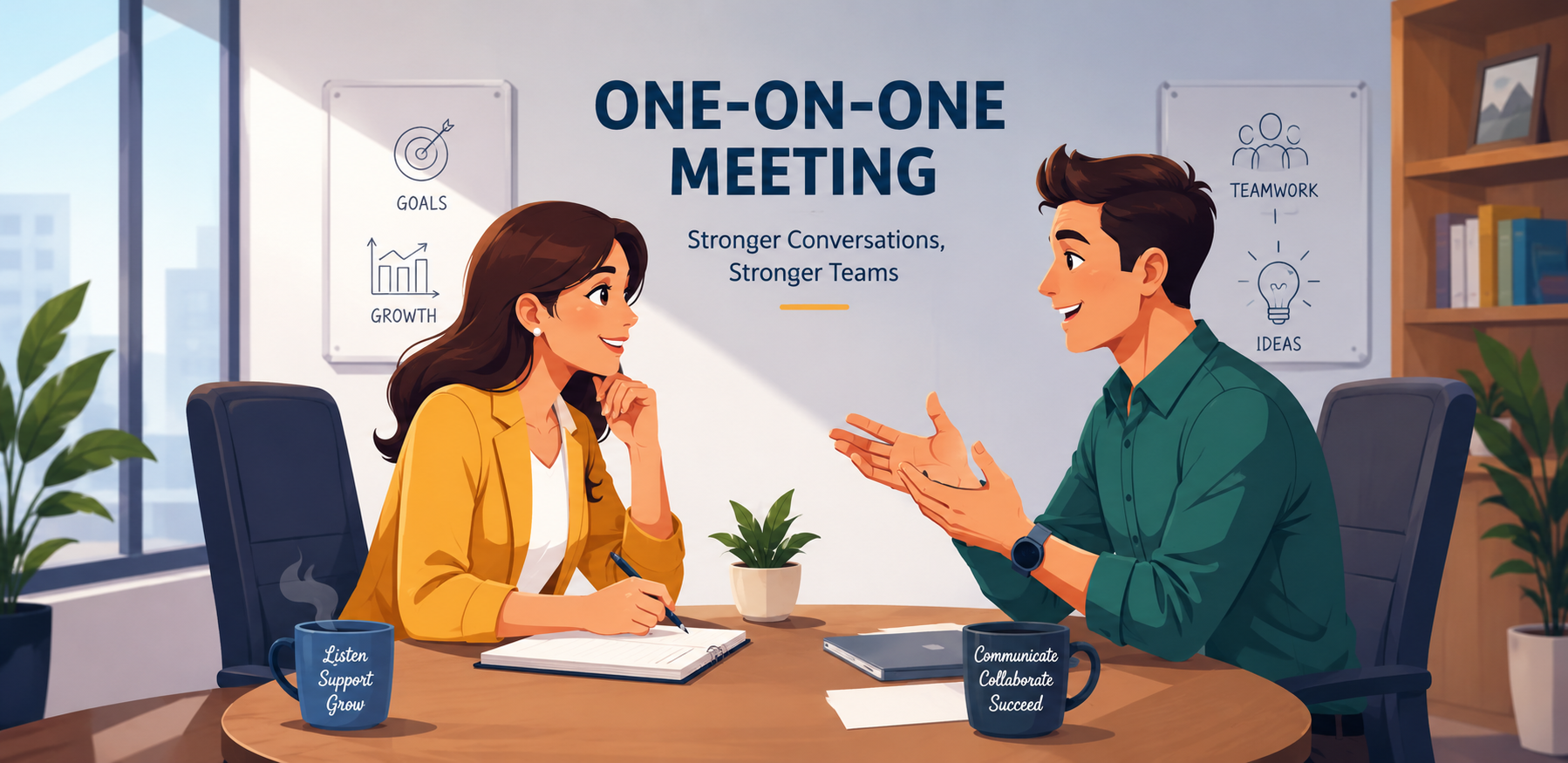
One-on-one meetings are meetings where managers and employees interact face to face to talk about work, company goals, challenges, and growth.
But one-on-one meetings become meaningless when employees do not share their honest thoughts, ideas, or concerns, and when the meetings start feeling boring.
So, if you want one-on-one meetings to be effective and help build trust, improve communication, support growth, and understand employee challenges better, employees should feel heard, supported, and motivated. Only then can a one-on-one meeting become truly meaningful.
In this article, we will understand how managers can run one-on-one meetings that team members truly value by using some effective steps.
How to Run One-on-One Meetings That Team Members Value?
1. Understand the Real Purpose of One-on-One Meetings
It is very important for managers to understand that in one-on-one meetings, building a good relationship with employees is more important than only discussing tasks.
If a manager talks only about company growth and work tasks without taking suggestions from employees, employees may start feeling bored and unimportant. That is why managers should focus on other things in meetings as well, such as discussing employee challenges, offering guidance and support, talking about growth opportunities, and identifying problems before they become serious.
When you also talk about employee-related matters, it increases their trust. And when trust increases, communication becomes more honest and natural.
2. Create a Comfortable and Open Environment
The main purpose of a meeting is that all team members present should share their thoughts, discuss ideas with each other, and provide feedback for improvement. But if the environment is not comfortable, people do not share things honestly because they feel they may be ignored or judged.
To make one-on-one meetings meaningful, the environment should be comfortable and open so employees can share their ideas and concerns freely. Managers can create a comfortable environment by listening without interrupting, showing patience and respect, avoiding aggressive reactions, and encouraging honest opinions.
3. Focus on the Employee, Not Only the Work
If a manager focuses only on work and discusses only tasks during meetings, employees may feel demotivated because their efforts, challenges, and experiences are ignored.
That is why managers should talk not only about tasks but also about employees themselves. In meetings, managers should include important topics such as workload balance, team collaboration, career growth, and skill development.
When managers discuss these topics with employees, employees feel that the manager cares not only about work but also about their growth. This makes trust stronger, and employees become more willing to give their best in meetings and at work.
4. Prepare Before the Meeting
Another effective way to make one-on-one meetings meaningful is to prepare before the meeting.
Preparing before the meeting is very important because it helps everything go smoothly and makes the conversation better. And when the conversation is good, it helps build a strong relationship between the manager and the employee.
That is why managers should review previous discussions, check ongoing projects, prepare questions, and think about ways to support the employee before the meeting.
5. Ask Open-Ended Questions
Asking open-ended questions is also a great way to run a good one-on-one meeting because it gives employees a chance to discuss topics properly and share many things openly. This helps create deeper conversations between the employee and the manager.
When deep conversations happen, both the employee and the manager understand each other better. This makes their relationship stronger, and everyone can participate more effectively in the meeting.
6. Listen More Than You Speak
Another important tip for making one-on-one meetings effective is to listen more than you speak.
Good communication is very important for a successful meeting. But communication does not only mean speaking. Good communication also means listening, understanding, and responding to the other person properly.
When managers focus more on listening to and understanding employees instead of speaking all the time, employees feel respected. They also become more comfortable sharing things honestly, which makes the conversation better and more natural. As a result, the meeting becomes more effective.
Managers can listen actively by giving full attention, avoiding distractions, and asking follow-up questions.
Conclusion: One-on-One Meetings
One-on-one meetings are most effective when they are treated as a space for real conversation, not just status updates. When managers listen actively, ask thoughtful questions, and focus on both performance and well-being, these meetings naturally become more meaningful for employees.
The real value comes from consistency, trust, and follow-through. When employees feel heard and see that their concerns and ideas lead to action, they start engaging more openly. Over time, this strengthens relationships, improves performance, and builds a healthier, more connected team culture.
“Build stronger team relationships and explore better leadership practices on Best Job Tool where great managers create meaningful conversations.”






Comments
Be the first to leave a comment.