

Introduction: Transition From Operations to Strategy Roles
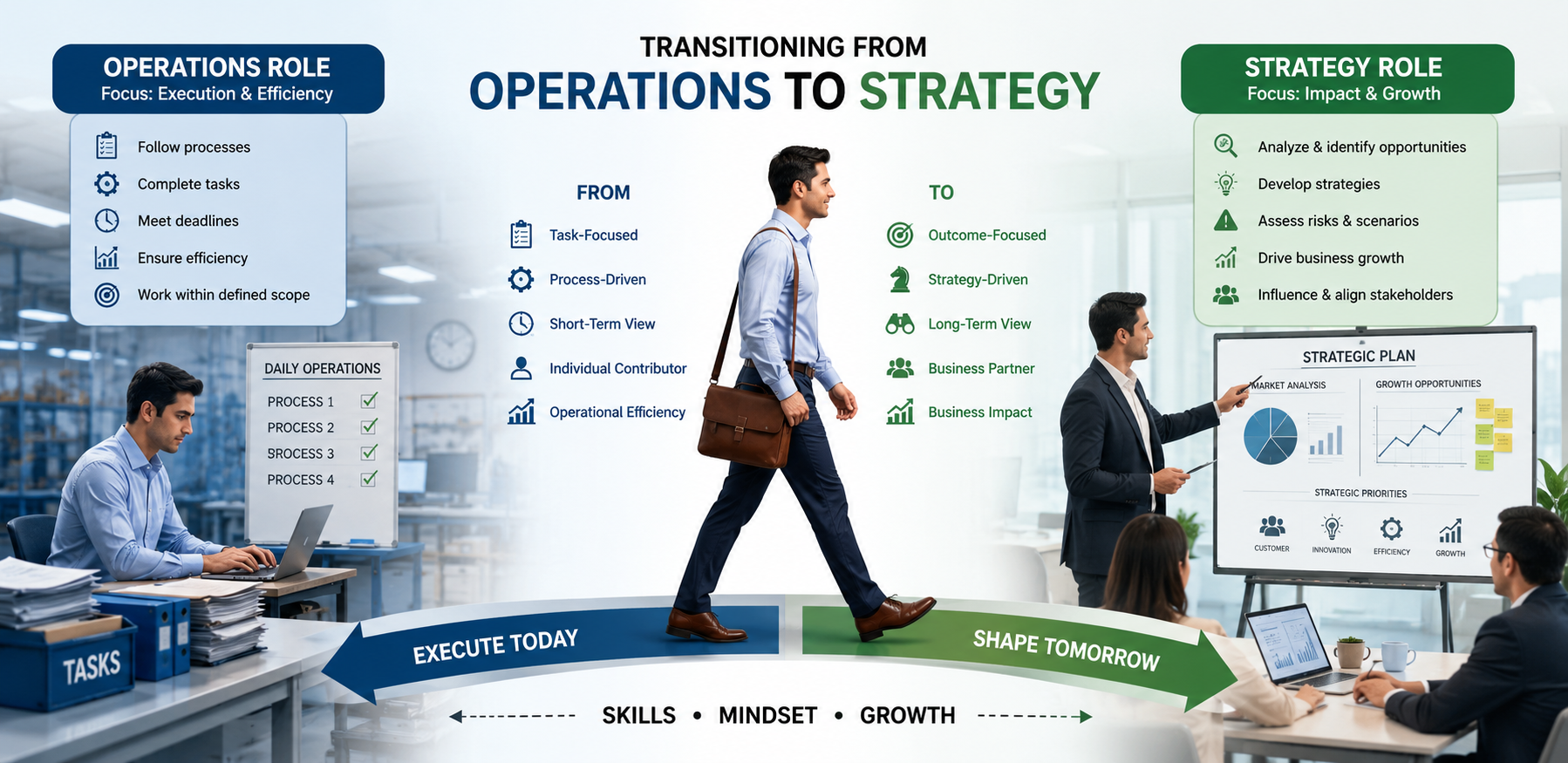
Operation roles are positions where you are assigned specific tasks and expected to deliver results by following a set process. This work can be repetitive, meaning you may have to do the same tasks every day.
Strategy-focused roles are positions where you solve problems, make decisions, and think about long-term goals and plans.
Many professionals start their careers in operation roles. As they progress in their careers, they often focus on growth and move into strategy-focused roles to take on greater responsibilities and create a bigger impact.
However, some professionals find it difficult to make this transition. They may feel confused about the next steps or struggle to develop the skills needed for strategic work. As a result, they remain stuck in operation roles for a long time.
But there is no need to worry. In this article, we will explore some practical ways to help you successfully transition from operation roles to strategy roles.
How to Transition From Operations to Strategy Roles?
1. Understand the Difference Between Operation and Strategy
The first and most important thing you should do before making the switch is understand the difference between operation roles and strategy-focused roles. Many people feel confused about these roles and sometimes regret their decision after switching because they did not fully understand the difference.
Professionals in operation roles mainly focus on completing tasks on time and following instructions. Their responsibility is to carry out assigned work efficiently.
On the other hand, professionals in strategy-focused roles concentrate on business outcomes rather than just completing tasks. They allocate resources, think about potential risks, solve problems, and make decisions that help the company achieve its goals. This type of work also helps improve their problem-solving skills and supports their professional growth.
2. Learn How Your Organization Creates Value
Operation roles are very different from strategy-focused roles. Almost every aspect of these roles is different. In operation roles, professionals usually do not need to think beyond their assigned tasks. They regularly complete the same type of work and meet deadlines.
However, professionals in strategy-focused roles solve problems, think about customers, and handle many different responsibilities. They focus on improving results and helping the organization achieve its goals.
That is why, when you decide to move from an operation role to a strategy-focused role, you should give yourself time to learn new skills and knowledge that will help you succeed in your new position.
Some important things you should learn include the business model, revenue sources, customer needs, market trends, and company goals. Understanding these areas will help you generate valuable ideas, make better decisions, and contribute more effectively to the organization.
3. Develop Big-Picture Thinking
To move from operation roles to strategy-focused roles, you need to develop big-picture thinking. People in operation roles usually perform the same tasks every day and focus on completing them. Because of this, they may not get many opportunities to improve their strategic thinking skills.
However, if you want to move into a strategy-focused role, you need to expand your way of thinking. Instead of focusing only on your daily tasks, try to understand how your work connects to the bigger goals of the organization.
You should think beyond your department, consider the long-term consequences of decisions, and analyze how those decisions can affect different teams. This broader perspective will help you develop the strategic mindset needed for higher-level roles.

4. Start Solving Problems, Not Just Completing Tasks
Another effective way to move from operation roles to strategy-focused roles is to start solving problems instead of only completing tasks.
Organizations highly value professionals who can solve business problems and provide new ideas. If you focus only on completing your assigned tasks, you may remain in operation roles for a long time.
That is why you should develop a problem-solving mindset. Whenever you face a challenge, try to identify the root cause, explore possible solutions, and present your recommendations.
When you consistently provide solutions to business problems and help the company handle difficult situations, people begin to see you as a strategic professional rather than someone who only executes tasks. This can create opportunities for you to move into strategy-focused roles and take on greater responsibilities.
5. Improve Decision-Making Skills
Improving your decision-making skills is also one of the best ways to move from operation roles to strategy-focused roles. In strategic roles, making the right decisions is very important. That is why strengthening your decision-making skills can help you handle strategic responsibilities more effectively.
To improve your decision-making skills, practice gathering relevant information before making decisions. Evaluate different options carefully and consider the possible risks and outcomes of each choice.
The more you develop these skills, the better prepared you will be to take on strategy-focused roles and contribute to important business decisions.
Conclusion: Transition From Operations to Strategy Roles
Transitioning from operations to strategy roles is not something that happens overnight. It requires a shift in mindset, a deeper understanding of the business, and the ability to think beyond day-to-day tasks. By learning how your organization creates value, developing big-picture thinking, improving your problem-solving abilities, and strengthening your decision-making skills, you can gradually prepare yourself for strategic responsibilities.
“Moving from operations to strategy requires more than experience—it requires a shift in thinking. Build the skills and mindset needed for strategic roles with Best Job Tool.”






Comments
Be the first to leave a comment.