

Introduction
One of the biggest concerns among students and recent graduates is the lack of professional work experience. Many candidates walk into interviews believing they have little to offer because they have not held a full-time corporate position. However, employers are often more interested in transferable skills and real-world problem-solving abilities than job titles Campus alone.
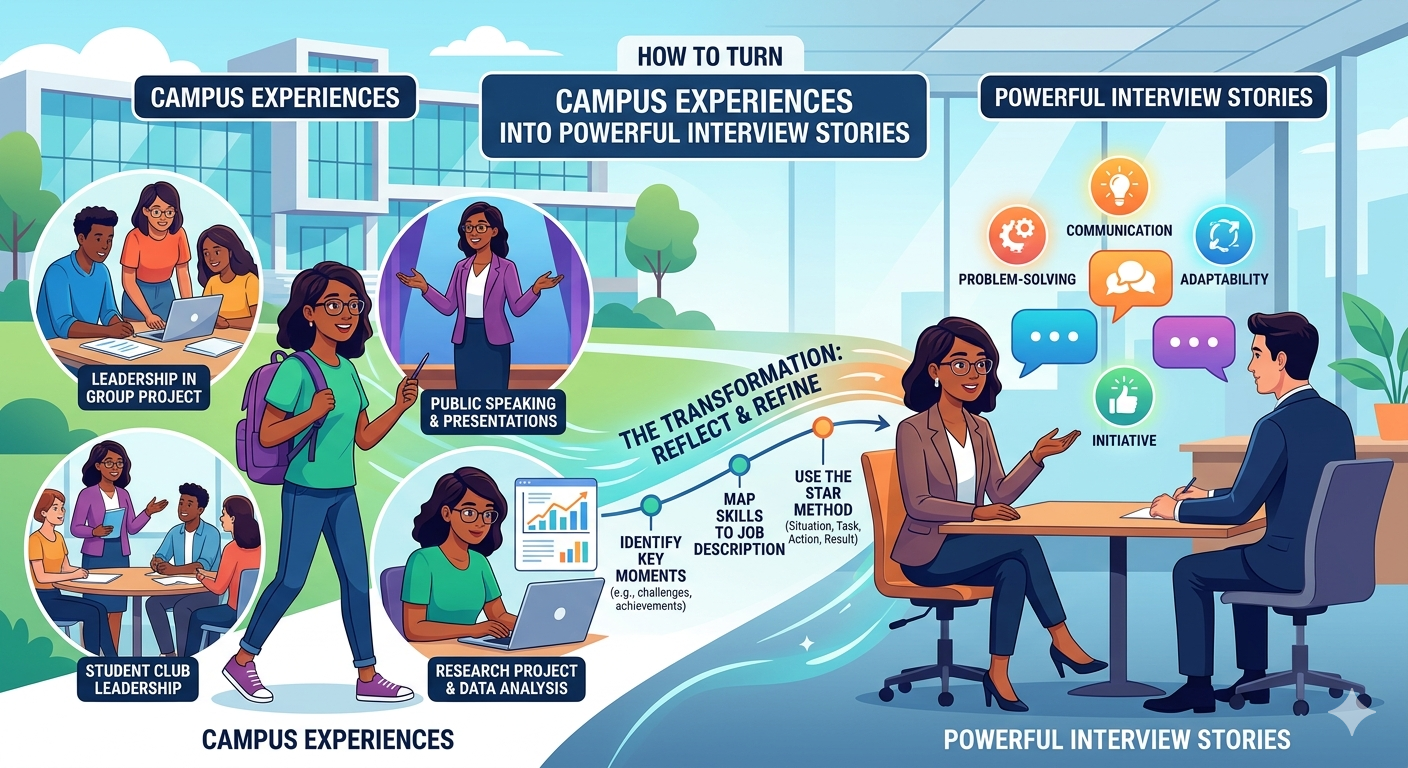
Campus experiences provide countless opportunities to develop leadership, teamwork, communication, productivity, and decision-making skills. Whether you organized a college event, participated in a research project, managed a student club, volunteered for a social cause, or completed a remote internship, these experiences can become powerful interview stories when presented effectively.
The challenge is not having experiences—it is knowing how to communicate them in a way that resonates with employers. By learning how to transform campus activities into professional success stories, candidates can stand out in interviews and demonstrate their readiness for modern workplaces.
Why Interview Stories Matter More Than Experience Lists
Recruiters often ask behavioral questions to understand how candidates handle real situations. Questions such as “Tell me about a time you solved a problem” or “Describe a situation where you worked under pressure” are designed to evaluate practical skills rather than theoretical knowledge.
Simply listing achievements on a resume is rarely enough. Employers want evidence of how you think, act, and contribute to results.
Strong interview stories help recruiters understand:
- How you approach challenges
- How you collaborate with others
- How you manage responsibilities
- How you communicate under pressure
- How you learn from setbacks
- How you create measurable outcomes
When candidates provide structured and relevant examples, they become more memorable and credible during the hiring process.
Identify Campus Experiences That Demonstrate Professional Skills
Many students underestimate the value of their campus involvement because they view it as part of their education rather than professional development.
Start by creating a list of meaningful experiences from your academic journey.
Examples include:
- Group assignments and academic projects
- Student organization leadership roles
- Volunteer programs
- Research activities
- Campus competitions
- Event planning responsibilities
- Remote internships
- Fundraising initiatives
- Educational travel programs
- Peer mentoring activities
Each of these experiences can demonstrate workplace competencies when framed correctly.
For example, leading a student club may showcase leadership and communication skills, while coordinating a college festival may highlight project management and budgeting abilities.
The goal is to identify situations where you made decisions, solved problems, managed resources, or achieved measurable results.
Use the STAR Method to Structure Every Story
One of the most effective ways to answer interview questions is through the STAR framework.
Situation
Explain the context of the experience.
Task
Describe your responsibility or objective.
Action
Discuss the steps you took to address the challenge.
Result
Share the outcome and measurable impact.
For example:
Situation: A college event faced low registration numbers two weeks before launch.
Task: As a member of the organizing committee, you were responsible for increasing participation.
Action: You developed a social media promotion strategy, collaborated with faculty members, and organized online information sessions.
Result: Registrations increased by 45%, leading to the event’s highest attendance in three years.
This approach keeps answers structured, professional, and easy for interviewers to follow.
Turn Leadership Roles Into Compelling Success Stories
Leadership is one of the most sought-after qualities in job candidates. Fortunately, leadership opportunities exist throughout campus life.
You do not need to be the president of a student organization to demonstrate leadership. Employers value initiative, accountability, and influence at every level.
Examples of leadership experiences include:
- Managing a student club project
- Coordinating volunteers
- Leading a competition team
- Organizing academic workshops
- Mentoring junior students
When discussing leadership experiences, focus on:
- Challenges you encountered
- Decisions you made
- Team coordination efforts
- Results achieved
For instance, if your team struggled to meet project deadlines, explain how you reorganized responsibilities, improved communication, and helped the group complete the project successfully.
These examples show employers that you can guide teams and take ownership of outcomes.
Showcase Productivity and Remote Work Readiness
Modern organizations increasingly rely on remote and hybrid work environments. As a result, employers seek candidates who can remain productive without constant supervision.
Many campus experiences naturally demonstrate these abilities.
Examples include:
- Managing online group projects
- Completing remote internships
- Coordinating virtual events
- Collaborating with geographically dispersed teams
- Balancing academics with extracurricular activities
When discussing productivity, highlight:
- Time management strategies
- Planning techniques
- Prioritization methods
- Digital collaboration tools used
- Outcomes achieved
For example, you might explain how you managed coursework, a remote internship, and student organization responsibilities simultaneously while maintaining academic performance.
Such examples reassure employers that you can succeed in fast-paced and flexible work environments.
Students exploring international opportunities can also use platforms like best job tool to identify remote positions that value these skills and experiences.
Use Travel and Field Experiences to Demonstrate Adaptability
Travel-related educational experiences often provide valuable professional lessons that candidates overlook.
Whether you participated in a research trip, industry visit, exchange program, or field survey, these experiences can demonstrate highly desirable workplace skills.
Employers value adaptability because business environments constantly change.
Travel-based experiences often showcase:
- Problem-solving abilities
- Cultural awareness
- Communication skills
- Flexibility
- Planning and organization
Imagine participating in a field research project where unexpected weather conditions disrupted your schedule. Explaining how you adjusted plans, managed resources, and completed objectives despite challenges creates a compelling story about resilience and adaptability.
These experiences become even more valuable when applying for global or remote roles that require collaboration across different regions and cultures.
Highlight Financial Planning and Resource Management Skills
Financial awareness is an underrated skill among job candidates.
Many campus activities involve managing limited resources, budgets, and funding opportunities. These experiences can demonstrate maturity and business thinking.
Examples include:
- Organizing events within budget constraints
- Managing sponsorship funds
- Leading fundraising campaigns
- Allocating resources for student initiatives
- Negotiating vendor costs
When discussing financial planning experiences, focus on:
- Budget objectives
- Cost-saving strategies
- Decision-making processes
- Outcomes achieved
For example, if your team organized a college festival with limited funding, explain how you secured sponsorships, reduced unnecessary expenses, and delivered a successful event.
Employers appreciate candidates who understand resource management and can make responsible financial decisions.
Prepare Multiple Stories for Different Interview Questions
One of the biggest mistakes candidates make is preparing only one or two examples before an interview.
Instead, build a collection of stories that demonstrate different competencies.
Prepare examples related to:
- Leadership
- Teamwork
- Communication
- Problem-solving
- Productivity
- Adaptability
- Financial planning
- Conflict resolution
- Innovation
- Project management
A single campus experience can often be adapted to answer multiple interview questions.
For example, organizing a college event can demonstrate leadership, teamwork, budgeting, communication, and problem-solving depending on the interviewer’s question.
Maintaining a personal story bank allows you to respond confidently and naturally during interviews.
Regularly updating this collection also helps you prepare for networking events, scholarship applications, internships, and future career opportunities.
Candidates seeking international roles can further strengthen their career growth by exploring opportunities through best job tool, which connects professionals with global employers and remote job openings.
Conclusion
Campus experiences are far more powerful than many students realize. Academic projects, leadership roles, volunteer work, travel programs, remote collaborations, productivity initiatives, and financial planning responsibilities all provide valuable evidence of workplace readiness.
The key to interview success is learning how to present these experiences strategically. Employers are not simply looking for candidates with experience; they are looking for individuals who can solve problems, communicate effectively, adapt to challenges, and contribute meaningful results.
By identifying relevant experiences, using the STAR framework, highlighting measurable outcomes, and preparing multiple examples, students can transform ordinary campus activities into memorable interview stories.
As the job market becomes increasingly competitive and global, candidates who effectively communicate their experiences gain a significant advantage. Combining strong interview storytelling with career resources such as best job tool can help students and graduates unlock new opportunities, build confidence, and take the next step toward long-term professional success.






Comments
Be the first to leave a comment.