

Introduction
The job market has become increasingly competitive, with employers seeking candidates who possess a combination of technical expertise, soft skills, industry knowledge, and adaptability. Simply meeting the basic qualifications listed in a job description is often no longer enough. Successful candidates understand how to align their skills with employer expectations before submitting an Applying application.
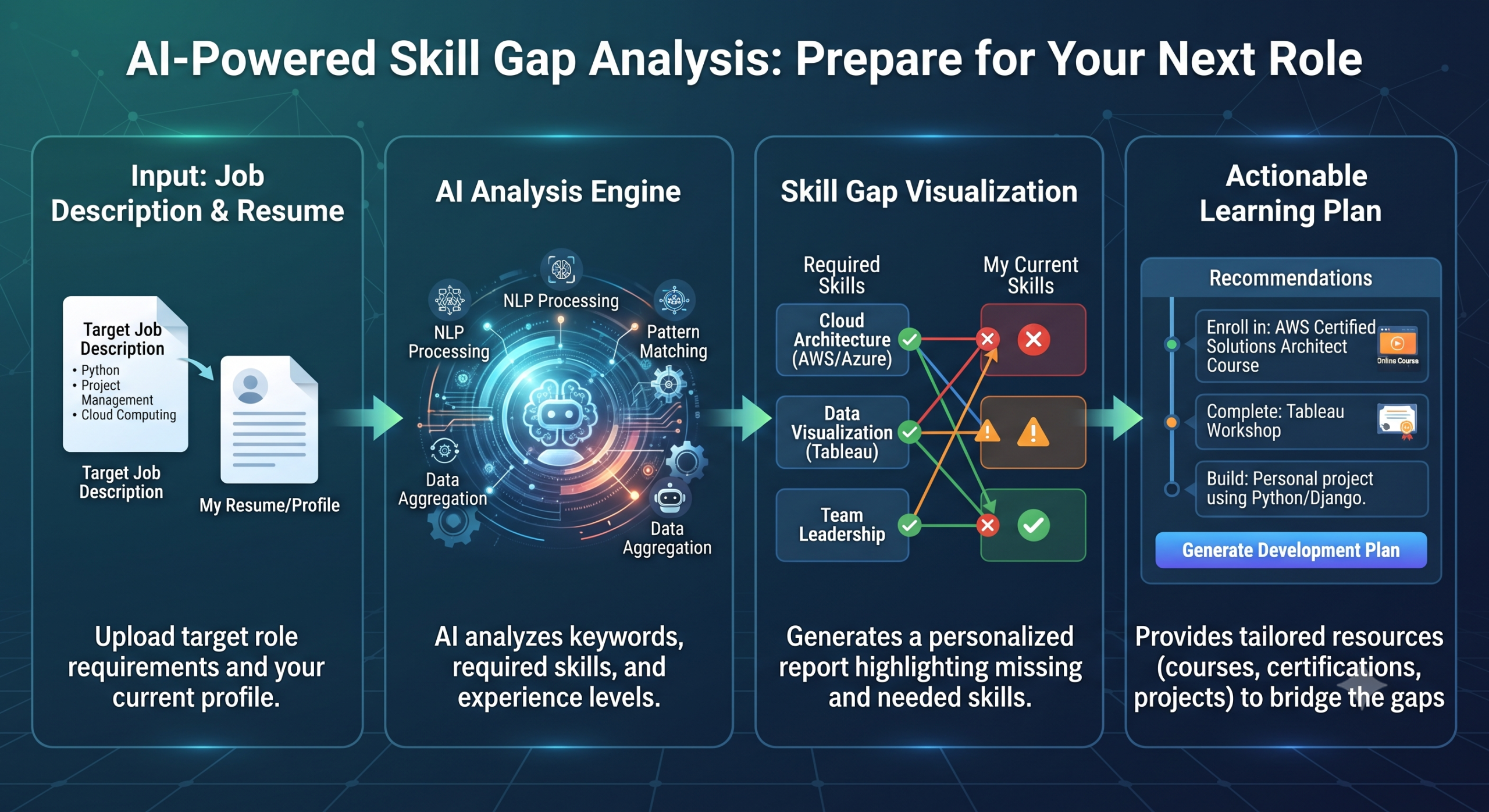
Artificial Intelligence (AI) has transformed the way professionals prepare for job opportunities. Instead of manually comparing resumes with job descriptions, candidates can now use AI-powered tools to analyze job requirements, identify missing skills, evaluate market trends, and create personalized learning plans. This proactive approach allows job seekers to address weaknesses before applying, significantly improving their chances of securing interviews.
AI should not replace your judgment or career planning—it should enhance it by providing data-driven insights. When used strategically, AI helps professionals focus on the skills that matter most while saving valuable time during the job search.
Whether you are pursuing remote opportunities or exploring global careers through the best job tool, a global job platform, using AI to identify skill gaps can help you build a stronger, more competitive professional profile.
H2: Analyze Job Descriptions with AI
The first step in identifying skill gaps is understanding exactly what employers are looking for.
AI-powered career tools can analyze multiple job descriptions and highlight recurring requirements.
Look for patterns such as:
- Technical skills
- Software proficiency
- Industry certifications
- Communication abilities
- Leadership experience
- Project management knowledge
- Analytical thinking
Instead of focusing on a single vacancy, compare several similar roles to identify the most frequently requested qualifications.
This approach helps you prioritize learning efforts based on market demand rather than assumptions.
H2: Compare Your Current Skills Against Market Expectations
Once you understand employer requirements, evaluate your existing skills objectively.
AI tools can compare your resume or professional profile with job descriptions to identify missing competencies.
Common areas of comparison include:
- Technical expertise
- Industry experience
- Certifications
- Programming languages
- Productivity software
- Leadership capabilities
- Communication skills
Create three categories:
Skills You Already Have
These are strengths you should highlight in your resume and interviews.
Skills That Need Improvement
These require additional learning or practical experience.
Skills That Are Not Essential
Avoid spending time developing abilities that rarely appear in your target roles.
This structured approach makes career development more efficient.
H2: Prioritize High-Impact Skills
Not every missing skill deserves equal attention.
AI can help identify which competencies appear most frequently across job postings, making it easier to prioritize learning. Applying
Focus on:
- Core technical skills
- Industry-standard software
- Digital collaboration tools
- Data analysis capabilities
- Communication skills
- Problem-solving abilities
- Project management knowledge
Prioritize skills that:
- Appear in multiple job descriptions.
- Align with your long-term career goals.
- Can be learned within a realistic timeframe.
- Increase your competitiveness across several roles.
Strategic learning delivers greater value than trying to master every available skill.
H2: Build a Personalized Learning Plan
After identifying skill gaps, create a structured plan to close them.
An effective learning roadmap should include:
Short-Term Goals
Complete within one to three months:
- Online courses
- Software tutorials
- Industry webinars
- Practice exercises
Medium-Term Goals
Develop over three to six months:
- Professional certifications
- Portfolio projects
- Case studies Applying
- Volunteer experience
Long-Term Goals
Build over six months or longer:
- Advanced certifications
- Leadership skills
- Specialized expertise
- Industry networking
AI-powered learning platforms often recommend courses and resources based on your career objectives, helping you stay focused on relevant development opportunities.
H2: Use AI to Strengthen Your Resume and Professional Profile
Your resume should clearly demonstrate that your skills match the position you are targeting.
AI tools can help by:
- Identifying missing keywords.
- Suggesting stronger action verbs.
- Improving readability.
- Highlighting measurable achievements.
- Matching resume language with job descriptions.
However, avoid copying AI-generated content without reviewing it carefully.
Ensure your resume remains:
- Accurate
- Honest
- Personalized
- Achievement-focused
- Easy to read
Use AI as an editing assistant rather than a replacement for your own professional experience.
H2: Prepare for Interviews Using AI Insights
Skill development should continue beyond submitting your application. Applying
AI can help you prepare for interviews by:
Predicting Common Questions
Many platforms analyze job descriptions and generate role-specific interview questions.
Identifying Knowledge Gaps
Practice areas where your confidence is lower.
Improving Communication
Use AI to refine answers, organize responses, and improve clarity while ensuring your final responses remain authentic.
Mock Interview Practice
AI-powered interview simulators can provide feedback on:
- Response structure
- Communication clarity
- Technical accuracy
- Confidence
- Time management
Combining interview preparation with skill development creates a stronger overall application.
H2: Track Progress and Continuously Update Your Skills
The job market evolves continuously, making ongoing learning essential.
Use AI to monitor:
- Emerging industry skills
- New certifications
- Technology trends
- Hiring demand
- Professional development opportunities
Review your progress regularly by asking:
- Which new skills have I developed?
- What remains missing?
- Have employer expectations changed?
- Does my resume reflect my latest achievements?
When searching for opportunities through the best job tool, reviewing current market requirements before each application helps ensure your qualifications remain aligned with employer expectations.
Continuous improvement positions you for long-term career success rather than a single job opportunity.
Practical Steps to Identify Skill Gaps Before Applying
Follow these practical steps before submitting any application:
- Analyze multiple job descriptions.
- Compare required skills with your current experience.
- Prioritize high-demand competencies.
- Create a structured learning plan.
- Complete relevant courses or certifications.
- Update your resume with newly acquired skills.
- Practice interview questions using AI tools.
- Review your professional profile regularly.
- Monitor industry trends and hiring demands.
- Reassess your skill gaps every few months.
- Focus on measurable achievements instead of simply listing skills.
- Continue learning even after securing a new role.
Consistent preparation improves confidence and significantly increases your chances of landing interviews. Applying
Conclusion
Artificial Intelligence has become a valuable career development resource, helping professionals identify skill gaps, understand employer expectations, and prepare more effectively for competitive job opportunities. Rather than relying on guesswork, candidates can use AI to make informed decisions about which skills to develop, how to improve their resumes, and where to focus their learning efforts.
The most successful job seekers combine AI-driven insights with continuous learning, practical experience, and authentic self-assessment. By regularly evaluating your qualifications against evolving market demands, you can remain competitive in a rapidly changing employment landscape.
Whether you are exploring your first professional opportunity or advancing your career through the best job tool, a global job platform, using AI strategically to identify and close skill gaps will strengthen your applications, improve interview performance, and support long-term career growth in today’s digital workforce.






Comments (1)
[4238]phpgames31 Official Login | Best Online Slots in Philippines,phpgames31 offers a seamless app download and exclusive GCash casino bonuses. Learn how to play baccarat and win big. Join the top gaming community today! visit: phpgames31