

Introduction
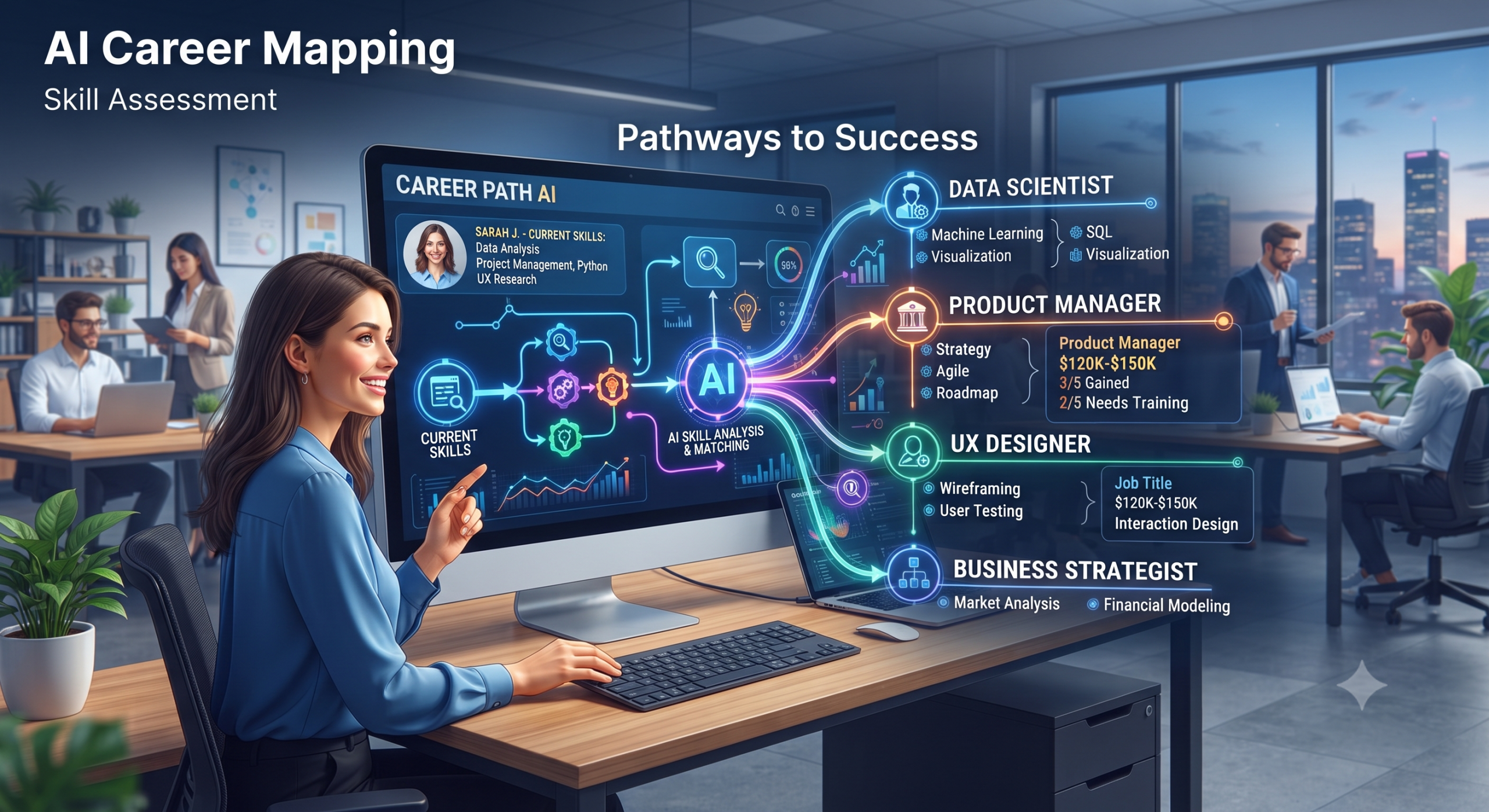
Career planning has traditionally involved researching job descriptions, seeking advice from mentors, and gradually building experience through trial and error. Today, Artificial Intelligence (AI) is making this process more data-driven by helping professionals understand how their existing skills align with current job market demands and future career opportunities.
AI-powered career tools can analyze resumes, compare skills with thousands of job postings, identify transferable competencies, recommend learning opportunities, and suggest realistic career transitions. Instead of guessing which role to pursue next, professionals can make informed decisions based on market trends and their current capabilities.
However, AI should be viewed as a decision-support tool rather than a replacement for personal judgment. The best career decisions combine AI-driven insights with individual interests, long-term goals, industry research, and professional experience.
Whether you are beginning your career, planning a career change, or exploring global opportunities through the best job tool, a global job platform, using AI to map career paths can help you create a focused and achievable professional development strategy.
H2: Build a Complete Inventory of Your Current Skills
Before AI can recommend career paths, you need a clear understanding of your existing abilities.
Create a comprehensive list of your skills, including:
Technical Skills
- Programming languages
- Data analysis
- Digital marketing
- Graphic design
- Financial analysis
- Cloud computing
- CRM software
Workplace Skills
- Communication
- Leadership
- Team collaboration
- Problem-solving
- Project management
- Time management
- Critical thinking
Industry Knowledge
Include experience gained through:
- Previous jobs
- Freelance work
- Internships
- Certifications
- Volunteer projects
- Personal projects
The more accurate your skill profile, the more relevant AI-generated career recommendations will be.
H2: Compare Your Skills with Current Job Market Demand
AI can analyze thousands of job postings to identify where your existing skills are most valuable.
Rather than focusing on one job title, compare multiple related roles to identify recurring requirements.
AI may help identify:
- Frequently requested technical skills
- High-demand certifications
- Common software tools
- Leadership expectations
- Industry-specific competencies
- Emerging technologies
This analysis helps you understand which career paths closely match your current qualifications and where additional learning may be needed.
H2: Identify Transferable Skills for Career Transitions
One of AI’s greatest strengths is recognizing transferable skills that apply across multiple industries.
For example:
A customer service professional may already possess:
- Communication
- Conflict resolution
- Relationship management
- Time management
- Problem-solving
These skills can support transitions into roles such as:
- Customer Success Manager
- Account Manager
- Human Resources Coordinator
- Sales Representative
- Project Coordinator
Similarly, professionals in marketing, operations, finance, education, or healthcare often possess transferable skills that AI can map to emerging career opportunities.
Recognizing these connections expands your career options beyond traditional progression paths.
H2: Identify Skill Gaps and Prioritize Learning
Once AI identifies suitable career paths, the next step is understanding what additional skills are required.
Categorize skill gaps into three groups:
Immediate Priorities
Skills required for most target roles.
Medium-Term Development
Skills that improve competitiveness but are not essential immediately.
Long-Term Growth
Advanced capabilities needed for leadership or specialized positions.
Focus learning on:
- Professional certifications
- Industry software
- Technical competencies
- Communication skills
- Leadership development
- Project management methodologies
A structured learning plan helps you progress steadily without becoming overwhelmed.
H2: Use AI to Build a Personalized Career Roadmap
Instead of applying randomly for jobs, use AI insights to create a step-by-step career plan.
An effective roadmap should include:
Short-Term Goals (0–6 Months)
- Complete targeted training.
- Update your resume.
- Build relevant projects.
- Improve your professional profile.
Medium-Term Goals (6–18 Months)
- Earn certifications.
- Expand your portfolio.
- Gain practical experience.
- Strengthen your professional network.
Long-Term Goals (18+ Months)
- Pursue leadership opportunities.
- Develop specialized expertise.
- Build industry recognition.
- Mentor junior professionals.
Breaking long-term ambitions into smaller milestones makes career growth more manageable and measurable.
H2: Optimize Your Resume and Professional Profile with AI
AI can also help ensure your professional profile aligns with your desired career path.
Use AI to:
- Identify missing keywords.
- Improve resume structure.
- Highlight transferable skills.
- Strengthen achievement statements.
- Match your experience to job descriptions.
When updating your resume:
- Quantify accomplishments.
- Include measurable business outcomes.
- Use industry terminology naturally.
- Focus on results instead of responsibilities.
Candidates searching for opportunities through the best job tool should regularly update their resumes to reflect newly acquired skills and certifications.
An optimized resume increases visibility and improves your chances of progressing through the initial stages of recruitment.
H2: Monitor Career Trends and Adjust Your Plan Regularly
The employment market changes rapidly as technology, business priorities, and industry demands evolve.
Use AI to monitor:
- Emerging job roles
- In-demand skills
- Salary trends
- Industry certifications
- Remote work opportunities
- Hiring activity
Review your career plan every few months by asking:
- Are my target roles still growing?
- Have employer expectations changed?
- Which new skills should I develop next?
- Does my resume reflect my latest achievements?
Continuous evaluation helps ensure your career strategy remains aligned with current market needs.
Practical Steps to Map Your Career with AI
Before applying for your next opportunity, follow these practical steps:
- Create a complete inventory of your skills.
- Analyze multiple job descriptions using AI.
- Identify transferable competencies.
- Compare your qualifications with market demand.
- Prioritize the most valuable skill gaps.
- Build a structured learning roadmap.
- Update your resume and professional profile.
- Gain practical experience through projects or certifications.
- Monitor industry trends regularly.
- Review your career goals every six months.
- Seek feedback from mentors alongside AI recommendations.
- Focus on long-term career growth rather than only your next job.
Consistent planning and continuous learning create stronger career opportunities over time.
Conclusion
Artificial Intelligence is changing the way professionals plan their careers by providing data-driven insights into skills, market demand, and potential career transitions. Instead of relying solely on intuition, AI enables job seekers to identify transferable skills, understand emerging opportunities, and develop targeted learning plans that align with employer expectations.
The most effective career planning combines AI-powered analysis with personal ambition, industry knowledge, and continuous professional development. By regularly evaluating your skills, updating your qualifications, and adapting to changing market trends, you can make confident career decisions and remain competitive in an evolving workforce.
Whether you are pursuing your first professional role, planning a career transition, or exploring international opportunities through the best job tool, a global job platform, using AI to map career paths can help you make informed decisions, strengthen your employability, and build a sustainable path toward long-term career success.






Comments
Be the first to leave a comment.