

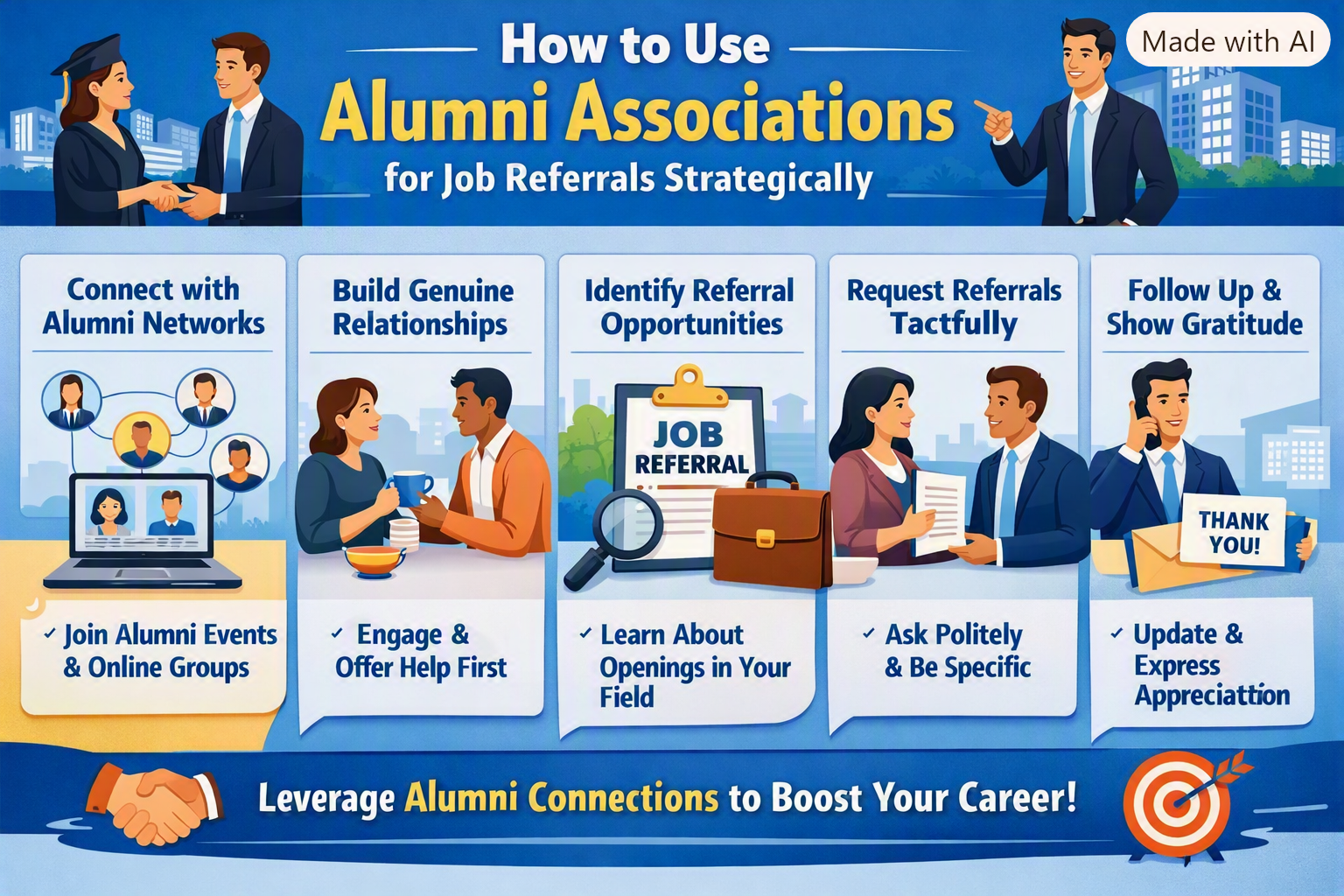
Introduction: Alumni Associations
Finding a job can be difficult, especially when you are applying to many positions but are not getting enough responses. Many job seekers focus only on job websites, company career pages, and LinkedIn applications. These methods can be useful, but they are not the only ways to find opportunities.
One of the most useful resources you may already have is your alumni association.
An alumni association connects former students of a school, college, or university. These people may now work in different companies, industries, and cities. Some may be managers, recruiters, founders, or experienced professionals. Because you share an educational connection, reaching out to them can feel more natural than contacting a complete stranger.
However, using an alumni association for job referrals is not about asking everyone for a job. It is about building genuine professional relationships and finding the right people who can guide you, introduce you to others, or refer you when a suitable opportunity is available.
Here is how you can use alumni associations strategically for job referrals.
How to Use Alumni Associations for Job Referrals Strategically?
1. Understand What an Alumni Association Can Offer
Before contacting alumni, understand what an alumni association actually provides.
Some alumni associations maintain online directories where you can find former students by industry, job title, location, or graduation year. Others organize networking events, career talks, mentorship programs, workshops, and job boards.
Your alumni network can provide several types of support.
For example, an alumnus may:
- Tell you about an open position.
- Refer you to a hiring manager.
- Introduce you to someone in their company.
- Review your resume.
- Share information about a company.
- Explain what skills employers are looking for.
- Help you understand an industry.
- Suggest people you should connect with.
This means you should not think of an alumni association only as a source of referrals.
Think of it as a professional network that can help you understand where opportunities exist and how to approach them.
2. Find Your Alumni Network
Start by finding out whether your college or university has an active alumni association.
Visit the official website of your educational institution and look for an alumni section. You may find an alumni directory, networking platform, social media group, or email contact.
You can also search for alumni on LinkedIn.
Search for your college or university name and filter the results based on:
- Industry
- Company
- Location
- Job title
- Graduation year
- Area of expertise
For example, if you want to work in digital marketing, search for alumni from your university who currently work as marketing specialists, content managers, SEO professionals, brand managers, or marketing directors.
This helps you avoid contacting hundreds of random people.
Instead, you can focus on alumni who are connected to your career goals.
3. Define Your Job Target Before Networking
One common mistake is contacting alumni without knowing what kind of job you want.
You do not need to have your entire career planned, but you should have a basic direction.
For example, instead of saying:
“I am looking for a job in any field.”
You could say:
“I am looking for entry-level content writing and digital marketing roles.”
This makes it easier for alumni to understand how they can help.
Before starting your outreach, write down:
- Your target job titles
- Your preferred industries
- Your preferred locations
- Your current skills
- Your experience level
- Companies you are interested in
- Skills you are currently developing
This information will help you identify the most relevant alumni.
4. Build a List of Relevant Alumni
Do not contact every alumnus you find.
Create a small list of people who are connected to your goals.
For example, if you want to work in technology, you might prioritize alumni who:
- Work at companies you are interested in.
- Have the job title you want.
- Work in your target industry.
- Live in your target location.
- Have experience similar to the career path you want.
- Are involved in alumni activities.
You can start with 10 to 20 people.
Quality is more important than quantity.
A thoughtful conversation with five relevant alumni can be more valuable than sending the same message to 100 people.
5. Research Each Person Before Contacting Them
Never send the exact same message to every alumnus.
Spend a few minutes researching each person.
Look at their LinkedIn profile, professional background, current company, and areas of expertise.
Find something you genuinely have in common.
For example:
“I noticed that we both studied at XYZ University.”
You can also mention their career path:
“I saw that you moved from content writing into product marketing. I am interested in making a similar transition.”
This shows that you are not sending a random message.
Personalization can make your communication feel more genuine.
6. Start With a Conversation, Not a Referral Request
One of the biggest mistakes job seekers make is immediately asking for a referral.
Imagine receiving a message from someone you have never met:
“Hi, we went to the same university. Please refer me for a job.”
You may not feel comfortable doing that.
A referral can affect someone’s professional reputation, so people usually want to know whether they can trust the person they are referring.
Instead, begin with a conversation.
You could ask about their experience in the industry, their career path, or the skills they believe are important.
For example:
“Hi, I noticed that we are both alumni of XYZ University. I am currently exploring opportunities in digital marketing, and I found your career journey interesting. I would love to learn more about your experience in the field.”
This approach creates an opportunity for a relationship before you ask for anything.
Conclusion: Alumni Associations
Alumni associations can be a powerful resource for job seekers because they provide access to people who already share an educational connection with you. However, the best results usually come from treating alumni networking as relationship building rather than simply asking for referrals.
Start by identifying alumni who work in your target industry or company. Research their backgrounds and contact them with personalized messages. Ask for advice before asking for a referral. Attend alumni events, use LinkedIn, and stay connected with people who are willing to help.
When the right job opportunity appears, a strong relationship can make it easier to ask for a referral. If someone agrees to help, provide your resume, job details, and other information they need.
Most importantly, remember that networking is a two-way process. Be respectful, patient, and willing to provide value to others.
You may not receive a job from your first alumni conversation, and that is normal. The real benefit comes from building a professional network that continues to support your career over time.






Comments (1)
[7920]basa8 login করুন এবং বিকাশ দিয়ে সেরা স্লট গেম খেলুন,basa8 app download করে আজই জয়েন করুন। বিকাশ দিয়ে ক্যাসিনো গেম এবং সেরা অনলাইন স্লট গেম খেলার সুযোগ নিন। ক্যাসিনো বোনাস পাওয়ার নিয়ম জানতে লগইন করুন। visit: basa8