

Introduction
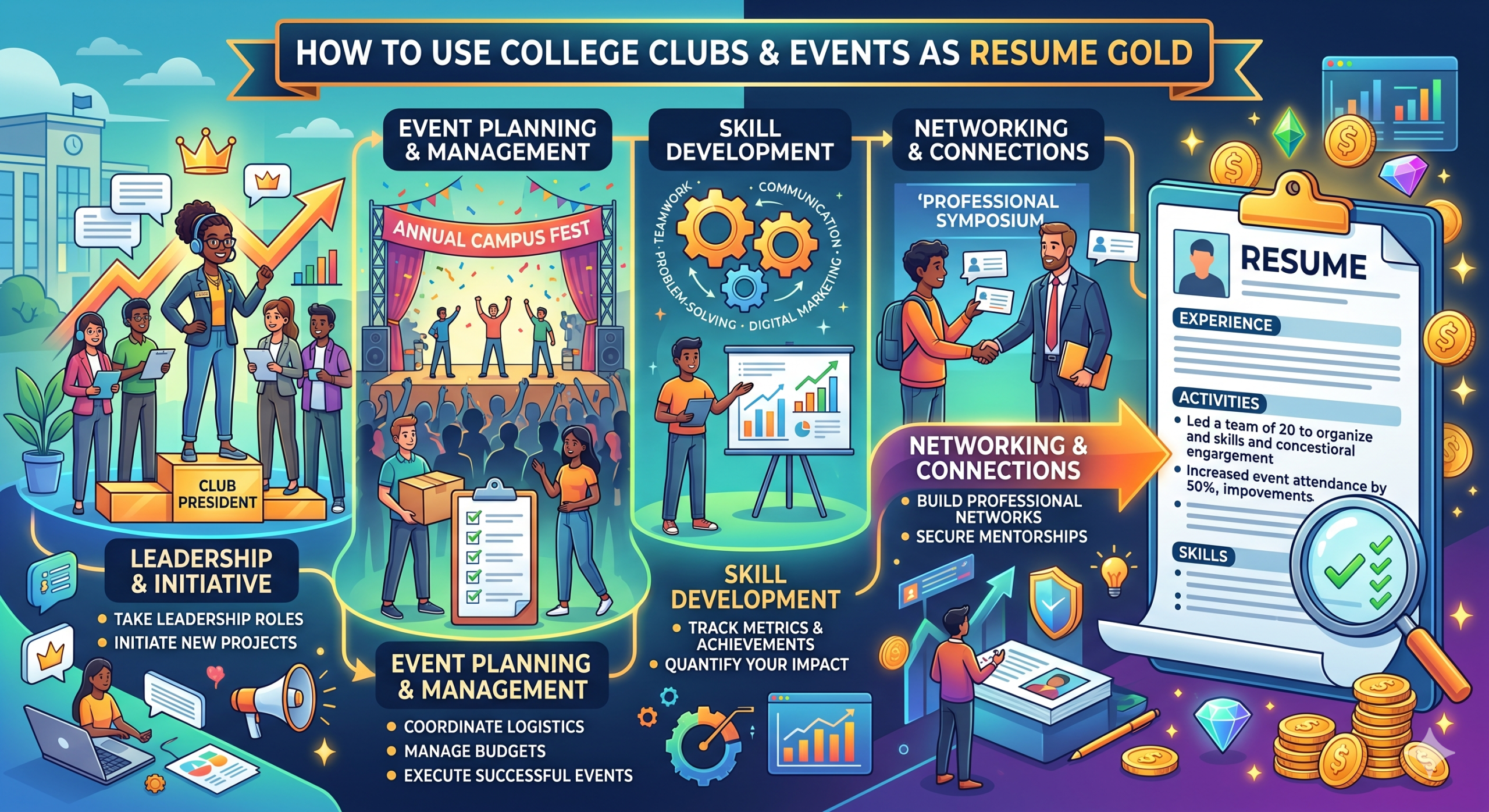
Many students focus heavily on academics while overlooking one of the most valuable career-building resources available on campus: college clubs and events. Employers today are not only looking for strong grades but also for candidates who demonstrate leadership, teamwork, communication, and problem-solving abilities. Participating in clubs, societies, competitions, and campus events provides practical experiences that can significantly strengthen a resume.
College activities offer opportunities to gain real-world skills before entering the job market. Whether you join a student organization, volunteer at an event, organize a workshop, or lead a campus initiative, these experiences can showcase qualities that employers actively seek. The key is knowing how to participate strategically and present those experiences effectively on your resume.
This guide explains how students can transform college clubs and events into valuable career assets that help them stand out in internships, graduate programs, and full-time job applications.
Why Employers Value Extracurricular Experience
Recruiters often review hundreds of resumes with similar academic qualifications. Extracurricular activities help candidates demonstrate practical skills that cannot always be measured through grades alone.
College clubs and events can reveal important professional qualities such as:
- Leadership abilities
- Team collaboration
- Project management
- Communication skills
- Problem-solving capabilities
- Initiative and responsibility
- Adaptability under pressure
Employers recognize that students who actively engage outside the classroom are often better prepared for workplace challenges.
Choosing the Right Clubs for Career Growth
Not every club will contribute equally to your career goals. Selecting organizations that align with your interests and professional aspirations can maximize the value of your involvement.
Consider joining:
Industry-Focused Clubs
These organizations provide exposure to your future field.
Examples include:
- Marketing clubs
- Finance societies
- Engineering associations
- Coding communities
- Entrepreneurship groups
Participation demonstrates genuine interest in your chosen industry.
Leadership Organizations
Leadership-focused clubs help students develop management and organizational skills.
Benefits include:
- Leading teams
- Managing projects
- Organizing activities
- Handling responsibilities
These experiences are highly attractive to employers.
Community Service Groups
Volunteer organizations demonstrate social responsibility and teamwork.
Students often gain experience in:
- Event planning
- Fundraising
- Community outreach
- Volunteer coordination
These activities showcase initiative and commitment.
Turning Club Participation into Resume-Worthy Experience
Simply being a member of a club may not significantly strengthen your resume. Active involvement creates more impactful experiences.
Instead of listing:
- Member, Business Club
Focus on contributions such as:
- Organized networking events for 200 students
- Coordinated sponsorship outreach campaigns
- Managed social media engagement initiatives
- Led student recruitment activities
Employers are interested in measurable contributions rather than passive participation.
When possible, quantify achievements using numbers and outcomes.
Examples:
- Increased event attendance by 30%
- Managed a team of 15 volunteers
- Raised ₹50,000 for a fundraising campaign
- Coordinated workshops attended by 300 participants
Specific accomplishments make resumes more compelling.
Making the Most of College Events
Campus events provide excellent opportunities to develop skills and build professional networks.
Attend Industry Seminars
Guest lectures and industry panels offer exposure to professionals and current trends.
Benefits include:
- Learning from experts
- Understanding industry expectations
- Building professional connections
- Discovering career opportunities
Take notes and engage with speakers whenever possible.
Participate in Competitions
Competitions demonstrate initiative and problem-solving capabilities.
Examples include:
- Business case competitions
- Hackathons
- Innovation challenges
- Debate competitions
- Research presentations
Achievements in these events can significantly strengthen a resume.
Volunteer for Event Management
Event planning provides hands-on experience that mirrors many workplace responsibilities.
Students often develop skills in:
- Budget management
- Logistics coordination
- Team collaboration
- Stakeholder communication
These experiences are highly transferable to professional environments.
Developing Leadership Experience Through Campus Activities
Leadership experience is one of the strongest additions to a student resume.
Many students assume leadership requires becoming club president, but leadership can take many forms.
Examples include:
- Leading a project team
- Managing volunteers
- Organizing workshops
- Coordinating campaigns
- Supervising event logistics
Leadership demonstrates the ability to take responsibility and deliver results.
To maximize impact:
- Volunteer for challenging assignments
- Take ownership of projects
- Support team members effectively
- Document achievements and outcomes
These experiences provide strong examples for interviews and future applications.
Building a Professional Network Through Clubs and Events
Networking is often one of the most overlooked benefits of campus involvement.
College clubs frequently connect students with:
- Alumni
- Industry professionals
- Recruiters
- Faculty members
- Guest speakers
Building relationships early can create opportunities for:
- Internships
- Mentorship
- Job referrals
- Career advice
- Industry insights
Effective networking does not require aggressive self-promotion. Focus on genuine conversations and long-term relationship building.
Simple actions such as attending networking sessions, asking thoughtful questions, and staying connected on professional platforms can create valuable career opportunities.
How to Showcase Club Experience on Your Resume
The way extracurricular activities are presented can significantly influence their impact.
Consider creating sections such as:
Leadership Experience
Include positions where you supervised teams or managed projects.
Campus Involvement
Highlight active participation and meaningful contributions.
Volunteer Experience
Showcase community service and event support activities.
For each role:
- Use action-oriented language
- Focus on achievements
- Include measurable results
- Highlight transferable skills
Strong examples include:
- Led a team of 12 students to organize a campus entrepreneurship summit.
- Coordinated sponsorship partnerships that generated funding for student events.
- Managed social media campaigns that increased event registrations.
These descriptions demonstrate value far more effectively than simply listing memberships.
Common Mistakes Students Should Avoid
Many students miss opportunities to maximize the value of extracurricular activities.
Common mistakes include:
- Joining too many clubs without meaningful involvement
- Failing to pursue leadership opportunities
- Not tracking achievements and results
- Ignoring networking opportunities
- Listing memberships without explaining contributions
Quality involvement often has greater impact than participation in numerous organizations.
Employers prefer candidates who demonstrate meaningful engagement and measurable accomplishments.
Creating a Long-Term Career Strategy Through Campus Activities
College clubs and events should not be viewed as isolated experiences. Instead, they should become part of a broader career development strategy.
Students can create a stronger professional profile by:
- Choosing activities aligned with career goals
- Developing leadership experience
- Building industry connections
- Participating in relevant competitions
- Documenting accomplishments consistently
Over time, these experiences accumulate and create a resume that reflects practical skills, initiative, and professional readiness.
Conclusion
College clubs and events offer far more than social engagement. They provide valuable opportunities to develop leadership skills, gain practical experience, expand professional networks, and build a stronger resume. Students who actively participate, take on responsibilities, and focus on measurable achievements often gain a competitive advantage in internships and job applications.
By approaching extracurricular activities strategically, students can transform ordinary campus involvement into meaningful career-building experiences that impress employers and create long-term professional opportunities. When it comes time to find internships or graduate roles, platforms like BestJobTool can help connect students with opportunities that align with the skills and experience they have developed throughout their college journey.






Comments
Be the first to leave a comment.