

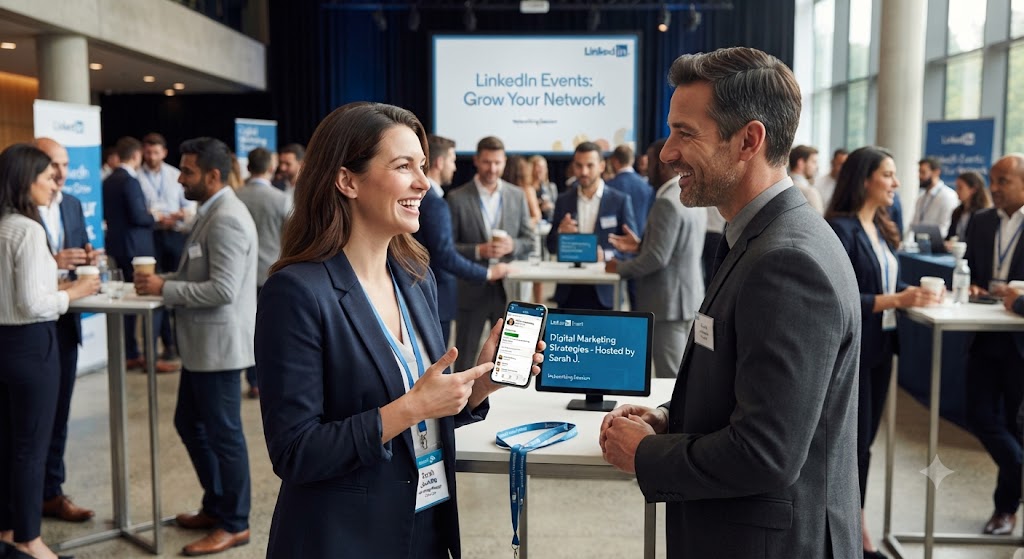
Professional networking is no longer limited to conferences, office meetings, or formal industry associations. Digital events have created new ways for professionals to meet industry peers, learn from experts, discover career opportunities, and build relationships across geographic boundaries. LinkedIn Events can be particularly useful because they bring professional conversations, event discovery, and networking together on a platform where people already maintain their professional identities.
However, simply registering for an event is not networking. Building a valuable professional network requires preparation, active participation, thoughtful follow-up, and consistent relationship building.
Whether you are looking for a new job, exploring a career transition, developing industry expertise, or expanding an international network, LinkedIn Events can become part of a structured networking strategy.
1. Choose LinkedIn Events That Match Your Career Goals
The first step is selecting events that are relevant to your professional objectives. Attending every event that appears in your feed can consume time without producing meaningful connections.
Start by defining your networking goal.
You might want to:
- Meet recruiters in your industry
- Connect with hiring managers
- Learn about a specific profession
- Meet professionals in another country
- Understand emerging technologies
- Explore a new industry
- Find potential clients
- Build relationships with industry experts
Once your objective is clear, look for events connected to your target area.
For example, someone interested in supply-chain careers could prioritize events related to logistics technology, procurement, operations, manufacturing, or supply-chain analytics rather than attending unrelated business webinars.
Review the event description before registering. Check the speakers, organizers, topics, participating companies, and expected audience.
The goal is not to collect event registrations. It is to identify events where the right professional conversations are likely to happen.
2. Research Speakers and Participants Before the Event
Preparation can significantly improve the quality of your networking.
Once you register, research the speakers and organizations involved. Review their professional backgrounds, areas of expertise, recent work, and common interests.
Create a short list of people you would genuinely like to connect with.
For each person, identify:
- Their current role
- Their organization
- Their area of expertise
- A topic you can discuss
- A relevant question you could ask
- A potential reason for staying connected
Avoid approaching networking as a transaction. The objective should be to establish a relevant professional relationship, not immediately ask someone for a job.
For example, instead of sending:
“Can you help me get a job?”
You could write:
“I attended your session on supply-chain automation and found your discussion about data-driven planning particularly useful. I would be interested in staying connected and learning more about developments in this area.”
This approach is more professional and creates a natural reason for future communication.
3. Prepare Your LinkedIn Profile Before Attending
Your LinkedIn profile becomes your professional introduction when you participate in a LinkedIn Event.
People may check your profile after seeing your comments, questions, or interactions. Make sure it accurately communicates your professional direction.
Review these areas:
Headline
Your headline should clearly explain your professional focus rather than simply stating your current job title.
About Section
Summarize your experience, skills, areas of interest, and career direction.
Experience
Highlight achievements and responsibilities that demonstrate professional value.
Skills
Include skills relevant to the types of professionals and employers you want to connect with.
Profile Photo and Banner
Use professional visuals that support your professional positioning.
Also check whether your profile communicates what you are currently looking for. If you are exploring a career transition, make your target area clear without making the profile sound unfocused.
A strong profile increases the likelihood that an event interaction turns into a meaningful connection.
4. Participate Actively During the Event
Passive attendance rarely produces strong networking results.
During the event, pay attention to opportunities to participate.
Depending on the event format, you may be able to:
- Ask questions
- Participate in discussions
- Comment on important points
- Respond to other participants
- Share useful insights
- Connect with speakers
- Engage with the event organizer
Your contributions should be relevant and professional.
Instead of asking a question that can be answered with a simple “yes” or “no,” ask questions that encourage discussion.
For example:
“What skills do you expect operations professionals will need most as companies increase their use of AI-based planning systems?”
This type of question demonstrates curiosity and gives the speaker an opportunity to provide a useful perspective.
Take notes during the session. Record ideas, names, companies, and topics that could support follow-up conversations.
The objective is to leave the event with several specific reasons to continue conversations.
5. Turn Event Interactions Into Genuine Connections
The most important networking work often happens after the event.
Avoid sending the same generic connection request to everyone you encountered.
Instead, personalize your message.
A useful structure is:
Context + Specific Reference + Connection Reason
For example:
“I attended the LinkedIn Event on remote operations leadership and appreciated your comments about managing distributed teams. I am currently developing my knowledge in this area and would be glad to stay connected.”
Keep the message short.
If you connected with another attendee rather than a speaker, mention the discussion or topic that created the connection.
You should also avoid immediately asking for favors. Allow the relationship to develop naturally.
Over time, you can:
- Comment on their professional posts
- Share relevant resources
- Congratulate them on professional achievements
- Ask thoughtful questions
- Engage with their industry insights
Networking becomes more valuable when it is maintained consistently rather than activated only when you need a job.
6. Use LinkedIn Events for Remote and International Networking
One of the biggest advantages of online professional events is geographic flexibility. You can participate in discussions with professionals from cities and countries you may never have the opportunity to visit physically.
This can be especially useful if you are exploring remote work or international career opportunities.
For example, if you are interested in working for companies in Germany, the United Kingdom, Canada, or the United States, look for relevant professional events organized by companies, industry groups, recruiters, and professional communities in those markets.
Use events to understand:
- Local industry trends
- Employer expectations
- Required skills
- Professional terminology
- Hiring practices
- Emerging opportunities
This approach can help you conduct career research before investing in relocation.
Travel testing can complement this strategy. If you are considering a particular city as a future career destination, attend virtual events first to understand its professional environment. Later, a short visit can help you evaluate networking opportunities, living costs, workspace options, transportation, and overall suitability.
For professionals searching globally, BestJobTool, a global job platform, can also be used alongside LinkedIn networking to identify potential opportunities across different locations.
7. Create a Consistent Networking and Productivity System
Networking becomes difficult when it is treated as an occasional activity.
Create a simple weekly system.
For example:
Monday: Find two relevant professional events.
Tuesday: Research speakers and participants.
Wednesday: Attend or register for selected events.
Thursday: Send personalized follow-up messages.
Friday: Review new connections and identify opportunities for continued engagement.
Maintain a simple networking tracker containing:
- Name
- Organization
- Role
- Event
- Date connected
- Discussion topic
- Follow-up date
- Relevant notes
This prevents valuable contacts from being forgotten.
Set realistic networking targets. Instead of trying to add hundreds of connections every month, focus on building a smaller number of relevant relationships.
Quality matters more than volume.
Financial planning should also be considered if networking involves paid conferences, international travel, or professional memberships. Online LinkedIn Events can help you research an industry before spending money on physical events or international trips.
Before paying for a professional event, evaluate its likely value based on:
- Relevant speakers
- Industry representation
- Networking opportunities
- Career relevance
- Location
- Travel costs
- Registration fees
- Potential business or career outcomes
A strategic approach helps you spend professional-development money where it is most likely to create value.
Conclusion: Turn LinkedIn Events Into a Long-Term Networking Strategy
LinkedIn Events can be an effective way to expand your professional network, but successful networking depends on what you do before, during, and after each event.
Start by choosing events that align with specific career goals. Research speakers and participants before attending, optimize your LinkedIn profile, and prepare thoughtful questions. During the event, participate actively rather than remaining a passive viewer.
Afterward, turn useful interactions into personalized connections. Avoid immediately asking for jobs or favors. Instead, focus on building professional relationships through relevant conversations, useful insights, and consistent engagement.
LinkedIn Events can also support remote and international career strategies by allowing you to connect with professionals outside your local market. Virtual networking can help you research potential industries and destinations before making major career or relocation decisions.
The key is consistency. A few meaningful conversations each month can become a valuable professional network over time.
Use LinkedIn Events not simply as a collection of webinars to attend, but as a structured system for learning, connecting, researching career opportunities, and building professional relationships that can support long-term career growth.






Comments
Be the first to leave a comment.