


Introduction
In professional world, trust is very important whether you are a team member, manager, or running your business. People rely those who are reliable, honest, and capable. Without faith, relationships become weak, communication becomes slow, and efficiency of work decreases. Building trust is not one-day work. It develops with consistency, honesty and empathy. In this article, we will understand how to build trust in professional environment and which actions make you trustworthy person.
What Trust Means?
In professional environment, the meaning of trust is trusting someone to complete his promises and responsibilities honestly and reliably. It means you have faith on your colleague that he will complete his promises, will support and not take any wrong decisions. Trust is of two types, competence-based trust and character-based faith.
Competence-based trust is trusting on someone’s skills and abilities. And another is character-based trust, which means trusting someone’s intentions and honesty. In professional world, both types are important because relationships and work will be smooth when we rely on each other.
Key Factors That Build Trust
1. Consistency and Reliability Builds Trust
The meaning of consistency and reliability in professional environment is you are aligned with your words and actions. It means whatever you promise about, you complete it and stay dependable in every situation. If you complete any work on time one day and then delay next day, then people do not rely on you. Consistency is not just limited to meeting deadlines.
It is extended till daily habits, communication style and behavior, such as staying punctual in meetings, responding emails and messages timely and not ignoring any commitments. The meaning of reliability is people also rely on you in the situations as well. If you always see predictable and responsible, then trust build naturally.
2. Transparency and Open Communication Builds Trust
The meaning of transparency is communicating openly with your colleagues and managers. In professional world people rely only those people who do not hide any information and explain it openly. Open communication does not only mean sharing information, it also includes clear expectations, taking feedback, giving feedback, and discussing challenges.
If you hide any situation or issue or provide incomplete information then it creates misunderstandings and doubts which can break trust. For example, if you share the reason of delay in project openly with the team, also propose a solution, then people appreciate you and trust on your honesty and transparency.
3. Competence and Professional Ability
An important aspect of trust is competence, which means trusting on ability and knowledge of someone. In professional environment, people rely only on those people who are capable and efficient in their work. Competence is not just for technical skills, it is also important for decision making, problem solving, and critical thinking.
Professional ability means you handle your work confidently and provide solutions for challenges. When people see that you consistently deliver high-quality work, then their faith builds naturally. The combination of competence and confidence create credibility, and credibility is the foundation of trust. For example, if you prepare an error-free report for any client and provide logical and precise solutions to them, then client and team both start trusting on you.
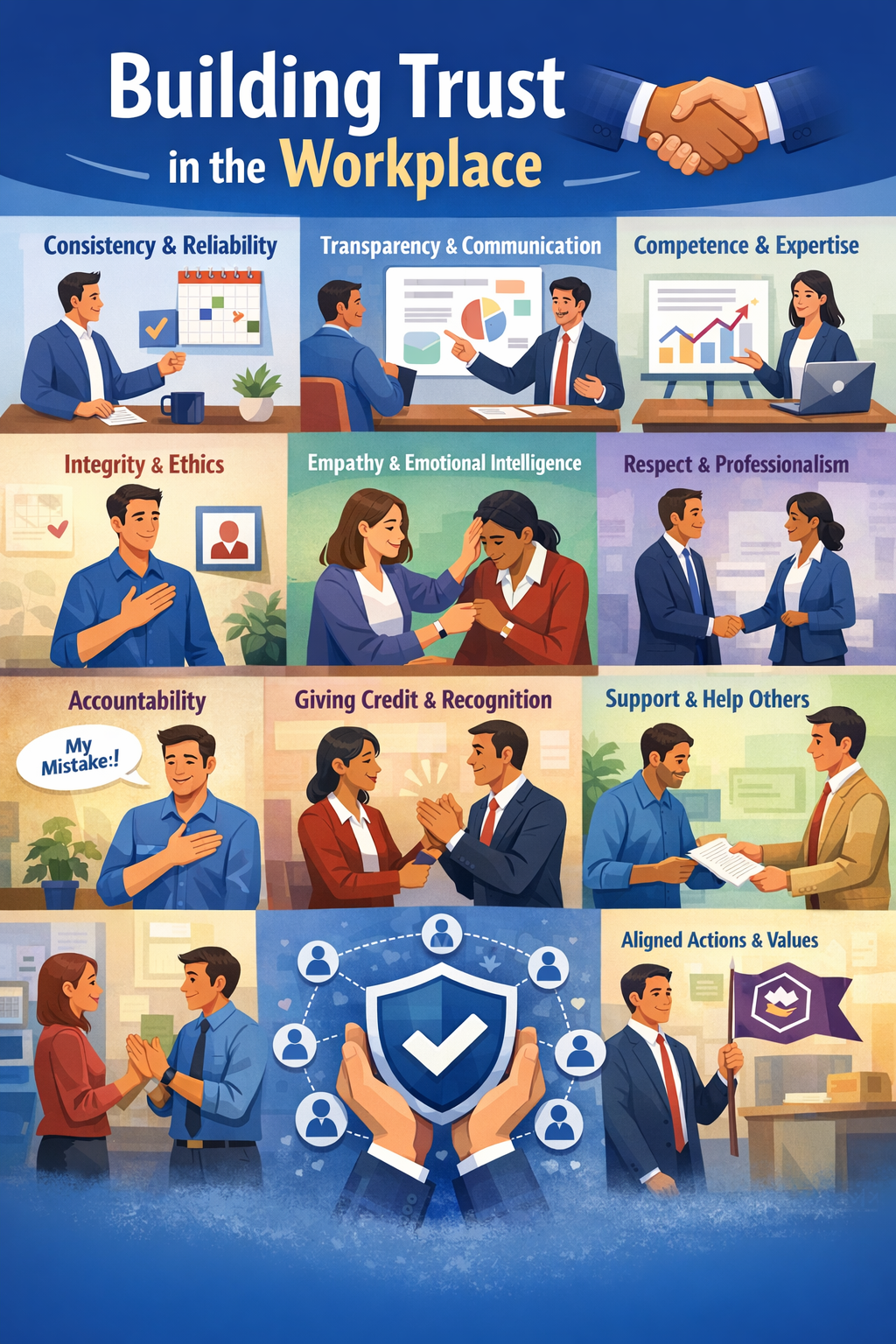
4. Integrity and Ethical Behavior Builds Trust
The strongest pillar of trust is integrity and ethical behavior. Integrity means you are always aligned with your values and principles and do not take any unethical shortcuts. In professional setting, if you openly admit your mistakes, take fair decisions and respect to confidential information, then people naturally rely on you. The meaning of ethical behavior is having clear sense of correct and incorrect and maintaining fairness in decision making.
People rely only those who are accountable for their responsibilities and role and do not compromise for personal gains. For example, if you know your team member has made a mistake and you honestly report it and suggest solution, then people naturally rely on your honesty and fairness.
5. Empathy and Emotional Intelligence
Empathy and emotional intelligence play the role of human connection in building trust. Empathy means that you understand the emotions of your colleagues and support them in their challenges. Emotional intelligence means you manage your emotions and take calm and rational decisions in stressful situations as well. In professional environment, people rely only on those people who show listening skills, understanding and supportive behavior.
If you are patient and understanding with team, resolve conflicts calmly and create positive work environment, then people naturally rely on you. For example, if a member of team is under pressure and you support him, share task and motivate him, then your empathy and emotional intelligence strengthen the trust of people.
You can also read “How to build trust through actions”.
Conclusion
Building trust in professional environments is not an overnight process; it is the result of consistent actions, integrity, competence, and genuine care for colleagues. Trust forms the foundation of strong working relationships, effective teamwork, and a positive organizational culture. By being reliable, transparent, empathetic, and ethical, professionals can earn the confidence and respect of their peers and leaders.
In the long run, trust enhances collaboration, reduces conflicts, and boosts productivity. Whether you are a team member, manager, or leader, investing in trust-building behaviors is one of the most valuable steps you can take for personal growth and career success. Remember, faith is earned through actions, not words, and maintaining it requires ongoing commitment and authenticity.
Read more such blogs here.






Comments
Be the first to leave a comment.