

Introduction: Negotiate Salary
Salary negotiation can be a tricky business for women. It should not be, but it often is. Discussions about compensation are, for many women, fraught with potential pitfalls that could damage one’s professional reputation.
A discussion about increased pay is perfectly normal and expected when building a thriving and sustainable career, but women may feel that speaking up will make them look greedy, loud, overbearing, or even rude. This does not have to be the case, however, as salary negotiations do not have to be combative by their very nature.
How Women Can Negotiate Salary Without Being Labeled Difficult?
1. Negotiate With Knowledge Of Your Value
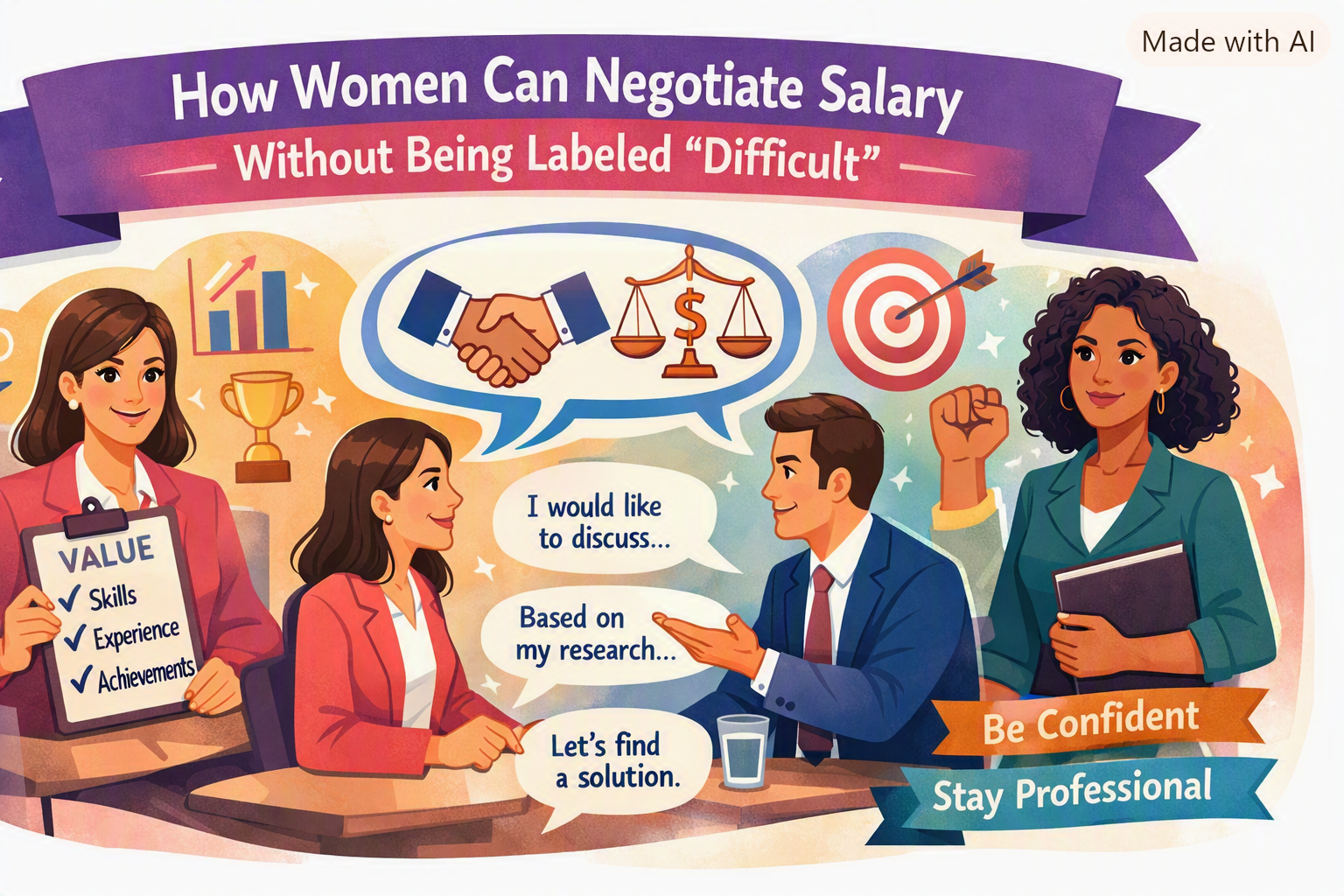
The first step to getting the salary you deserve is understanding how valuable you are to a company. This does not mean simply knowing how much money you are worth. Understanding your value means you must understand the organization’s needs on every level. Clients, employees, managers, and executives all have needs that drive the company. Knowing these needs and understanding how you and your skills fill that need, makes you knowledgeable of your value.
When you want to ask for a raise, do not say you deserve more money. Explain in exact detail how you increased sales, improved employee satisfaction, managed accounts, met goals, or went above and beyond your job description. Emphasizing how and quantifying your work shows how the company profits because of you.
Learn what your worth is. Do your research. Learn the salary range for your job and your experience level. Knowing what your worth is and what everyone else gets, prepares you to ask for what you deserve without coming off as demanding. This shows you are not coming into a negotiation blind, which is the last thing you would want.
2. Confident Language
If there is any uncertainty, women tend to think that negotiating will ruin their image. Using the right language shows your confidence.
Negotiating or asking for what you deserve is not being difficult. Saying “I require a higher salary” is not necessary. Saying “I believe compensation should reflect the responsibilities, experience, and results I provide to the company” is more effective.
Overall, be strong in your actions and in what you say without apology. You will be respected for your confidence. Do not apologize for speaking about something and doing something you know you deserve.
3. Paycheck Facts, Not Feelings
Your financial needs maybe genuine but they are a poor argument for a raise. Your employer evaluates an employee’s worth according to how much he/she contributes towards the company’s growth.
Explain clearly your argument for a wage increase based on responsibilities undertaken and achieved milestones. Where appropriate use examples to explain how your work performances can justify a raise. An ideal statement could be,
“Due to my expanded duties and new level of responsibility, I would like to discuss a salary adjustment effective immediately.”
4. Practice and Prepare
Being prepared can give you an enormous confidence boost. Practicing in front of a mirror or a friend/group of friends who are good at giving constructive feedback is important.
While preparing, one should also prepare possible answers to questions including:
Explain why you need a salary adjustment. What rate of increase or new salary do you want? State what you accomplished and how it reflects your contributions to the company. State what you are willing to accept if your needs can only be met partially. What options do you have?
Preparation offers a great advantage during the discussion. It also discourages backtracking, which may happen when one is nervous or feels undermined. It is advisable to avoid unnecessary tangents that may come about filling unsuitable pauses.
5. Do Not Fear Silence
One of the hardest negotiation skills to acquire is the ability to stop talking. Once you have stated your salary requirement, practice patience, and let the other party take the next step in the discussion.
Some job seekers, when faced with a prolonged pause, start arguing with themselves. They may reduce their expected pay by ten thousand, throw in several apologies for being so demanding, and so on.
Meanwhile, you should take a firm stand; it is best to formulate your requirements clearly and give the other party food for thought. In the meanwhile, you should take a firm position; it is best to clearly define your requirements so that the other side has food for thought. Silence is not a sign of disaster. It only means that both parties have a pause to deliberate.
6. More Than Just Pay Increases
Remember that sometimes the employer cannot raise your base pay.
It does not mean that the negotiations are over. You might want to discuss other compensation topics, such as profit-sharing plans, additional paid leave, flexible work schedules, study allowances, job title upgrades, stock options, or salary reviews after certain periods. If raising your base wage is out of the question, ask the employer what he or she would have to do to reconsider your pay in six months. This way, you have not closed the door on future salary talks.
Conclusion: Negotiate Salary
Women should not have to decide between being graceful and getting paid fairly, but unfortunately, they still do. Demanding what you want may not be the best way to negotiate your salary, but knowing what you want and stating it clearly and confidently will get you closer to achieving it than anything else.
Reminding yourself of all the ways in which you are worthy of the compensation you are asking for and backing it up with cold data will help you avoid feeling defensive and allow you to think through the discussion properly. You can be firm and polite, as long as you do not act like a bully.
“Salary negotiation is not being difficult—it’s advocating for your skills, experience, and value. Research market rates, prepare clear evidence of your impact, and communicate your expectations confidently and professionally. Strengthen your career and negotiate with confidence using Best Job Tool.”






Comments
Be the first to leave a comment.