

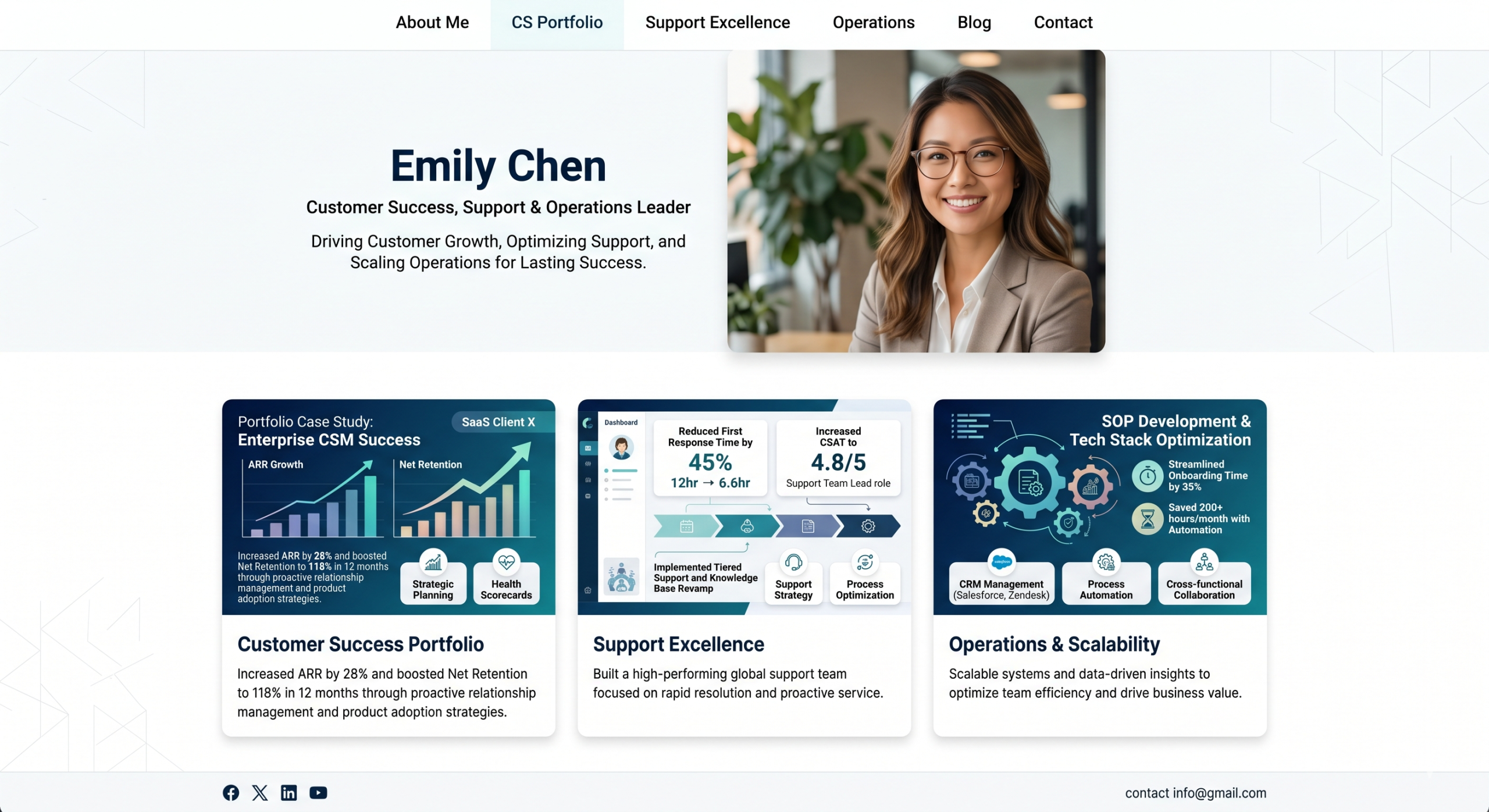
Introduction
In today’s competitive job market, having a strong resume is important, but it is often not enough. Employers hiring for customer success, customer support, and operations roles want to see proof of your abilities, problem-solving skills, and business impact. This is where a professional portfolio can make a significant difference.
A portfolio helps candidates showcase real examples of their work, demonstrate achievements, and provide evidence of the skills listed on their resumes. Whether you are a student, recent graduate, career changer, or experienced professional, creating a portfolio can strengthen your personal brand and improve your chances of securing interviews.
The good news is that you do not need years of experience to build a valuable portfolio. With the right projects and documentation, you can create a portfolio that highlights your strengths and shows employers how you can contribute to their organization.
Why a Portfolio Matters for Customer Success, Support, and Operations Roles
Many professionals assume portfolios are only useful for designers, developers, or writers. However, customer-facing and operations-focused roles increasingly require candidates to demonstrate practical skills.
A strong portfolio helps employers evaluate:
- Communication abilities
- Customer relationship management skills
- Problem-solving approaches
- Process improvement capabilities
- Organizational skills
- Data-driven decision making
- Project management experience
Instead of simply stating that you possess these skills, a portfolio provides tangible examples that support your claims.
Create Customer Success Case Studies
Customer success professionals are responsible for helping customers achieve value from a product or service. Employers want candidates who understand customer needs and can improve retention and satisfaction.
One of the best portfolio additions is a customer success case study.
Your case study can include:
- Customer goals and challenges
- Success strategy implementation
- Communication plans
- Onboarding processes
- Retention initiatives
- Performance measurements
Even if you do not have professional experience, you can create hypothetical case studies based on real business scenarios.
These projects demonstrate strategic thinking and customer-focused problem solving.
Build a Customer Onboarding Portfolio Project
Customer onboarding plays a critical role in customer success. Companies invest significant resources in creating smooth onboarding experiences because first impressions often determine long-term retention.
A customer onboarding portfolio project can showcase:
- Welcome workflows
- Customer training plans
- Communication schedules
- Success milestones
- Follow-up strategies
You can create onboarding frameworks for software companies, e-commerce businesses, educational platforms, or service-based organizations.
This type of project demonstrates your ability to guide customers toward successful outcomes.
Showcase Customer Support Documentation
Clear communication is one of the most important skills in customer support.
Creating support-related documentation can strengthen your portfolio while demonstrating professionalism and attention to detail.
Examples include:
Knowledge Base Articles
Develop helpful articles covering topics such as:
- Account setup
- Password recovery
- Product troubleshooting
- Billing support
- Frequently asked questions
Customer Email Templates
Create professional templates for common support situations.
Examples:
- Welcome messages
- Complaint responses
- Service updates
- Escalation notices
- Technical support communications
Chat Support Scripts
Develop customer service chat examples that demonstrate empathy, professionalism, and problem resolution skills.
These projects show employers that you understand customer communication best practices.
Include Operations Improvement Projects
Operations professionals are responsible for improving efficiency, reducing errors, and creating scalable systems.
Portfolio projects in this area can have a significant impact because they demonstrate business thinking and organizational abilities.
Examples include:
Workflow Optimization Projects
Analyze a common business process and suggest improvements.
Potential topics:
- Employee onboarding
- Customer service workflows
- Internal communication systems
- Project approval processes
Standard Operating Procedures (SOPs)
Create detailed SOPs for routine business activities.
Examples:
- New employee training
- Customer onboarding
- Team reporting processes
- Quality assurance procedures
Employers value candidates who can create clear, repeatable systems.
Demonstrate Data Analysis and Reporting Skills
Modern customer success and operations roles increasingly rely on data-driven decision making.
Including reporting and analytics projects can strengthen your portfolio significantly.
Examples include:
- Customer satisfaction analysis
- Support ticket trend reports
- Retention improvement recommendations
- Productivity tracking dashboards
- Process performance evaluations
You do not need access to company data. Public datasets or sample scenarios can help demonstrate your analytical abilities.
When presenting reports, focus on:
- Insights discovered
- Problems identified
- Recommended actions
- Expected business outcomes
This approach showcases critical thinking and decision-making skills.
Highlight Cross-Functional Collaboration Projects
Customer success, support, and operations teams regularly collaborate with other departments.
Creating portfolio examples that demonstrate teamwork can be highly valuable.
Potential project ideas include:
- Customer feedback implementation plans
- Product improvement recommendations
- Service quality enhancement strategies
- Internal communication frameworks
- Customer escalation workflows
These projects show that you understand how different departments work together to achieve business goals.
Employers often prioritize candidates who can communicate effectively across teams.
Use Metrics to Make Your Portfolio Stronger
One of the most effective ways to improve any portfolio is by including measurable outcomes.
Whenever possible, present projects with clear results and performance indicators.
Examples include:
- Reduced response times by 25%
- Improved customer satisfaction scores
- Increased onboarding completion rates
- Reduced process bottlenecks
- Improved team productivity
Numbers make achievements more credible and easier for recruiters to understand.
Even for hypothetical projects, you can estimate expected outcomes based on industry benchmarks and logical assumptions.
Build a Professional Online Portfolio
Creating excellent projects is only part of the process. Presentation matters just as much.
A professional portfolio should be:
- Easy to navigate
- Well organized
- Mobile friendly
- Visually clean
- Updated regularly
Popular platforms include:
- Personal websites
- LinkedIn Featured Section
- Notion
- Google Sites
- Portfolio PDFs
Each project should include:
- Project overview
- Objectives
- Approach taken
- Key insights
- Results or expected outcomes
This structure helps recruiters quickly evaluate your work.
Common Portfolio Mistakes to Avoid
Many professionals weaken their portfolios by making simple mistakes.
Avoid:
- Including unrelated projects
- Using overly technical language without explanation
- Focusing on responsibilities instead of outcomes
- Adding too much text with little structure
- Neglecting measurable results
- Failing to update content regularly
A focused portfolio with a few high-quality projects is often more effective than a large collection of average work.
Conclusion
A professional portfolio can become one of the most powerful tools for advancing a career in customer success, customer support, and operations. It provides employers with concrete evidence of your skills, problem-solving abilities, communication strengths, and business understanding.
Whether you are creating customer onboarding plans, support documentation, workflow improvements, data analysis reports, or operational frameworks, each project helps demonstrate your value in a practical and measurable way. By consistently building and refining your portfolio, you can stand out from other applicants and position yourself as a strong candidate for future opportunities. When you’re ready to explore new roles, BestJobTool can help connect you with employers seeking professionals who bring proven skills and real-world problem-solving capabilities.






Comments
Be the first to leave a comment.