

Introduction: Future of Office Real Estate
The workplace is changing. With an increasing number of people working from home or following hybrid and flexible schedules, companies are rethinking their approach to the office. That has had a major impact on the commercial real estate market, office rents, and the way workers use their jobs.
The Future of Office Real Estate and What It Means to Workers is a chance to look past empty office buildings and changing occupancy rates. This shift affects commutes, office culture, career paths, benefits, and much more.
The Future of Office Real Estate and What It Means for Workers?
1. The Traditional Office Is Being Displaced
For many years, the default assumption was that employees would show up at an office five days per week. Leases saw businesses dedicating large floor plates to individual desks, conference rooms, cafeterias, and more. Workers’ lives revolved around the commute.
Hybrid and remote work has disrupted this setup. By splitting time between home and the office, businesses may need fewer individual workstations. Instead, they could be replaced with fewer desks, meeting rooms, training hubs, and other shared facilities.
2. Hybrid Work Could Reshape Office Demand
As hybrid work becomes the new normal, offices will see changes in the way that workers show up. Some may come into the office for certain days, while others may reserve office space for specific projects.
For employees, this could result in a shift away from permanent workstations and towards shared desks and meeting areas. Instead of a fixed desk, employees may need to book workspace in advance.
However, less regular office visits could create scheduling and accessibility issues for hybrid workers. Businesses will need to ensure that they have consistent expectations about who shows up where when.
3. Smaller Offices Could Become More Common
Many businesses will likely reduce the size of their offices as leases renew, or as space requirements decline.
For workers, this means there will be fewer traditional corporate office spaces waiting for them when they arrive each morning. Instead, there could be a shift towards more compact, flexible offices that accommodate the needs of hybrid workers better.
It could also mean that the office is used for different purposes. Employees must need to move between meeting rooms, collaborative areas, and other shared offices as they get work done.
4. Office Design Could Focus More on Collaboration
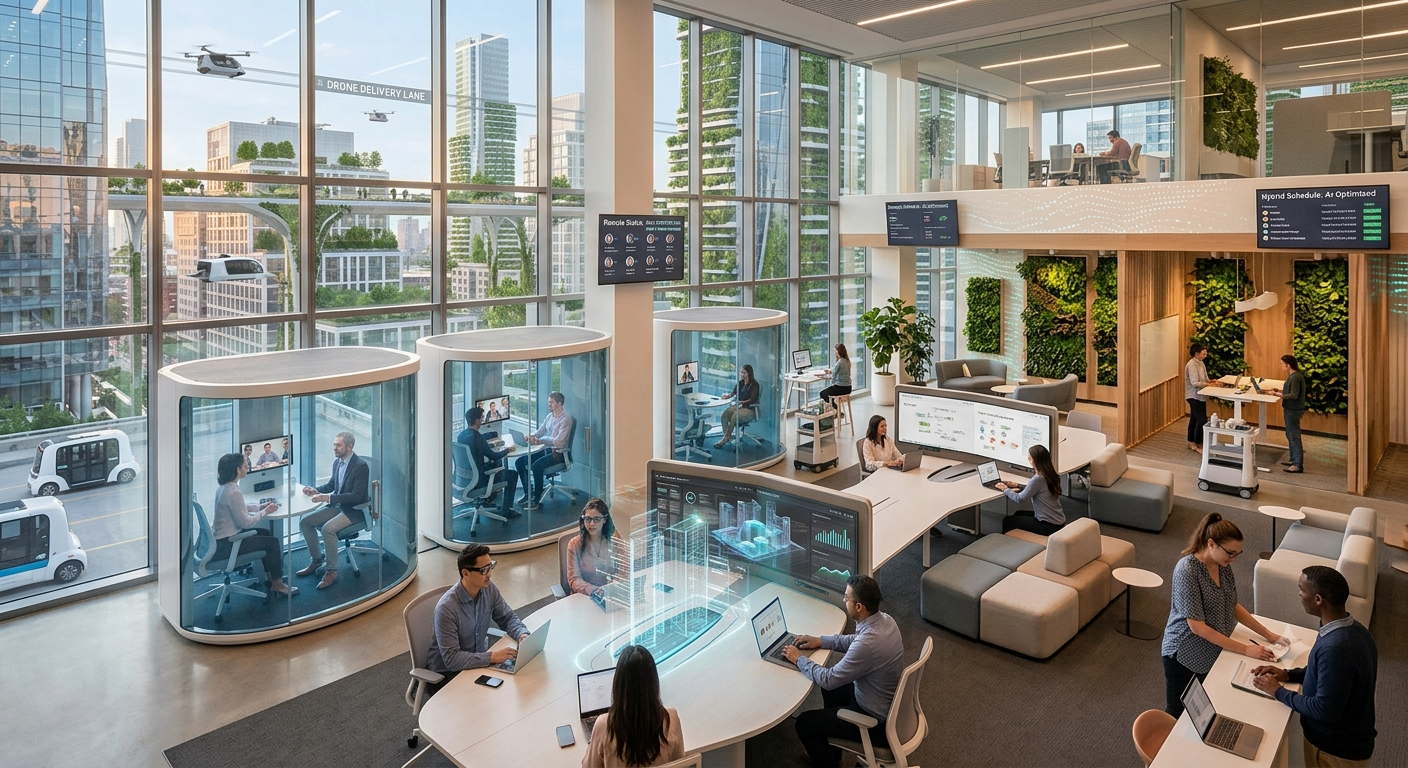
With people able to do their own work from home, offices could be used more for collaborative and group tasks. It could see businesses dedicating and resources to individual workstations, and more to brainstorming, informal meetings, project work, and socializing. In effect, offices would be designed with a greater emphasis on bringing people together, rather than accommodating everyone at once.
For workers, this could see their time spent in the office being used for different activities. They could spend more time visiting the office for meetings, mentoring, networking, and other activities that require in-person interaction.
5. Location Could Play a Bigger Role
The shifting demands of the office could have an impact on where businesses locate their offices. For some, this could see companies occupying smaller spaces in more desirable areas. Businesses may provide flexible workspaces, allowing hybrid workers to work from different locations.
6. A Shift Could Come in Communities
The office real estate market doesn’t exist in isolation. The presence of office workers in an area has a considerable impact on nearby restaurants, shopping, transport, and more.
Areas that were once dominated by office buildings may need to adapt if the traditional office disappears. Vacant commercial buildings can be repurposed for housing, hotels, and other services as demand dictated by nearby businesses change.
7. Workers May Need to Develop New Workplace Skills
Many of the changes linked to the future of office real estate will reshape workplace skills. Workers will need to learn to balance time spent in the office, and outside of it. Those that develop high digital communication skills, collaboration, time management, and direction will see more opportunity as companies continue to embrace more flexible working styles.
At the same time, personal interaction and collaboration can play a key role in maintaining relationships and productivity. Employees who understand how to navigate this hybrid environment are more likely to thrive in the changing office landscape.
8. Career Paths Could Become More Fluid
Attending an office can play a critical role in a worker’s ability to move upwards within a business. The ability to network, engage with colleagues, and demonstrate skills in a physical environment can provide a boost over purely remote employees.
As a result, businesses need to ensure that their internal career progression and promotion rules apply fairly to all workers, regardless of where they are employed.
Workers themselves need to take greater control of their careers and visibility within organizations, by ensuring that their achievements are known, and that they are engaging with colleagues and managers in person, where possible.
Conclusion: Future of Office Real Estate
The Future of Office Real Estate and What It Means to Workers looks at how the evolving office market fits into larger trends within the workplace. As companies continue to re-evaluate the way that they occupy office spaces, workers will find themselves working in more flexible environments. The office won’t disappear, but its function will continue to evolve from a space where individuals do their individual work, to a place suited to collaboration and connection.
For workers, the focus should be on flexibility. By understanding shifting office requirements, workplace skills, and employer expectations, they can adapt to the changing relationship between office real estate and the modern office.
The workplace is changing, and staying informed can help you prepare for new opportunities. Explore the Best Job Tool to discover relevant job opportunities, strengthen your career search, and take the next step toward your professional goals.






Comments
Be the first to leave a comment.