

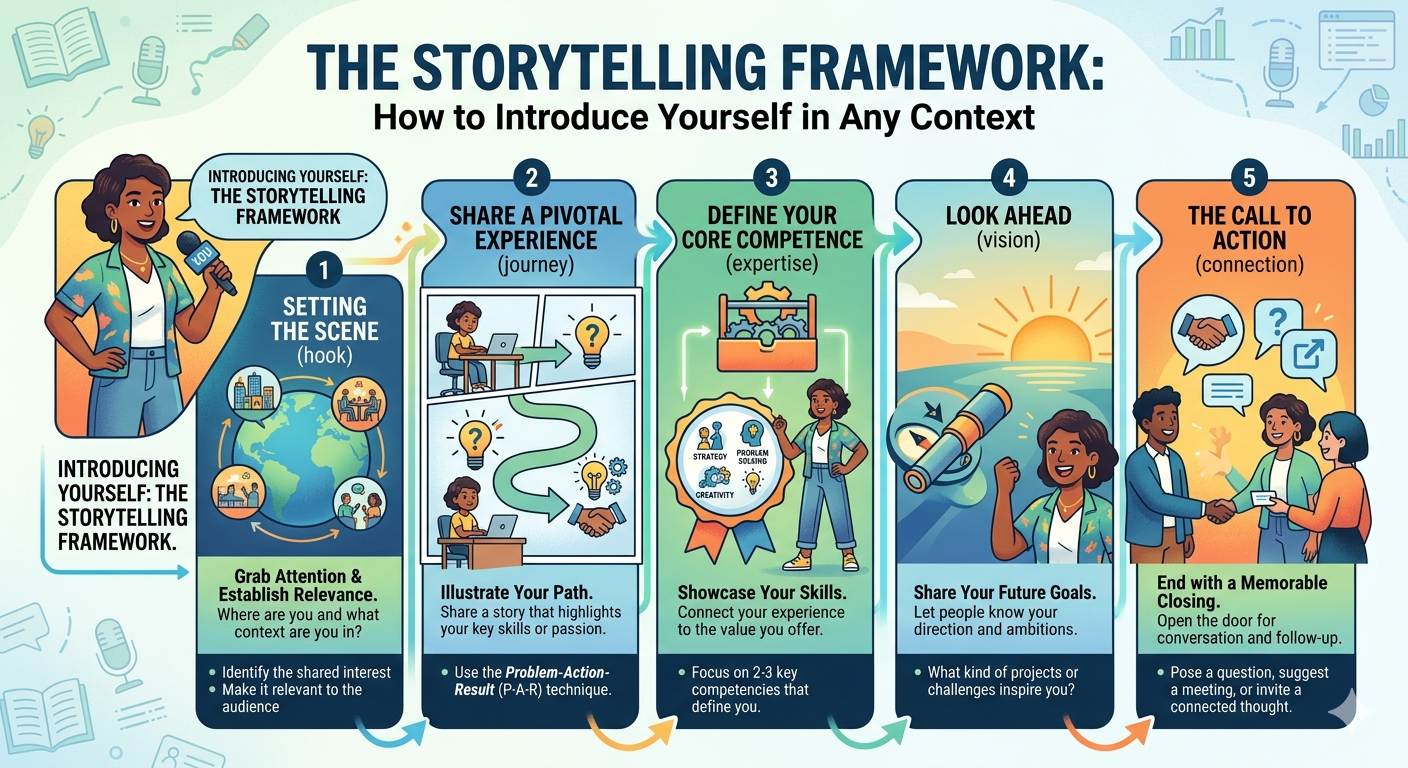
Introducing yourself sounds simple, but many people Framework struggle when the moment actually arrives. Whether it is a job interview, networking event, business meeting, conference, Storytelling classroom, or online interaction, self-introductions often create pressure and nervousness. Most people make the mistake of listing facts only. They mention their name, job title, education, and experience in a robotic way. While this provides information, it rarely creates connection or memorability.
This is where storytelling becomes powerful. A strong introduction is not just about sharing information. It is about creating interest, emotion, and relevance. People naturally remember stories more than plain facts.
Learning the storytelling framework to introduce yourself can improve communication skills, confidence, and professional relationships. A good introduction helps others understand who you are, what motivates you, and why your experience matters.
In this blog, we will explore how storytelling improves self-introductions, the structure of an effective introduction, common mistakes to avoid, and practical strategies you can use in any situation.
Why Storytelling Makes Introductions More Powerful
Human communication is built around stories. Since childhood, people connect emotionally with experiences, challenges, and personal journeys. Stories make conversations feel natural instead of formal or scripted.
Traditional introductions often sound repetitive because many people use similar formats. For example:
“Hi, my name is John. I am a marketing professional with five years of experience.”
This introduction provides information but does not create curiosity or emotional connection.
A storytelling-based introduction sounds more engaging:
“Hi, I’m John. I started my career managing a small local business page, and that experience made me realize how powerful digital marketing can be in helping brands grow online.”
The second version feels more human and memorable because it includes motivation and personal experience.
Storytelling also helps people communicate confidence naturally. Instead of trying to sound impressive, they focus on sharing authentic experiences and growth journeys.
In professional environments, storytelling improves:
- First impressions
- Networking conversations
- Interview performance
- Leadership communication
- Public speaking confidence
- Personal branding
- Relationship building
Strong storytelling does not require dramatic life experiences. Even simple career journeys can become meaningful when structured effectively.
The Simple Storytelling Framework for Self-Introductions
A powerful self-introduction usually follows a simple structure. This framework keeps the introduction organized, engaging, and easy to remember.
The 4-Part Storytelling Framework
- Who you are
- What sparked your journey
- What you do now
- What excites you moving forward
This structure creates flow instead of random information.
Step 1: Start With Your Identity
Begin with your name and current role or background.
Example:
“Hi, I’m Sarah, and I work as a graphic designer focused on social media branding.”
Keep this part short and clear.
Step 2: Share the Starting Point
Explain what inspired your journey or interest.
Example:
“I originally became interested in design while helping small local businesses create promotional content during college.”
This adds personality and context.
Step 3: Explain What You Do Today
Talk briefly about your current focus or expertise.
Example:
“Today, I help brands build visual identities that improve engagement and online visibility.”
This demonstrates professional value naturally.
Step 4: End With Forward-Looking Energy
Finish with enthusiasm about future goals or interests.
Example:
“I’m especially excited about combining branding with AI-driven content strategies in the future.”
This ending creates positivity and opens conversation opportunities.
How to Adjust Your Introduction for Different Situations
A good introduction should adapt to the environment. The way you introduce yourself in a job interview will differ from a casual networking event.
For Job Interviews
Focus on experience, achievements, and career motivation.
Keep the structure professional and relevant to the role.
For Networking Events
Make the tone conversational and engaging.
Focus on shared interests and industry connections.
For College or Classroom Introductions
Highlight learning goals, interests, and aspirations.
Keep the tone friendly and approachable.
For Online Meetings
Use shorter introductions because virtual meetings often move quickly.
Mention your role and one interesting detail about your work.
For Leadership or Public Speaking
Focus on credibility, experience, and mission.
Show confidence without sounding overly formal.
Adapting your storytelling style helps people connect with you more naturally in different situations.
Common Mistakes People Make During Self-Introductions
Many self-introductions fail because people either provide too little information or overload listeners with unnecessary details.
Here are common mistakes to avoid:
- Speaking too long
- Sounding overly scripted
- Sharing irrelevant details
- Talking too fast
- Using complicated language
- Listing achievements only
- Forgetting enthusiasm
- Sounding robotic or rehearsed
Another mistake is trying too hard to impress people. Confidence does not come from exaggeration. It comes from clarity and authenticity.
Some people also apologize unnecessarily during introductions, using phrases like:
- “I’m not very experienced.”
- “I’m probably not the best person here.”
- “I don’t have much to say.”
These statements reduce confidence immediately.
Strong introductions should feel calm, positive, and natural.
How Storytelling Builds Confidence in Communication
Many people believe confident speakers are naturally talented, but confidence often comes from preparation and structure.
Storytelling frameworks help reduce anxiety because they provide direction. Instead of wondering what to say next, speakers simply follow a logical flow.
Storytelling also shifts focus away from self-judgment. Rather than trying to sound perfect, people focus on sharing experiences and conversations.
Confidence improves when introductions become more personal and meaningful.
Benefits of Storytelling for Confidence
- Easier conversation flow
- Reduced nervousness
- Better audience connection
- Improved memory retention
- More natural speaking style
- Stronger emotional engagement
Practicing introductions regularly also improves delivery over time. Repeating the same structure helps speakers become more comfortable and polished.
Recording yourself, practicing with friends, or rehearsing before meetings can significantly improve communication quality.
Small improvements in self-introductions often create major improvements in professional confidence.
Examples of Storytelling Introductions
Understanding real examples makes the framework easier to apply.
Example for a Marketing Professional
“Hi, I’m Daniel. I first became interested in marketing while helping a family business promote products online during the pandemic. That experience showed me how digital strategies can directly impact growth. Today, I work on content and performance marketing campaigns for startups, and I’m excited about how AI tools are transforming customer engagement.”
Example for a Student
“Hello, I’m Priya, currently studying computer science. I became interested in technology after learning basic coding through online tutorials during school. Since then, I’ve worked on small web development projects and continue exploring AI and software design.”
Example for a Freelancer
“Hi, I’m Alex, a freelance video editor. I originally started editing videos as a hobby for gaming content, but over time I realized storytelling through visuals was something I genuinely enjoyed. Today, I help creators and brands produce engaging short-form content for social media.”
These introductions feel memorable because they include personal journeys instead of only titles and qualifications.
How to Practice and Improve Your Introduction
Improvement comes through repetition and self-awareness. Even strong communicators continuously refine their introductions over time.
Helpful practice methods include:
- Recording your introduction
- Practicing in front of mirrors
- Joining networking groups
- Attending speaking events
- Practicing with friends
- Watching professional speakers
- Improving body language
Body language also affects introductions significantly. Maintaining eye contact, smiling naturally, and speaking clearly improves confidence and engagement.
Another helpful strategy is keeping introductions flexible. Instead of memorizing exact sentences, remember key points and adapt naturally during conversations.
This prevents introductions from sounding rehearsed or robotic.
With regular practice, storytelling-based introductions become easier and more authentic.
Conclusion
Learning the storytelling framework to introduce yourself can transform the way people perceive and remember you. Instead of giving robotic facts or overly formal descriptions, storytelling helps create connection, clarity, and authenticity.
A strong introduction is not about impressing people with complicated achievements. It is about helping others understand your journey, motivations, and professional direction in a simple and engaging way.
Using a structured storytelling approach makes introductions feel more natural in interviews, networking events, meetings, classrooms, and professional conversations. It also improves confidence by providing clear communication flow.
The most memorable introductions often combine simplicity, personality, best job tool and purpose. Sharing experiences, motivations, and future excitement helps people connect emotionally and professionally.
Whether you are a student, freelancer, job seeker, entrepreneur, or experienced professional, mastering storytelling introductions can improve communication skills and open new opportunities. With practice and consistency, anyone can create introductions that leave a lasting positive impression.






Comments
Be the first to leave a comment.