

Introduction
In today’s fast world, everyone wants success quickly. We see people getting promotions at a young age. We see entrepreneurs becoming rich in a few years. On social media, it looks like everyone is moving fast. Because of this, many people think that career speed is everything. They believe that if they are not growing fast, they are failing.
But this is not true.
In reality, career momentum matters more than speed. Moving forward consistently is more important than moving forward quickly. A person who builds steady progress will often reach further than someone who rushes without direction.
In this article, we will understand what career momentum means, why it is more important than speed, and how you can build strong momentum in your own career.
What Is Career Speed?
Career speed means how fast you grow in your job or profession. For example:
- Getting promoted quickly
- Changing jobs every year for higher salary
- Becoming a manager at a young age
- Starting a business and earning fast profits
Speed focuses on quick results. It looks impressive from the outside. People often praise fast success because it feels exciting.
But speed has a problem. It is not always stable.
If you move fast without building strong skills, experience, and confidence, you may struggle later. Speed can give quick growth, but it does not always give long-term strength.
What Is Career Momentum?
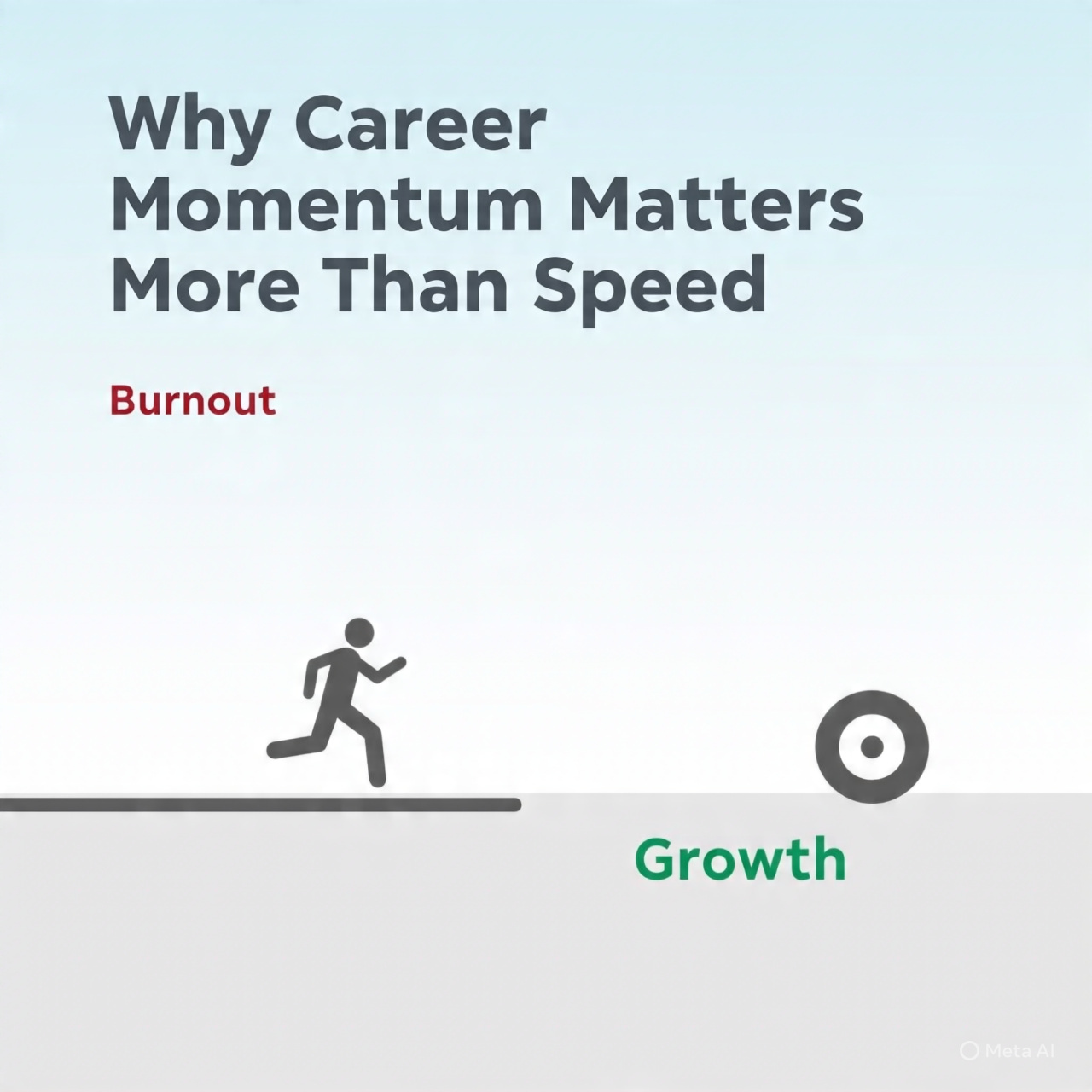
Career momentum means steady and continuous progress over time. It is not about how fast you grow. It is about whether you keep moving forward in the right direction.
Momentum includes:
- Learning new skills regularly
- Improving your thinking ability
- Building strong relationships
- Taking small but consistent steps
- Gaining real experience
Momentum is like pushing a heavy object. At first, it moves slowly. But once it starts moving, it becomes easier to keep going. The same happens in a career. When you build habits, skills, and confidence, growth becomes natural.
Why Career Momentum Matters More Than Speed?
1. Speed Can Be Temporary, Career Momentum Is Sustainable
Speed often depends on external factors:
- Market trends
- Company growth
- Luck
- Timing
For example, someone may join a fast-growing company and get promoted quickly. But if the company struggles, their growth may stop.
Momentum, on the other hand, depends on internal factors:
- Your skills
- Your discipline
- Your mindset
- Your learning habit
These things stay with you even if you change jobs or industries. That is why momentum is more powerful. It does not depend only on outside conditions.
2. Fast Growth Can Create Pressure
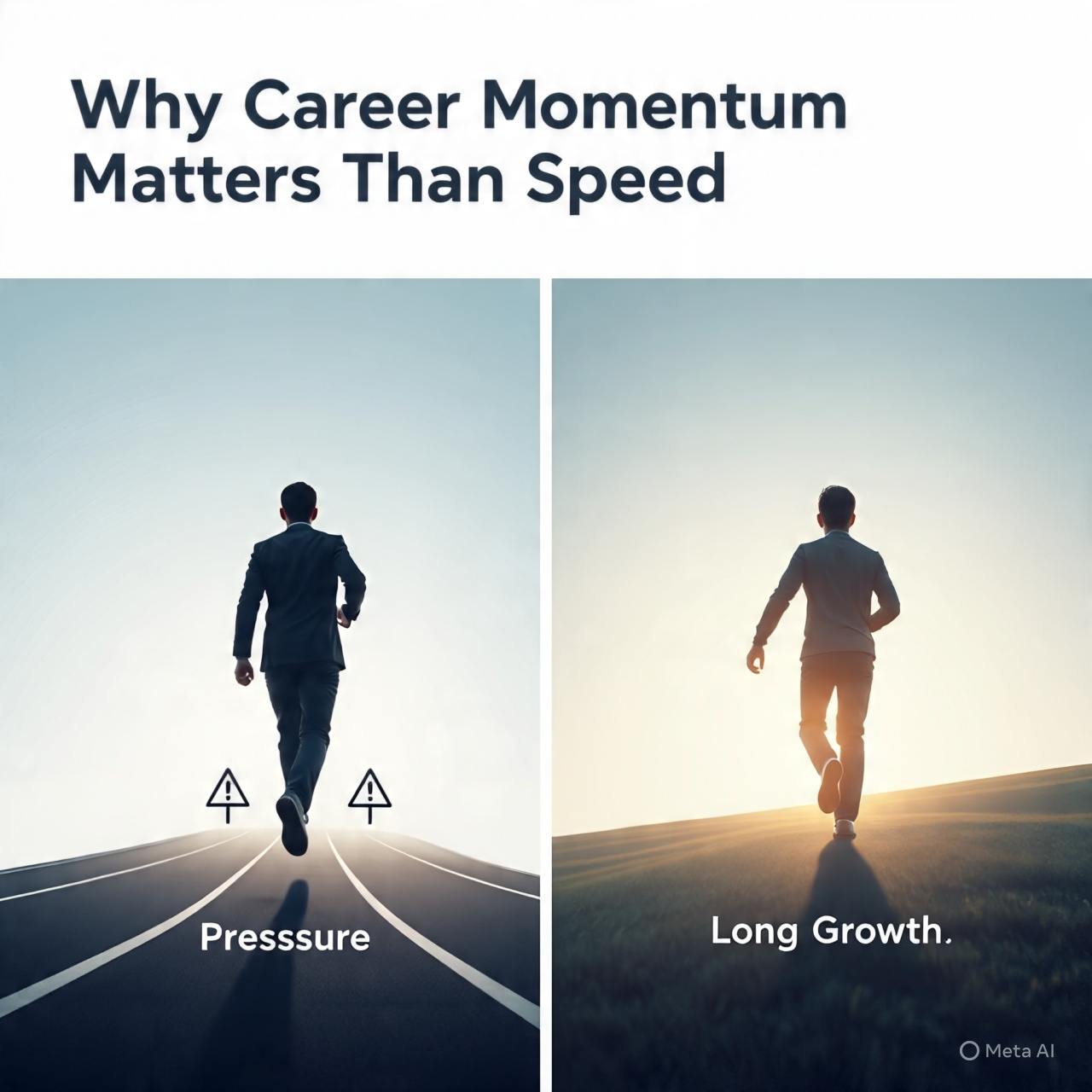
When growth is too fast, pressure also increases quickly.
Imagine someone who becomes a team leader in just one year without learning proper communication or problem-solving skills. They may feel stressed. They may doubt themselves. They may feel fear of losing their position.
Speed without preparation creates anxiety.
Momentum allows you to grow step by step. You learn from small challenges before facing big ones. You build confidence naturally. So when you reach a higher position, you are ready for it.
3. Career Momentum Builds Strong Foundations
A building cannot stand without a strong foundation. The same is true for a career.
Momentum helps you:
- Understand your industry deeply
- Improve your practical knowledge
- Learn from mistakes
- Develop emotional intelligence
- Build patience
These foundations help you survive difficult times. Speed may give quick rewards, but without foundation, growth can collapse.
4. Career Momentum Creates Skill Compounding
When you improve one skill, it supports another skill. This is called compounding.
For example:
- Better communication improves teamwork
- Better thinking improves decision making
- Better time management improves productivity
Over time, these small improvements create big results.
If you focus only on speed, you may ignore deep learning. But if you focus on momentum, your skills keep improving. After a few years, you may suddenly realize how far you have come.
5. Comparison Makes Speed Look Important
One big reason people chase speed is comparison.
Social media platforms like LinkedIn and Instagram show success stories every day. We see promotions, awards, job changes, and achievements. But we do not see the struggles behind them.
When we compare our slow progress to someone else’s fast progress, we feel behind.
But every career journey is different. Some people start early. Some start late. Some have support. Some struggle alone.
Momentum means focusing on your own growth instead of comparing your timeline with others.
6. Speed Can Lead to Burnout
When someone tries to grow too fast, they may:
- Take too many responsibilities
- Work long hours without rest
- Ignore health
- Say yes to everything
This can lead to burnout. Burnout reduces motivation and energy. It can even make a person want to quit their job completely.
Momentum respects balance. It allows rest, reflection, and recovery. It values long-term growth more than short-term success.
7. Career Momentum Improves Confidence Naturally
Confidence does not come from titles. It comes from competence.
If you slowly improve your skills, solve problems, and handle challenges, your confidence grows naturally. You do not need to prove yourself again and again.
But if you grow too fast without experience, you may feel insecure. You may fear being exposed as not capable enough.
Momentum builds real confidence because it is based on real ability.
8. Career Momentum Helps You Handle Setbacks
Every career has setbacks:
- Rejected job applications
- Failed interviews
- Business losses
- Project failures
If your mindset is focused only on speed, a setback feels like a disaster. You may feel that everything is over.
But if you focus on momentum, a setback is just a small pause. You know that progress is long-term. One failure does not stop your journey.
Momentum gives emotional stability.
9. Slow Growth Is Not Equal to No Growth
Many people think that if they are not growing fast, they are not growing at all.
But small growth matters:
- Reading 10 pages daily
- Learning one new concept every week
- Improving communication little by little
- Expanding network slowly
After one year, these small actions create big change.
Momentum is about respecting small progress.
Conclusion
Career speed can give quick results, but it is not always sustainable. Fast growth without preparation can create stress, insecurity, and burnout.
Career momentum, on the other hand, builds strong foundations. It improves skills step by step. It creates confidence, reputation, and emotional stability. It helps you survive setbacks and grow consistently.
Instead of asking, “How fast am I growing?” ask, “Am I moving forward every month?”
Because in the long run, steady progress beats fast progress.
Career momentum matters more than speed.






Comments
Be the first to leave a comment.