

Introduction
Clarity is not just about knowing your job title. It is about understanding your strengths, interests, values, skills, and goals. It answers important questions like:
- What kind of work do I enjoy?
- What skills do I want to use daily?
- What type of growth do I expect in the next 5–10 years?
- What kind of lifestyle do I want from my career?
When you have clear answers to these questions, your career decisions become easier and more confident. You stop following trends blindly and start making choices that align with your personal vision, which help you to beat complexity in interviews.
Why Clarity Beats Complexity in Interviews?
1. Shows Clear Thinking
One of the biggest benefits of clarity is better decision-making. When you know your goals, you stop overthinking every opportunity.
You can easily decide:
Which jobs to apply for
Which offers to accept or reject
Which skills to learn next
Which companies match your values
Without clarity, every decision feels risky. You keep asking others what you should do because you don’t trust your own judgment.
2. Clear Candidates Understand the Role Better
Clear candidates have proper understanding of roles. They know about their responsibilities, expectations, and important skills for the role. That’s why they give relevant and confident answers in the interview.
These candidates have clear focus, that’s why they do not remain confuse between the unmatched things. Hiring managers feel that this candidate understand the job seriously and can perform effectively after joining.
3. Clarity Helps in Planning and Action
Clarity is not just limited to thinking, it also help you take action, when you know your goal and the steps you will take, then you can create a concrete plan and follow it. Through this, you can reduce uncertainty and anxiety because you do not wait, instead take steps actively for your career growth, for example, if you want leadership role, then clarity will guide you, what skills you need to first improve, how to handle projects and which mentorship opportunities you should follow.
4. Boosts Confidence and Self-Awareness
Clarity makes you aware about your strengths, weaknesses, and interests. When you know in which thing you are strong and where you need improvement, you feel confident in your decisions and actions.
Self-awareness also means that you are able to understand your values and priorities and does not take stress from peer pressure or societal expectations. When you create a clear roadmap for you, anxiety reduces.
5. Minimizes External Pressure
When you have a clear idea about your goals and priorities, then you do not influence much from others’ opinions and societal expectations. Many people feel stress because of their family, friends, or peer pressure.
However, clarity keeps you grounded with your priorities and interests, and you are able to take decisions confidently, which is meaningful only for you. It reduces anxiety automatically because you do not compare your growth and journey with anyone else.
6. Clarity Helps You Handle Rejection Better
Rejections hurt more when you are unsure of your path. When you lack clarity, every rejection feels personal. You start doubting your abilities and self-worth.
With clarity, you understand that rejection is not rejection of you, but of fit. You know the right opportunity will align with your goals. This mindset keeps you motivated and emotionally balanced during job searches.
You can read “Why Hiring Managers Prefer Clarity Over Experience” to gain more knowledge.
Conclusion
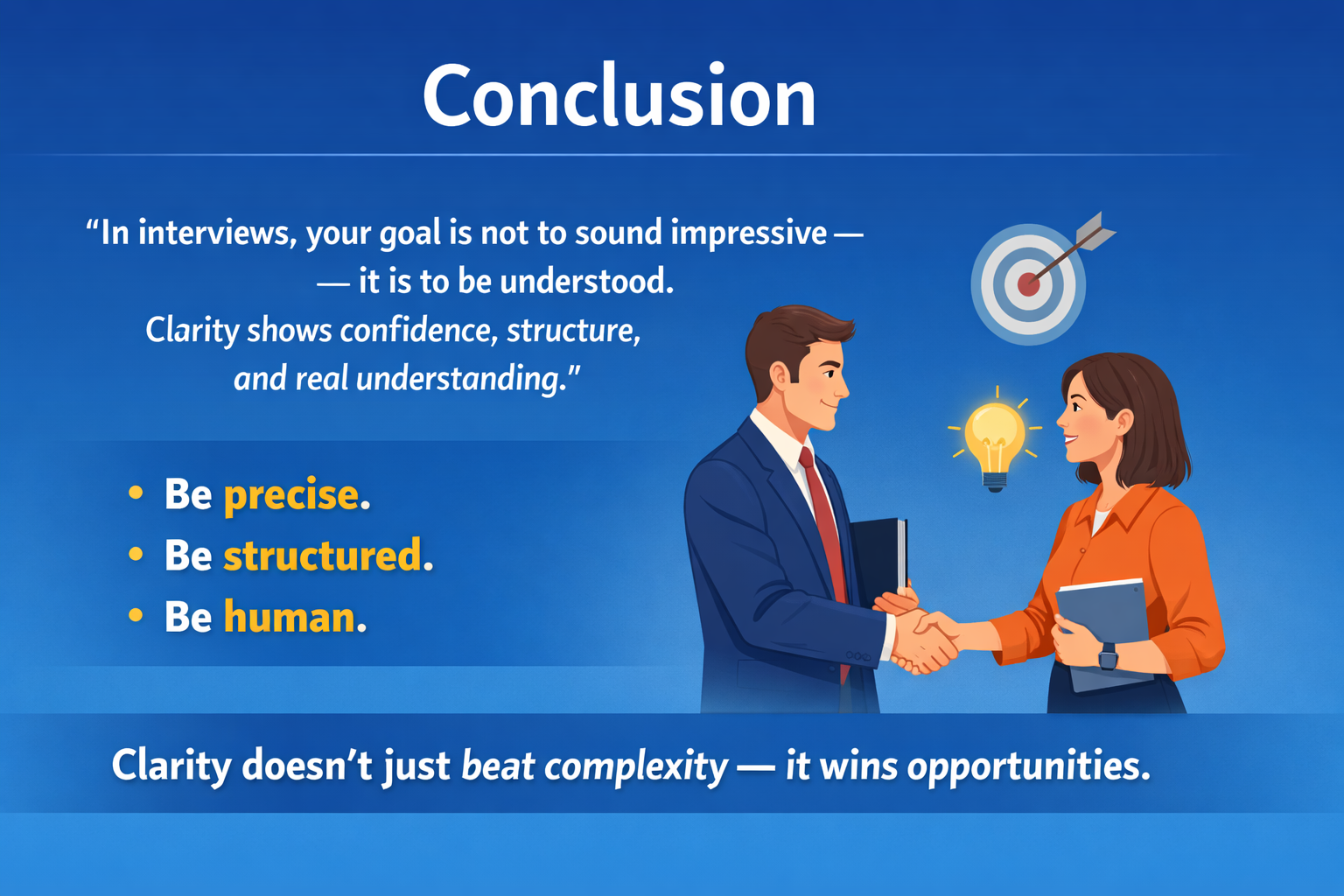
In interviews, your goal is not to sound impressive — it is to be understood. Clarity is powerful because it shows confidence, structured thinking, and real understanding. When you communicate clearly, interviewers don’t have to decode your message. They immediately see your value.
Complexity often feels smart, but it can create distance. Clarity builds connection. It makes your experience relatable, your achievements believable, and your personality authentic. In a competitive job market where many candidates have similar qualifications, the person who explains their impact simply and confidently stands out.
Remember, interviews are conversations, not presentations. The candidate who speaks with focus, structure, and intention leaves a stronger impression than the one who overwhelms with jargon.
So the next time you prepare for an interview, aim for this:
Be precise. Be structured. Be human.
Because in interviews, clarity doesn’t just beat complexity — it wins opportunities.
To explore more such blogs, visit here.






Comments
Be the first to leave a comment.