

Introduction
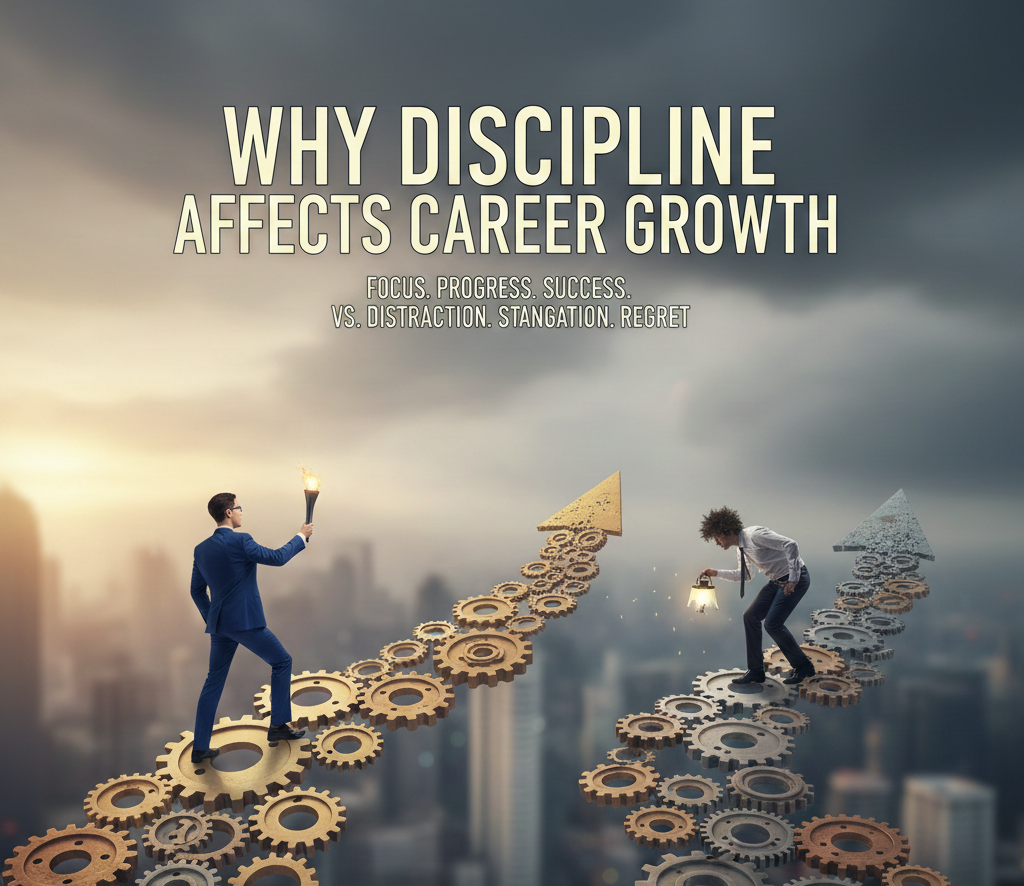
Many professionals believe career growth depends mainly on talent, connections, or luck. While these factors can help, they rarely sustain long-term success. What truly separates consistent performers from average ones is discipline. That is why understanding why discipline affects career growth is essential for anyone serious about building a strong career.
Discipline shapes how you work when motivation fades. It defines how you respond to pressure, deadlines, and responsibility. Over time, disciplined actions compound into visible progress.
This blog explains why discipline affects career growth at every stage and how it quietly influences opportunities, trust, and advancement.
Understanding discipline in a professional context
Discipline in the workplace is not about strict rules or punishment. It is about consistency in behavior, effort, and decision-making. It means doing what needs to be done even when it feels uncomfortable.
Professionally disciplined individuals manage time well, follow through on commitments, and maintain focus. They do not rely on bursts of motivation. Instead, they build habits that support performance.
This consistency explains why discipline affects career growth more reliably than short-term enthusiasm.
Discipline creates reliability, and reliability builds trust
Trust is the foundation of career growth. Managers promote people they can rely on. Teams depend on those who deliver consistently.
Discipline ensures that deadlines are met and quality remains stable. Over time, this creates a reputation for dependability. Once trust is established, responsibilities increase naturally.
When leaders know they can count on you, they invest in your growth. That is a key reason why discipline affects career growth so strongly.
Why discipline matters more than raw talent
Talent can open doors, but discipline keeps them open. Many talented professionals fail to grow because they lack consistency.
Without discipline, talent becomes unpredictable. Performance fluctuates, and trust weakens. Employers prefer steady performers over inconsistent high-potential individuals.
Disciplined professionals may not always be the most gifted, but they improve steadily. Over time, this growth surpasses raw talent without structure.
This reality reinforces why discipline affects career growth more than natural ability alone.
Discipline improves focus in a distracted workplace
Modern workplaces are full of distractions. Notifications, meetings, and constant communication fragment attention.
Discipline helps professionals protect focus. It allows them to prioritize tasks and manage time intentionally. Focused work produces higher-quality outcomes.
Employees who manage distractions effectively stand out. Their productivity becomes visible. This visibility contributes directly to recognition and advancement.
How discipline shapes daily work habits
Career growth is built through daily actions, not rare breakthroughs. Discipline influences how you start your day, organize tasks, and close commitments.
Consistent habits reduce stress and improve efficiency. Small actions, repeated daily, create measurable progress over time.
These habits compound quietly. Eventually, results speak louder than intentions. This long-term impact explains why discipline affects career growth deeply.
Discipline strengthens accountability and ownership
Accountability is highly valued in professional environments. Disciplined individuals take ownership of their work.
They do not blame circumstances or others when challenges arise. Instead, they focus on solutions and learning. This mindset earns respect from peers and managers.
Ownership leads to leadership opportunities. Leaders are expected to model discipline consistently. Accountability bridges individual contribution and leadership growth.
The link between discipline and skill development
Skills do not develop overnight. Learning requires repetition, practice, and patience. Discipline provides all three.
Professionals who commit to continuous learning schedule time for improvement. They practice even when progress feels slow.
Over time, disciplined learning creates expertise. Expertise leads to better roles and higher responsibility. This connection further explains why discipline affects career growth so directly.
Discipline during difficult and boring phases
Not every phase of work is exciting. Some tasks feel repetitive or challenging. Discipline keeps professionals moving forward during these phases.
Those who rely only on motivation often stall when work becomes dull. Disciplined individuals continue regardless of mood.
This resilience separates long-term achievers from short-term performers. Employers notice who stays consistent when conditions are not ideal.
How discipline influences promotions and opportunities
Promotions are rarely based on effort alone. They are based on observed behavior over time.
Disciplined employees demonstrate consistency, responsibility, and growth. Managers feel confident promoting them because risk is lower.
Opportunities often arise quietly. Disciplined professionals are prepared when they appear. Readiness meets opportunity through consistent effort.
This pattern shows clearly why discipline affects career growth across industries.
Discipline builds professional credibility
Credibility is earned through actions, not claims. Disciplined professionals align words with behavior.
When you consistently deliver on commitments, credibility strengthens. Colleagues and leaders take your input seriously.
Credibility leads to influence. Influence leads to growth. Discipline forms the base of this progression.
The role of discipline in leadership development
Leadership demands self-control and consistency. Leaders must manage emotions, decisions, and time effectively.
Discipline prepares professionals for these demands. It strengthens decision-making under pressure and maintains stability during uncertainty.
Many leadership failures stem from lack of discipline rather than lack of knowledge. That is why disciplined professionals transition into leadership more smoothly.
Discipline supports adaptability during change
Work environments change constantly. New tools, strategies, and expectations appear regularly.
Disciplined individuals adapt faster because they commit to learning and adjustment. They follow through during transitions rather than resisting them.
Adaptability strengthens career resilience. This resilience ensures continued relevance and growth.
Why discipline matters in remote and hybrid work
Remote work requires self-management. Without supervision, discipline becomes essential.
Professionals who manage time well and communicate consistently succeed remotely. Those without discipline struggle with productivity and accountability.
As flexible work models grow, discipline becomes even more valuable. This trend highlights why discipline affects career growth in modern workplaces.
Discipline and long-term career stability
Career stability depends on relevance and reliability. Discipline supports both.
Consistent performance protects against sudden setbacks. It builds a track record that employers respect.
During uncertain times, disciplined professionals recover faster. Stability strengthens confidence and career longevity.
Common misconceptions about discipline
Many people view discipline as restrictive. In reality, discipline creates freedom. It reduces chaos and decision fatigue.
Another misconception is that discipline kills creativity. However, structure often supports creative thinking by reducing distractions.
Understanding discipline correctly helps professionals embrace it rather than resist it.
How to build discipline intentionally
Discipline develops through small, repeatable actions. It starts with setting realistic goals and honoring them.
Tracking progress improves awareness. Adjusting habits gradually ensures sustainability.
Over time, discipline becomes automatic. It shifts from effort to identity.
Discipline as a personal brand signal
Employers and colleagues form opinions based on behavior. Discipline sends a strong signal of professionalism.
It shows maturity, responsibility, and seriousness toward work. These traits influence how others perceive your potential.
Personal brand growth depends heavily on disciplined behavior over time.
Discipline outperforms motivation in the long run
Motivation fluctuates. Discipline remains stable.
Professionals who depend on motivation struggle during low-energy periods. Disciplined individuals continue regardless.
This consistency creates predictable success. Predictability builds trust. Trust fuels growth.
Why discipline affects career growth across all stages
Early career professionals use discipline to learn and prove reliability. Mid-career professionals use it to manage complexity. Senior professionals use it to lead effectively.
At every stage, discipline adapts but remains essential. Career growth is not linear, but discipline provides direction.
This universal relevance explains why discipline affects career growth more than any single skill.
Conclusion
Career growth rarely happens by accident. It is built through consistent actions, habits, and choices. That is why discipline affects career growth more than talent, luck, or connections.
Discipline builds trust, focus, credibility, and adaptability. It supports learning, leadership, and long-term stability. Over time, disciplined effort compounds into visible success.
To apply discipline in the right opportunities and environments, explore roles through the best job tool and align your habits with careers that reward consistency.
Find Your Dream Job Today – Explore Endless Career Opportunities and Secure Your Next Role with Best Job Tool.






Comments
Be the first to leave a comment.