


Introduction
In today’s world, many people depend on validation from others. They want appreciation, likes, praise, and approval before they feel good about themselves. Whether it is in school, at work, or on social media, people often measure their worth based on what others think about them. But this habit can become dangerous over time.
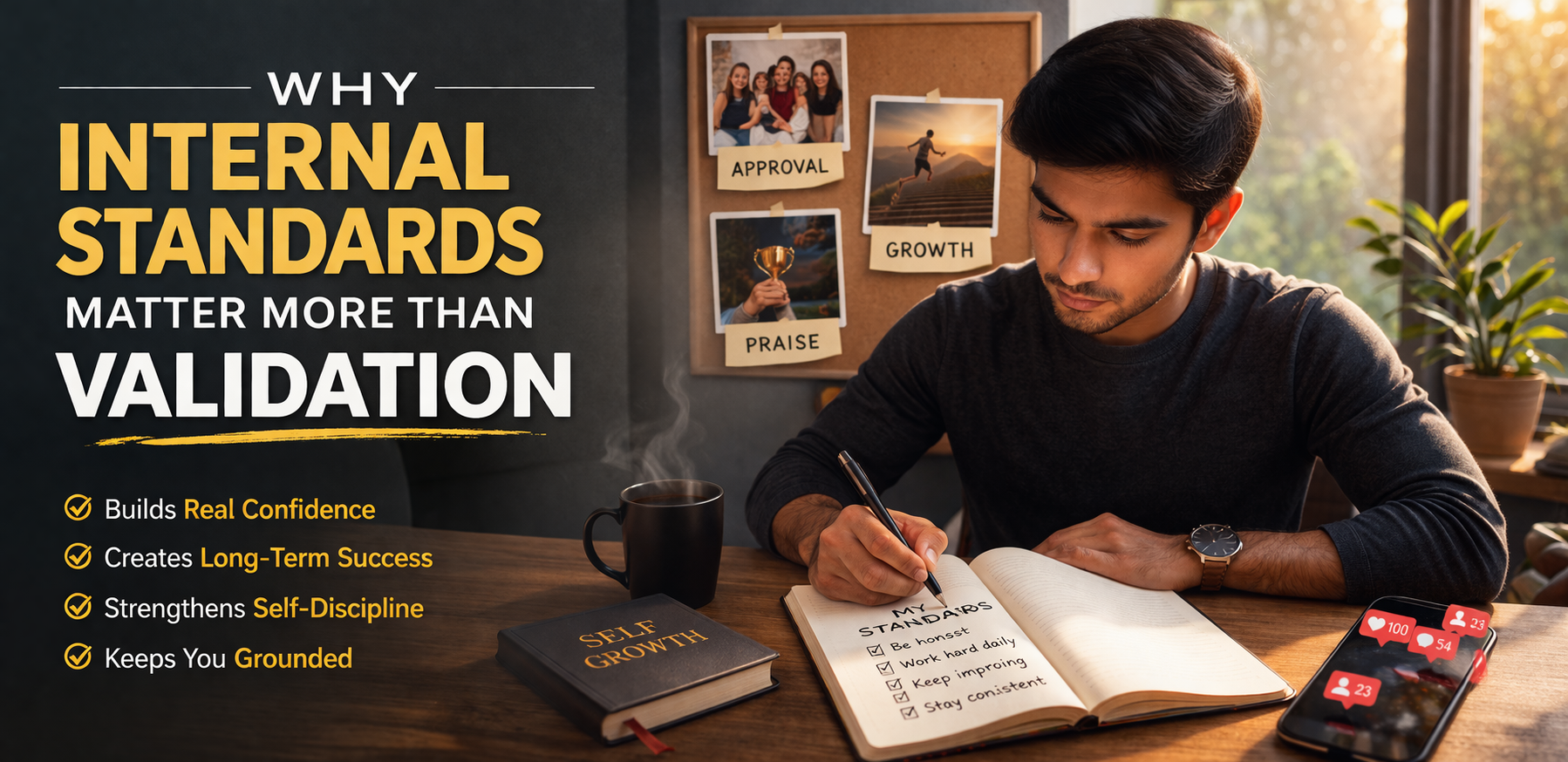
The truth is, internal standards matter more than validation. When you depend only on validation, your confidence becomes weak and unstable. But when you build strong internal standards, your confidence becomes strong and permanent.
In this article, we will understand what internal standards are, what validation means, and why internal standards are more important for long-term success and personal growth.
What Are Internal Standards?
Internal standards are the rules and values that you set for yourself. These standards guide your behavior, decisions, and actions. They come from your beliefs, discipline, and personal goals.
For example:
- Completing your work on time even when no one is watching
- Being honest even when lying is easier
- Practicing daily to improve your skills
- Giving your best effort without expecting praise
Internal standard is personal. They are not controlled by others. They are based on what you think is right and important.
What Is Validation?
Validation means approval or recognition from others. It can come in many forms:
- Compliments from people
- Likes and comments on social media
- Praise from teachers, bosses, or friends
- Awards or recognition
Validation feels good. It motivates us and gives us confidence. But the problem starts when we depend on validation too much.
When your happiness depends on others’ approval, you lose control over your emotions and decisions.
Why Internal Standards Matter More?
1. Internal Standards Build Strong Confidence
When you follow your own standards, you don’t need approval to feel good. You know your effort and your progress.
For example:
- You complete your task properly → you feel satisfied
- You improve your skills → you feel proud
This confidence comes from within and is not affected by others’ opinions.
2. You Become Self-Disciplined
Internal standards require discipline. When you set rules for yourself and follow them, you build consistency.
For example:
- Writing every day
- Learning new skills regularly
- Staying committed to your goals
Discipline helps you grow even when motivation is low.
3. You Stay Consistent
Validation is not consistent. Sometimes people appreciate you, sometimes they don’t. But internal standards remain stable.
When you follow your standards:
- You work even without praise
- You improve even without recognition
Consistency leads to long-term success.
4. You Make Better Decisions Because of Internal Standards
When you depend on validation, your decisions are influenced by others. But internal standards help you think clearly.
You ask yourself:
- “Is this right?”
- “Does this match my values?”
- “Will this help me grow?”
This leads to better and smarter choices.
5. You Become Emotionally Strong
Internal standards protect your emotions. You don’t feel broken because of criticism or ignored because of lack of praise.
Instead, you focus on your effort and improvement.
This makes you mentally strong and stable.
6. You Build a Strong Identity
When you follow your internal standards, you understand yourself better. You know:
- What you believe in
- What matters to you
- What kind of person you want to become
This builds a strong identity.
Conclusion
In life, people will always have opinions. Sometimes they will support you, sometimes they will not. If you depend on validation, your confidence will always be unstable.
But when you build strong internal standard, you take control of your life. You work with discipline, stay consistent, and grow continuously.
Validation may feel good for a moment, but it build a strong future.
So instead of asking:
“What do people think about me?”
Start asking:
“Am I meeting my own standards?”
That is the real path to confidence, growth, and success.






Comments
Be the first to leave a comment.