

Introduction
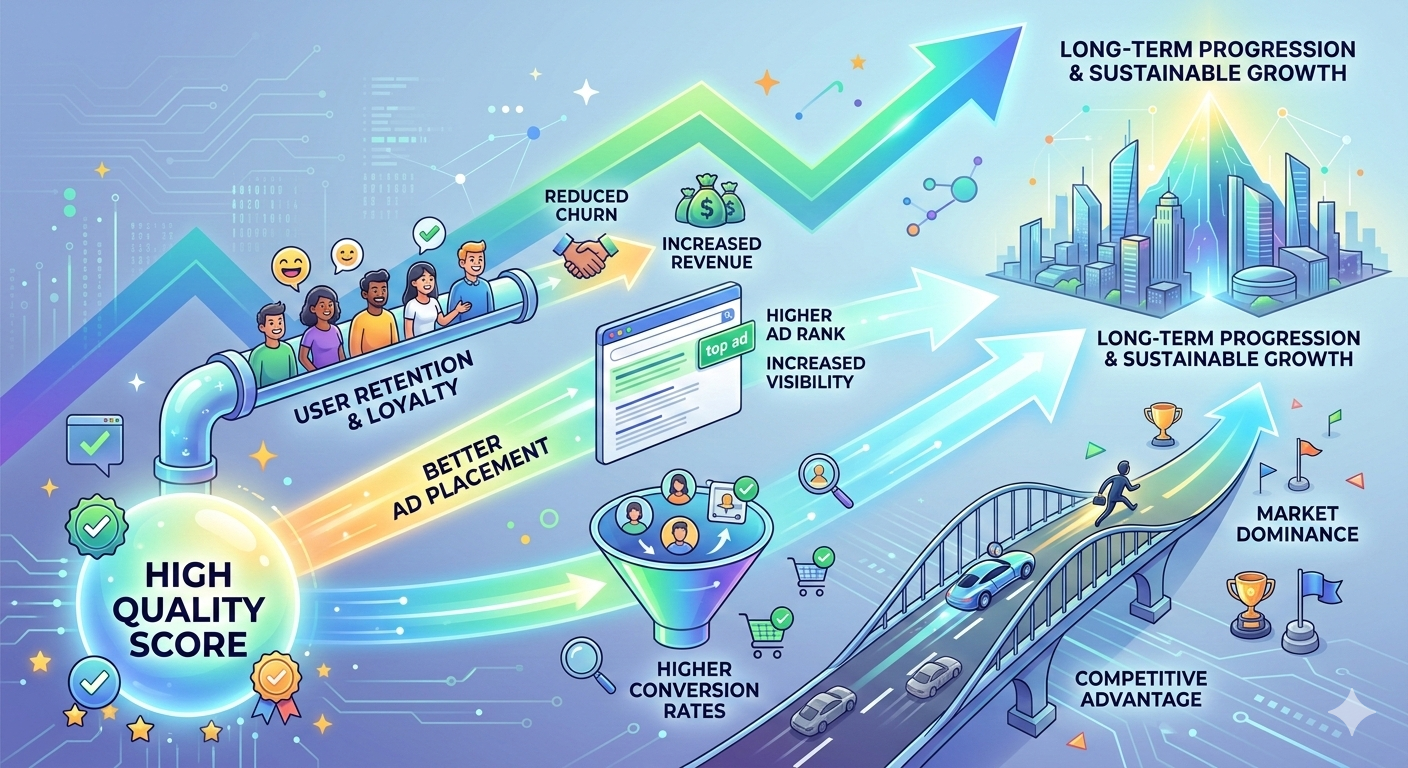
In performance-driven organizations, long-term career growth is rarely based on effort alone. Companies increasingly rely on measurable indicators to evaluate reliability, consistency, and professional impact over time. Among these indicators, quality scores stand out because they reflect how accurately and consistently an employee performs their responsibilities. This is especially important in support, operations, service, and process-oriented roles where errors directly affect business outcomes. That is exactly why quality scores influence long-term progression more than short-term achievements or occasional high performance. Quality scores create a performance history that leadership uses to assess trust, readiness, and growth potential.
Quality Scores Reflect Consistency Over Time
Consistency builds professional credibility
Quality scores are not just snapshots of performance. They represent sustained behavior across weeks, months, and review cycles. Employees who maintain consistent accuracy, clear communication, and process adherence develop strong professional credibility. Managers observe long-term patterns rather than isolated results, and stable quality metrics signal dependability. Over time, this consistency positions employees as reliable contributors who can handle increased responsibility without constant supervision.
Stability matters more than occasional high output
Organizations prefer predictable performers over inconsistent high achievers. An employee who delivers steady quality work is often considered more valuable than one who shows irregular performance spikes. Stable quality scores demonstrate discipline, attention to detail, and operational maturity, all of which are critical for long-term progression.
Quality Scores Strengthen Managerial Trust
Data-backed trust influences promotion decisions
Leadership teams rely on documented performance data when making promotion and appraisal decisions. High quality scores act as measurable proof of reliability and professionalism. When an employee consistently performs well according to quality benchmarks, managers gain confidence in assigning complex responsibilities. This trust is not built overnight but through repeated evidence of dependable performance.
Reduced supervision increases growth opportunities
Employees with strong quality records require less monitoring and correction. This independence allows managers to delegate more strategic tasks and leadership responsibilities. Over time, reduced supervision becomes a key factor in career advancement.
Impact on Performance Evaluations and Appraisals
Quality metrics shape formal review outcomes
Most structured organizations include quality-related KPIs such as accuracy, compliance, resolution effectiveness, and customer satisfaction in performance reviews. These metrics heavily influence appraisal ratings and growth discussions. Even highly productive employees may face slower progression if their quality scores remain inconsistent, because organizations prioritize sustainable excellence over speed alone.
Balanced performance leads to stronger evaluations
Employees who maintain both productivity and quality achieve stronger performance evaluations. This balance signals that they can deliver results without compromising standards, which is essential for leadership readiness.
Quality Scores Reduce Perceived Operational Risk
Reliable performance lowers promotion risk
Promotions involve risk from a managerial perspective. Assigning critical responsibilities to employees with inconsistent quality can impact team performance and service standards. High quality scores reduce this perceived risk by demonstrating accuracy, accountability, and process discipline. As a result, such employees are more likely to be trusted with leadership roles and strategic assignments.
Accuracy signals readiness for complex roles
Employees who consistently meet quality benchmarks are seen as capable of handling complex workflows, escalations, and decision-making scenarios. This perception directly supports long-term career progression.
Influence on Internal Reputation and Visibility
Strong quality metrics enhance internal perception
Quality dashboards and performance reports are frequently reviewed by managers, team leads, and leadership teams. Employees with consistently strong quality scores gain a reputation for being detail-oriented and dependable. This positive internal image increases their chances of being selected for high-impact projects, training programs, and leadership tracks.
Visibility leads to strategic opportunities
When performance data consistently highlights strong quality, employees become more visible within the organization. Increased visibility often translates into faster career growth and expanded responsibilities.
Role of Quality Trends in Career Development
Improvement trends signal growth mindset
Quality scores are not static. They reflect performance trends over time. Employees who show steady improvement in their quality metrics demonstrate adaptability, learning ability, and professional commitment. Leadership teams value this growth pattern because it indicates long-term potential rather than temporary performance.
Continuous improvement supports leadership readiness
Professionals who actively improve their quality scores are often considered future leaders. Their performance history shows that they can learn, adapt, and maintain standards under evolving expectations.
Connection Between Quality and Customer Impact
Service quality directly affects satisfaction
In customer-facing roles, quality scores often include customer satisfaction ratings, communication clarity, and resolution effectiveness. High-quality interactions improve customer trust and brand perception. Employees who consistently deliver high service quality become valuable long-term assets for the organization.
Customer-focused performance strengthens progression
Organizations reward employees who maintain high-quality customer experiences because their work directly contributes to retention and business growth. This strengthens their promotion potential.
Pathway to Specialized and Leadership Roles
Quality performance opens advanced career paths
Employees with strong quality metrics are often considered for roles such as quality analyst, trainer, team lead, or operations coordinator. Their performance history demonstrates their ability to maintain standards while guiding others. This creates a natural transition toward leadership and strategic positions.
Mentorship opportunities emerge from strong quality records
High-performing employees are frequently trusted with mentoring new team members and improving process quality. These responsibilities act as stepping stones toward long-term leadership growth.
Conclusion
Long-term career progression is driven by consistent credibility rather than short-term effort or output alone. That is precisely why quality scores influence long-term progression in structured and performance-driven work environments. They build managerial trust, reduce operational risk, strengthen performance evaluations, and enhance internal reputation. Employees who focus on accuracy, consistency, and continuous improvement position themselves for sustainable career growth, leadership opportunities, and long-term professional success.
Find Your Dream Job Today – Explore Endless Career Opportunities and Secure Your Next Role with Best Job Tool.






Comments
Be the first to leave a comment.