

Introduction: Why Resilience Matters in an Uncertain World
The modern job market is changing faster than ever before. Industries are evolving, technology is reshaping how businesses operate, and economic shifts can affect entire professions almost overnight. In such an unpredictable environment, resilience has become one of the most versatility important qualities for long-term career success.
Resilience is the ability to adapt, recover, and continue moving forward even when circumstances become difficult. Whether someone faces job loss, industry changes, financial uncertainty, or workplace challenges, resilience helps them stay focused and find new opportunities.
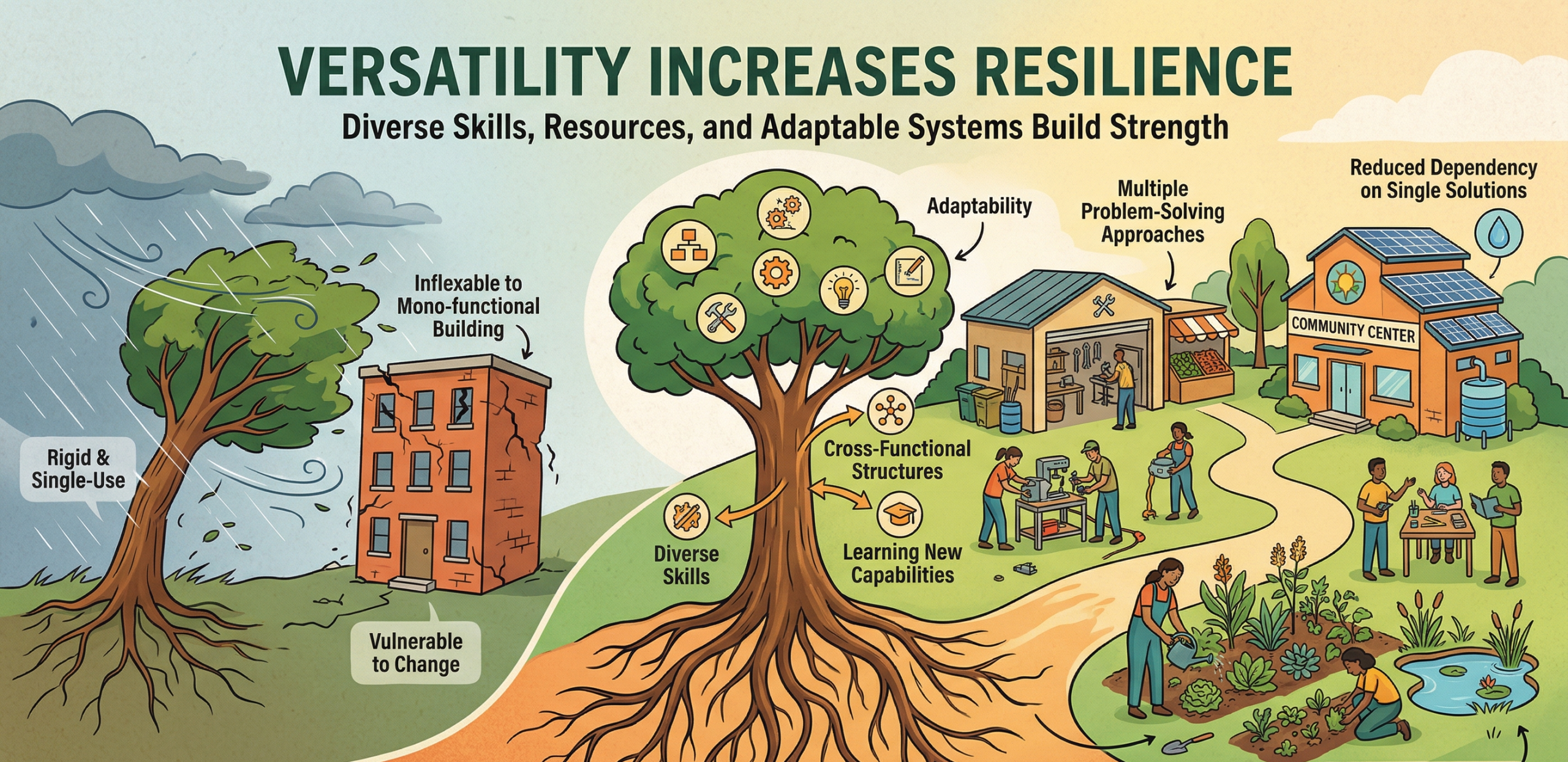
One of the strongest ways to build resilience is through versatility. People who develop a wide range of skills, experiences, and knowledge are often better prepared to handle change. Instead of relying on a single strength or one career path, versatile professionals can adjust, pivot, and continue growing.
In a world where change is constant, versatility increases versatility resilience by helping people remain valuable, adaptable, and confident no matter what challenges they face.
Understanding the Link Between Versatility and Career Stability
Versatility means having the ability to perform different roles, learn new skills, and adapt to various situations. It is not about being an expert in everything. Instead, it is about developing enough knowledge and flexibility to respond effectively when circumstances change.
Career stability no longer comes from staying in one position for decades. Today, stability often comes from being able to move between industries, learn new tools, and take on different responsibilities. A person with versatile skills is less likely to become irrelevant because they can continue adding value in different environments.
For example, a marketing professional who understands data analysis, content creation, and project management is more resilient than someone who only specializes in one narrow area. If one skill becomes less important, they still have other strengths to rely on.
Versatility increases resilience because it gives people more ways to remain employable, productive, and useful during periods of uncertainty.
How Multiple Skills Create More Opportunities
Having multiple skills opens the door to more career opportunities. Employers are increasingly looking for professionals who can contribute in different ways instead of focusing on a single task.
A person with knowledge of communication, leadership, digital tools, and problem-solving can fit into a variety of roles. They may qualify for positions in management, operations, marketing, customer service, or strategy. This broader range of opportunities makes it easier to recover from setbacks and find new paths when one option no longer works.
Versatile professionals are also more likely to succeed in freelance work, remote jobs, and entrepreneurship. Since they can manage different responsibilities, they are often able to work independently and handle changing demands.
For example, someone with writing, graphic design, and social media management skills can build a stronger freelance career than someone who only has one technical skill. Multiple abilities create flexibility, and flexibility often leads to greater resilience.
Why Adaptable Professionals Recover Faster from Setbacks
Setbacks are a normal part of every career. People may lose jobs, miss promotions, face company layoffs, or struggle with industry changes. The difference between staying stuck and moving forward often depends on adaptability.
Adaptable professionals recover faster because they are willing to learn, adjust, and explore new directions. Instead of seeing change as a threat, they see it as an opportunity to grow.
For example, when automation affects certain roles, adaptable workers can learn new technologies and shift into positions that require updated skills. During economic downturns, they may be able to move into different industries where demand is still strong.
Versatility increases resilience because it reduces the fear of change. People who know they can learn new skills and take on different responsibilities often feel more confident when facing difficult situations.
Rather than depending on one fixed identity, versatile professionals build careers that can evolve with the world around them.
The Role of Versatility in Changing Industries
Almost every industry is changing because of technology, automation, and shifting customer expectations. Professionals who resist change may struggle to remain relevant, while those who embrace versatility are more likely to succeed.
In industries such as healthcare, finance, education, marketing, and technology, employees are expected to do more than ever before. They may need to understand digital tools, collaborate across teams, analyze data, and communicate effectively.
For example, a teacher who understands online learning platforms and digital content creation has more opportunities than someone who only relies on traditional classroom methods. Similarly, a salesperson who can use customer relationship management tools, interpret analytics, and build online relationships becomes more valuable.
Versatility increases resilience because it allows professionals to stay useful even when industries evolve. Instead of becoming outdated, they continue developing the skills that match current market needs.
Can Cross-Functional Knowledge Improve Long-Term Success?
Cross-functional knowledge means understanding how different areas of a business work together. A professional who knows about marketing, sales, operations, finance, and customer service can often make better decisions and contribute more effectively.
This type of knowledge improves long-term success because it creates a broader perspective. People who understand multiple functions are often better at problem-solving, communication, and leadership.
For example, a manager who understands both finance and customer experience can make decisions that improve profitability without harming service quality. A content writer who understands search engine optimization, analytics, and branding can create more effective campaigns.
Cross-functional knowledge also makes people more valuable to employers. They can step into different roles, support multiple teams, and respond quickly when business priorities change.
Versatility increases resilience because it prepares people for leadership, career transitions, and future opportunities.
Building Confidence Through Diverse Experiences
Confidence is often built through experience. When people work in different roles, industries, or environments, they become more comfortable handling unfamiliar situations.
Diverse experiences teach people how to solve problems, communicate with different personalities, and stay calm under pressure. They also show that change is manageable.
Someone who has worked in customer service, sales, and operations may feel more prepared to take on leadership responsibilities because they have already learned how different parts of a business function.
Versatile professionals are often more confident because they know they can adapt. They trust their ability to learn new systems, handle unexpected challenges, and succeed in different situations.
This confidence is an important part of resilience. People who believe they can overcome obstacles are more likely to keep moving forward even when times are difficult.
Why Employers Value Flexible and Multi-Skilled Professionals
Employers value people who can adapt quickly and contribute in multiple ways. Businesses often face changing priorities, tight budgets, and unexpected challenges. In these situations, flexible employees become extremely valuable.
A multi-skilled professional can help different teams, learn new systems faster, and take on extra responsibilities when needed. They reduce the need for constant hiring because they can fill gaps across different areas of the business.
For example, a professional who can manage projects, communicate with clients, and analyze data offers more value than someone who only performs one narrow task.
Employers also see versatile workers as future leaders because they understand different aspects of the organization. Their flexibility makes them better at solving problems and guiding teams through change.
Versatility increases resilience because it strengthens job security and creates more room for career growth.
Case Studies: People Who Thrived by Expanding Their Skill Sets
Many successful professionals became resilient by expanding their skill sets over time.
entity[“known_celebrity”,”Oprah Winfrey”,”Media entrepreneur and television host”] started her career in local television but later expanded into publishing, acting, production, and business leadership. Her versatility allowed her to remain influential across multiple industries.
entity[“known_celebrity”,”Elon Musk”,”Technology entrepreneur and business leader”] built expertise in software, engineering, finance, and manufacturing. His ability to apply knowledge across different industries helped him create successful businesses in transportation, energy, and space exploration.
entity[“known_celebrity”,”Sara Blakely”,”Founder of Spanx”] combined sales skills, creativity, branding, and business strategy to build a successful company. Her willingness to learn different areas of business contributed to her long-term success.
These examples show that versatility increases resilience because it helps people respond to change, overcome setbacks, and create new opportunities.
Conclusion: Versatility as the Foundation of Resilience
The future belongs to people who are willing to learn, adapt, and grow. In a rapidly changing world, relying on one skill or one career path is no longer enough.
Versatility increases resilience by giving people more options, greater confidence, and stronger long-term career stability. It helps professionals recover from setbacks, succeed in changing industries, and remain valuable in different situations. Best Job Tool
People who invest in multiple skills, cross-functional knowledge, and diverse experiences are often better prepared for uncertainty. They can adapt faster, solve problems more effectively, and create opportunities even during difficult times.
Ultimately, versatility is not just about doing more things. It is about building the resilience needed to thrive in any environment.






Comments
Be the first to leave a comment.