

Introduction
Career planning has shifted from static goal-setting to dynamic, data-driven strategy. With rapid changes in job markets, skills demand, and remote work opportunities, professionals can no longer rely on traditional long-term plans alone.
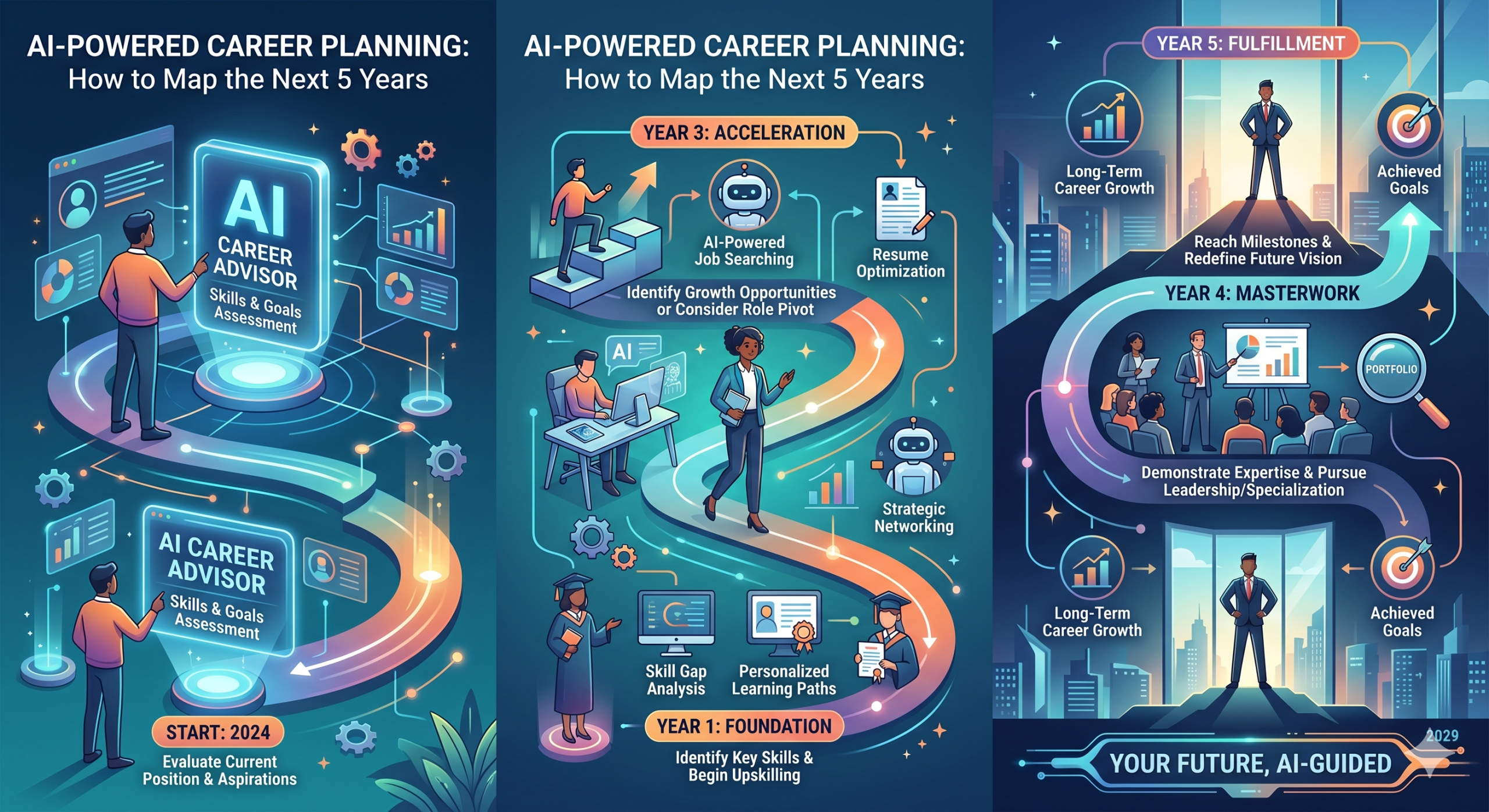
Artificial intelligence is transforming how individuals analyze career paths, identify opportunities, and make informed decisions. Instead of guessing future trends, you can now use AI tools to map a structured, adaptable 5-year career roadmap.
This approach combines clarity, flexibility, and measurable progress.
Understand What AI-Powered Career Planning Means
AI-powered career planning involves using intelligent tools and data insights to guide career decisions. Instead of relying solely on intuition, professionals use analytics to understand market trends, skill gaps, and growth opportunities.
This includes:
- Identifying in-demand skills based on real-time data
- Predicting industry shifts and job roles
- Mapping career progression paths
- Tracking personal performance and growth
The goal is not to replace human judgment but to enhance decision-making with accurate and updated information.
Define Your 5-Year Career Vision Clearly
Before using AI tools, you need a clear direction. AI works best when it is guided by specific inputs.
Start by defining:
- Your preferred industry or domain
- The role or position you aim to achieve
- Income and lifestyle expectations
- Work preferences (remote, hybrid, location-based)
Break your 5-year vision into smaller milestones such as yearly or quarterly goals. This makes tracking progress easier and more actionable.
A clear vision ensures that AI-generated insights remain aligned with your personal goals.
Use AI to Identify Skill Gaps and Opportunities
One of the most valuable uses of AI is identifying what skills you need to grow.
AI tools can analyze job descriptions, market trends, and competitor profiles to highlight:
- High-demand skills in your field
- Emerging technologies or tools
- Skills you already have vs. skills you need
- Certifications or training recommendations
This allows you to focus your learning efforts strategically rather than randomly.
For example, instead of learning multiple unrelated skills, you can prioritize those that directly contribute to your 5-year goal.
Build a Structured Learning and Growth Plan
Once you identify skill gaps, the next step is building a structured plan to close them.
Your plan should include:
- Monthly or quarterly learning targets
- Practical application through projects
- Continuous assessment of progress
- Integration of new skills into your current role
Learning without application has limited value. Ensure that every new skill is used in real-world scenarios.
Many professionals use the Best Job Tool to organize their learning roadmap, track completed milestones, and align skill development with career objectives.
This ensures consistency and measurable progress.
Track Performance and Adjust Your Strategy
A 5-year plan should not remain static. AI allows you to continuously monitor progress and adjust your strategy based on results.
Track:
- Skill acquisition progress
- Job performance improvements
- Market demand changes
- New opportunities or role shifts
If a particular path is not delivering expected results, AI insights can help you pivot early rather than wasting time.
Flexibility is essential in modern career planning.
Leverage AI for Networking and Opportunity Discovery
Career growth is not only about skills—it is also about access to opportunities.
AI tools can help you:
- Discover relevant job openings
- Identify networking opportunities
- Suggest professional connections
- Optimize your online profiles for visibility
This expands your reach and increases the chances of finding roles aligned with your goals.
Using tools like the Best Job Tool, you can centralize job tracking, manage applications, and analyze which opportunities align best with your long-term plan.
This creates a structured approach to career advancement.
Maintain Balance Between Data and Personal Judgment
While AI provides valuable insights, it should not completely replace personal decision-making.
Consider:
- Your interests and passions
- Work-life balance preferences
- Long-term satisfaction beyond financial growth
- Personal values and career meaning
AI can guide direction, but final decisions should reflect your individual priorities.
Balancing data with intuition leads to more sustainable career outcomes.
Conclusion
AI-powered career planning offers a smarter, more structured way to map your next 5 years. By combining data-driven insights with clear goals, professionals can make informed decisions, reduce uncertainty, and accelerate growth.
From identifying skill gaps to tracking progress and discovering opportunities, AI transforms career planning into a continuous, adaptive process. With the support of tools like the Best Job Tool, you can create a roadmap that is not only strategic but also practical and measurable.
The future of career growth belongs to those who plan intelligently and adapt consistently.






Comments
Be the first to leave a comment.