

Introduction: Careers Switch
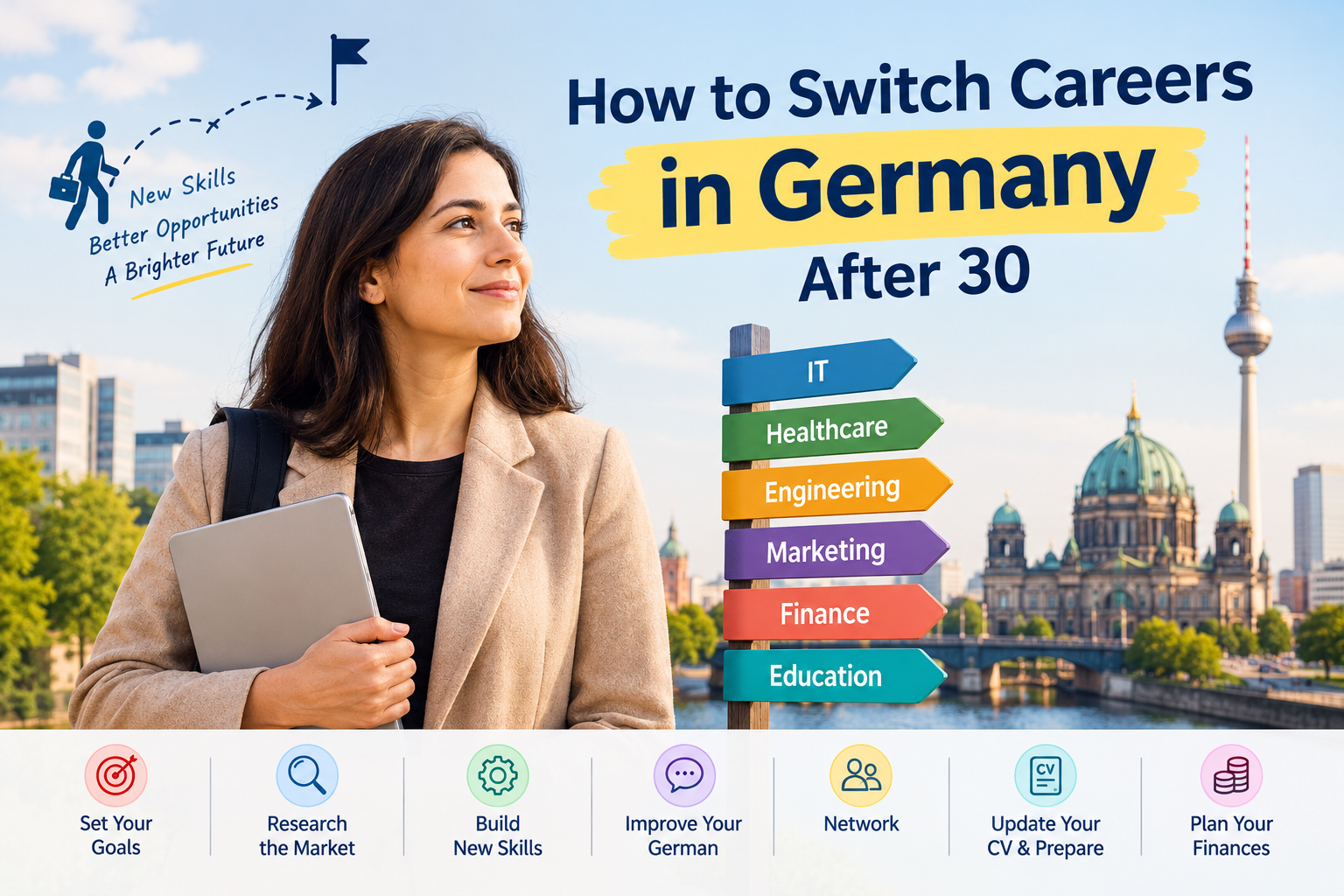
Changing careers can be difficult to do after the age of 30 as people will often have a lot of experience in the profession they are currently in. However, just because you have turned 30 does not mean that you cannot change career! There are opportunities within lots of industries in Germany ranging from Information Technology, Healthcare, Engineering, Logistics, Finance, Education and Digital Marketing. With the right skills and some planning, you can change your career.
Understanding how to change career in Germany after 30 can help give you a clear idea of what opportunities are out there. It can also help you prepare for the new expectations and requirements of your employer. Whether you’re looking to increase your earning potential, improve your work-life balance or simply do something you find more meaningful, changing careers can help you. Planning a careers switch in Germany after 30 requires a clear understanding of your professional goals, existing skills and the opportunities available in the German job market.
By evaluating your experience, understanding the German job market and gaining the right qualifications you can successfully change your career. Below are some tips to help you. A successful careers switch in Germany is possible when you choose a suitable industry, develop relevant skills and prepare for the expectations of potential employers.
How to Switch Careers in Germany After 30?
1. Identify Your Career Goals
The first thing you should do when considering changing your career is to identify why you want to leave your current profession. Some people want to earn more money whilst others want to have a more flexible role. Some may want to progress professionally or have a healthier work environment. Before making a careers switch in Germany, take time to understand which roles match your interests, strengths and long-term professional goals.
Consider what your interests and strengths are. What tasks do you enjoy doing? What tasks would you like to avoid?
For example, if you’re currently in customer service you may want to look at a role in Human Resources, Sales or Project Management. If you’re currently doing Administration then you may want to look into Digital Marketing or Business Operations. When considering changing career, write down 3 options. Compare the roles and see what responsibilities are involved, how much you can earn and what the entry requirements are. This will help you decide what is a realistic option.
2. Research the German Job Market
Germany has a range of industries but depending on what industry you’re in, what qualifications you have and how much experience, you may find some jobs easier to find than others. Researching the job market can help you gain an understanding of what roles are available based on your background. Researching industry trends is an important step in a careers switch in Germany because employers may have different expectations regarding experience, qualifications and language skills
Some industries you may want to look at are:
Information Technology – Software Development, Cyber Security, IT Support and Data Analysis.
Healthcare – Nursing, Healthcare Administration and Medical Support.
Engineering – Technical Project Management, Manufacturing and Quality Management.
Logistics – Supply Chain Management, Warehousing and Procurement.
Digital Marketing – SEO, Content Writing, Social Media Management and Online Marketing.
Business Services – Human Resources, Customer Success and Project Management.
Look at job sites such as LinkedIn, StepStone, Indeed Germany and the Federal Employment Agency to get an idea of what roles are available. Identify what skills are commonly required. People planning a careers switch in Germany should compare job descriptions across different companies to identify common requirements and suitable entry-level opportunities.
When changing careers, look at whether employers are willing to accept your previous experience or if they want specific qualifications. This will help you understand what to expect and avoid wasting your time in the wrong role.
3. Identify Transferable Skills
You may not need to completely start from scratch when changing careers. You may already have some useful skills from your previous role. Transferable skills can make a careers switch in Germany easier by helping employers recognise the value of your previous professional experience. Some transferable skills include Communication, Problem Solving, Leadership, Organisation, Teamwork, Customer Service and Project Management.
If you’re moving into Corporate Training from Teaching you already have presentation and teaching skills. If you’re moving into Operations from Retail Management you already have experience of supervising teams, managing stock and customer service. Compare your skills to what is needed for the role you want to do. Identify what strengths you have and what you can show with quantifiable results. Ensure your CV highlights your key achievements. This will help recruiters understand how your experience can benefit them.
4. Gain New Skills and Qualifications
Some roles will require you to undertake further training, certifications and qualifications. Research what is needed for your desired occupation. During a careers switch in Germany, gaining industry-specific qualifications can help you demonstrate your commitment and readiness to work in a new field. If you’re looking to go into Digital Marketing you may want to learn about SEO, Content Strategy, Google Analytics and Campaign Management. If you’re looking to go into Data Analysis then you may want to learn about using Spreadsheets, SQL and Data Visualisation.
There are also many vocational courses and development opportunities within Germany. Depending on your situation you may wish to look at courses through the Federal Employment Agency, Adult Education Centres (Volkshochschulen) and reputable online learning platforms. If you want to go into a regulated profession such as some Healthcare occupations then look into what recognition and licensing you’ll need.
Ensure that whatever training you do is practical so you can show your skills. Completing projects, internships and relevant certificates will help your application. Choosing practical training that matches current job requirements can make a careers switch in Germany more manageable and improve your chances of securing interviews
5. Improve your German Language Skills
Having good German language skills can impact what roles you are able to apply for. Whilst some international companies will have roles where you can use English, many employers will require you to have a good understanding of the German language. German language proficiency can influence the range of opportunities available to professionals planning a careers switch in Germany, particularly in customer-facing roles
Depending on what you’re going into you may need certain levels. Some international roles in Technology may allow you to use English but roles in customer service and regulated professions may require a higher level of German. If your German is not great then consider undertaking some structured lessons. Practice using new vocabulary within your profession. Read German job adverts, prepare answers to interview questions and practice your German. Changing your career can help you understand what roles are available by improving your German. Be honest with how good your German is on your CV.
6. Network
Networking can help you understand what the new industry involves and can help you identify opportunities. Building professional connections can support a careers switch in Germany by providing industry insights, advice and information about potential job openings Connect with professionals on LinkedIn who work within your desired field. Join relevant professional groups, attend events and webinars.
Ask for informational interviews with people who have undertaken the same career change. Ask them what qualifications employers are looking for, what entry level roles are commonly done and what challenges people face. This can help you understand what skills are important and how to best show your previous experience. Whilst it does not guarantee you a job it can give you an understanding of the industry, give you some professional recommendations and feedback.
7. Update Your CV and Prepare for Interviews
When applying for a different type of role in Germany it is important your CV is well structured and shows how your experience can relate to your new career goals. Ensure your CV is relevant to the role you’re applying for and highlights your transferable skills, recent training, practical projects and achievements. When preparing for a careers switch in Germany, tailor your CV to demonstrate how your previous achievements and newly acquired skills match the requirements of your target role.
Write a personalised covering letter explaining why you want to change your career. During interviews you may be asked why you are leaving your current role. Prepare a positive answer that shows your interest, progression and future goals. A successful career change will depend on showing employers that you have made an intentional decision and understand what your new role involves.
8. Plan Your Finances
Changing careers can sometimes mean taking a pay cut, paying for training and taking longer to find a new role. Planning your finances can help you avoid unnecessary stress. Consider how much you spend each month, how much you have saved, any current financial commitments and how much you will earn in your target occupation. If possible try to save up an emergency fund.
You could also undertake part time courses, freelance work or an internal transfer. If you’re eligible you could look into whether you’re entitled to any public funding or support with your training. This will make changing your career easier.
Conclusion: Careers Switch
Changing your career after 30 can be done with the right planning, realistic expectations and willingness to learn. There are opportunities within lots of industries in Germany. By researching, planning and understanding what employers are looking for you can find the right role. Ultimately, a successful careers switch in Germany after 30 depends on careful planning, continuous learning and the ability to demonstrate how your existing experience can benefit a new employer.
By identifying your goals, transferable skills, gaining the right qualifications, improving your German and networking you can successfully change your career. Ensure your application documents are up to date and be prepared to explain how your previous experience can benefit a new employer. Remember you still have experience from your previous career and this can now be used in a different way. With regular effort and careful planning you can create a fulfilling career in Germany at any age.
Take the next step towards your new career with confidence. Explore job opportunities, identify your transferable skills, and prepare a CV that highlights your strengths. Use the Best Job Tools to discover suitable vacancies, research employers, and make your career transition easier. Start exploring new opportunities in Germany today and build a career that aligns with your goals.





Comments
Be the first to leave a comment.