

Introduction: Notice Period Rules and Resignation Etiquette
Resigning from your job is a significant step in any professional’s career. Whether you’re going to a new company, looking for better career opportunities, moving countries or just wanting to make a career change, you need to plan properly and communicate professionally. In the Netherlands, you will need to understand your employment contract, legal requirements and what is expected of you at work. Knowing about notice periods and how to resign professionally will help prevent any unnecessary legal issues.
The Netherlands are known for being very professional at work. If you are resigning you need to make sure that you give notice, tell your manager, provide a formal letter of resignation and finish off any tasks. This helps keep a good relationship with your employer.
If you are an international worker or expat in the Netherlands it’s important to know how to resign correctly. Your employment contract, CAO and your personal situation can all have an impact. Read through your employment contract to see what notice you need to give and confirm when your last day of employment will be before accepting another job offer.
What are The Notice Period Rules and Resignation Etiquette in the Netherlands?
1. Notice Period
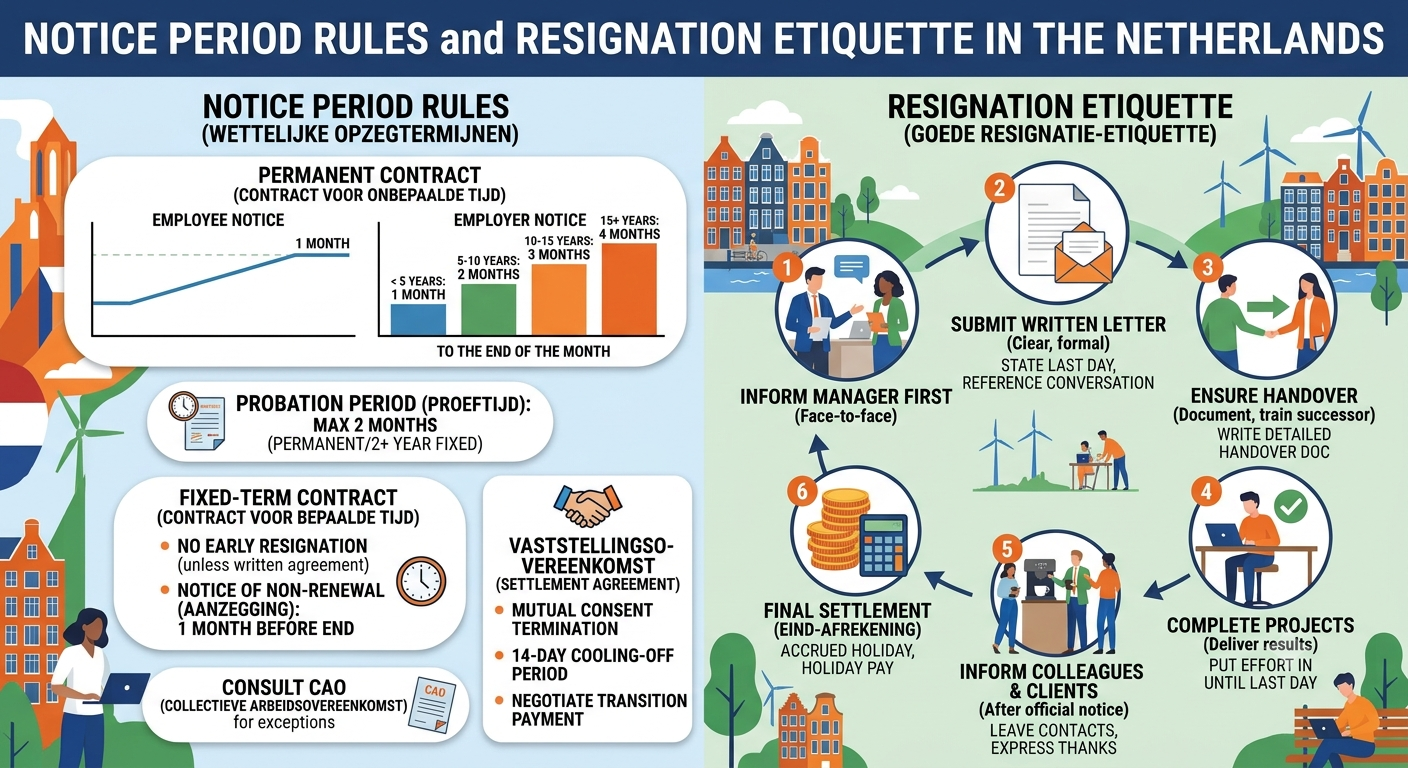
A notice period is how long you will have to work for after giving your notice. During this period you will still be under your employment contract and should perform your duties as normal. Within the Netherlands employees will typically have a 1 month notice period. However, your employment contract / CAO may include different terms.
Typically the notice period will start on the first day of the next calendar month. For example, if you give notice on 15th January you will typically finish on 28th February. Knowing the legal requirements is an important part of the Notice Period Rules and Resignation Etiquette.
2. Notice Period Rules
Depending on what type of employment contract you have, the notice period can vary. It is therefore extremely important to check what your contract says. Permanent employees typically have a 1 month notice period. However, you may agree to have a longer notice period in writing.
Fixed term contracts will typically finish on the date agreed. Unless your contract includes interim termination you generally cannot leave early. During a valid probationary period you can typically leave your job immediately. Do not assume that the same rules apply. Check what your contract says and what your CAO says to ensure you follow the Notice Period Rules and Resignation Etiquette.
3. Writing your resignation letter
A resignation letter is an important document to show you are leaving your job. In the Netherlands it is important to write a clear letter to resign from your employment after checking your contract. Before sending your letter it is a good idea to have a private conversation with your manager. Be polite and explain why you are leaving.
Your resignation letter should include your full name, the date, stating you are resigning and your last working day. Ask for confirmation in writing. “I would like to formally give my notice via this email. I will complete my notice period as per our contract and assist with handing over my duties.” By following the Notice Period Rules and Resignation Etiquette you can ensure everything is clear.
4. Professional Etiquette
Having a professional approach to your resignation is as important as knowing the legal requirements. How you resign can affect your professional reputation, references and relationships. Be polite when informing your manager. Do not announce you are leaving publicly.
Stay calm and professional when leaving, even if you are leaving due to disputes, pay or lack of career opportunities. Do not say anything negative about your colleagues. Many Dutch workplaces appreciate honesty and openness. You can explain why you are leaving your job without giving too much personal information. By following the Notice Period Rules and Resignation Etiquette you can ensure you leave with respect.
5. What to do during your notice period?
Giving your notice does not mean you no longer have any professional obligations. Typically you will still have to complete your duties as per your employment contract until your last day of employment. Attend any meetings, complete any important tasks, keep in contact with colleagues and keep up your usual standards.
Do not intentionally hold back on your work or ignore requests as you have accepted another job. Being professional shows you are reliable. If you need to leave earlier than expected talk to your employer. Try to get this in writing. Leaving without following the notice period could cause legal or financial issues. Knowing what to do during your notice period is an important part of the Notice Period Rules and Resignation Etiquette.
6. Handover
Having a good handover will allow your colleagues to continue with their work. It will also show that you take your duties seriously. Make a list of any active projects, outstanding tasks, important deadlines and any professional contacts. Ensure any documents are updated and explain the status of any important tasks.
If another employee will be taking over your role, offer them reasonable support. Ensure that you return any company property such as laptops, ID cards, documents and equipment. Any confidential company information should be kept safe. Follow the company’s data safety protocols. By having a structured handover you are following the Notice Period Rules and Resignation Etiquette.
7. Pay, holiday and final payments
Before leaving your job talk to your employer about your final pay. This will include any unpaid pay, approved expenses and any unused annual leave. Do not assume that you can take any unused holidays during your notice period. Talk to your employer and check your employment contract.
Ask when you will receive your final payslip. Ask if there will be any extra documents. You may want to ask for your employment references. This is an important part to plan if you are moving onto another job or country. Being detailed with this will improve your knowledge of the Notice Period Rules and Resignation Etiquette and avoid any confusion.
8. Common mistakes to avoid
Not checking your employment contract can cause issues. You may have the wrong last working day. Assuming all fixed term contracts can be left early. Check what your contract states before agreeing to a start date with a new employer. Leaving without following the notice period can cause legal or financial issues. If you need to leave early try to negotiate with your employer.
Consider how leaving voluntarily can affect your unemployment benefits. In the Netherlands you may lose your unemployment benefits if you leave your job voluntarily. There are exceptions depending on the situation. It may be beneficial to contact the Employee Insurance Agency (UWV). Avoiding these mistakes is an important part of the Notice Period Rules and Resignation Etiquette. This will help you have a more secure career move
Conclusion: Notice Period Rules and Resignation Etiquette
Leaving your job in the Netherlands requires a balance between knowing the legal requirements, being prepared and being professional. Ensure you know your notice periods, check your contract, write a letter to resign and complete your duties until the end of your employment.
By following the Notice Period Rules and Resignation Etiquette you can ensure you are looking out for your best interests and building positive relationships. Being clear, having a good handover and considering your final payments can make the whole process easier. Leaving your job professionally is a great way to show you are an honest, reliable and respectful employee. By thinking carefully about your resignation and following the employment requirements in the Netherlands you can leave your current role on good terms and set yourself up for a successful future career.
Planning your next career move after resigning from your current job in the Netherlands? Understanding Notice Period Rules and Resignation Etiquette is the first step towards a smooth professional transition. Make your job search easier with the Best Job Tool, helping you explore new career opportunities, discover suitable job openings, and take the next step towards your professional goals. Don’t let resignation stress slow you down—prepare for your next opportunity with confidence and find a job that matches your skills and ambitions. Start exploring new career opportunities today with the Best Job Tool and take your career to the next level!





Comments
Be the first to leave a comment.