

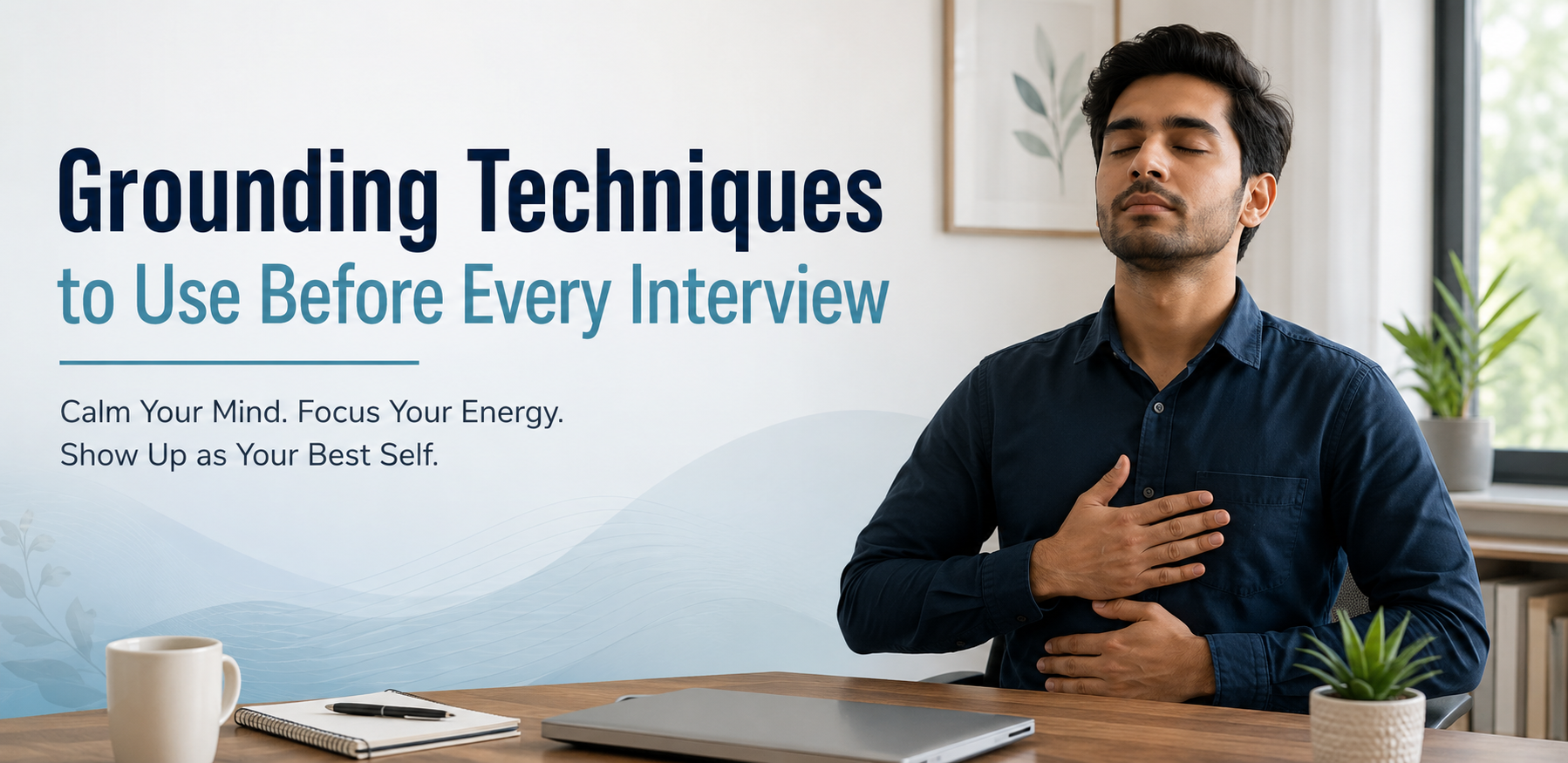
Introduction: Grounding Techniques
Have you ever seen a candidate who has many qualifications and skills but still gets rejected, not because they lack skills, but because they become nervous and are not able to present themselves properly?
This happens because the candidate gets nervous, and because of that they are not able to show their true abilities.
An interview is a stage where everyone feels nervous, whether they are a fresher or a professional. Feeling nervous is completely normal. But controlling nervousness is very important, otherwise it can have a negative impact on you.
That is why you should know grounding techniques to use before every interview, so that you can present yourself in the best way.
In this article, we will explore grounding techniques to use before every interview.
Grounding Techniques to Use Before Every Interview
1. The 4–4–6 Breathing Reset
This is the most effective way to reduce nervousness instantly.
In this technique, first you need to inhale for 4 seconds, hold your breath for 4 seconds, and then exhale slowly for 6 seconds. Repeat this for 2 to 3 minutes.
Doing this helps reduce nervous energy because when you are nervous, your breathing becomes fast and irregular. Your brain starts thinking that something is wrong, and it cannot focus on important things.
By controlling your breathing, you can slowly reduce nervousness, which helps you present yourself in a better way during interviews.
2. The “5–4–3–2–1” Sensory Grounding Technique
When we go for an interview and wait for our turn, we often feel very nervous. Because of this, we start overthinking.
But if you use this technique, you can easily reduce overthinking. You start noticing your physical environment. For example, look around and identify:
- 5 things you can see
- 4 things you can touch
- 3 things you can hear
- 2 things you can smell
- 1 thing you can taste
When you follow this step, your mind shifts from overthinking to observing things around you. This helps your brain function better and reduces nervousness.
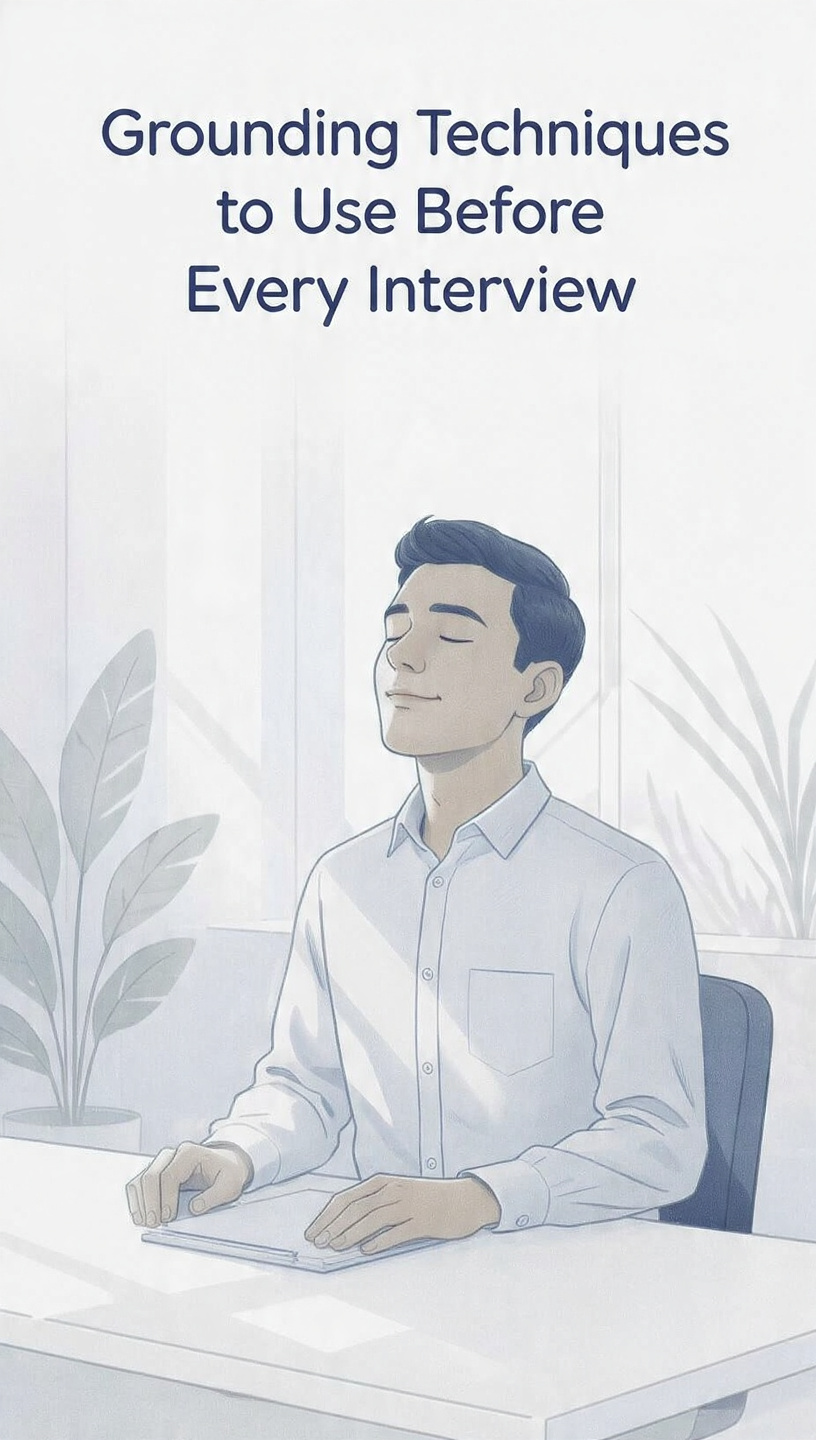
3. Power Posture for 2 Minutes
Many people think that the way you sit or stand in an interview is not related to confidence. Good posture is often used to make a good impression on the recruiter, but this is not the only reason.
Good posture is just as important for building confidence as it is for creating a good impression on the recruiter, because your mind reacts according to how you hold your body.
When you stand and sit confidently, your confidence automatically increases.
That is why, before an interview, you should sit or stand upright with relaxed shoulders, keep your feet grounded, open your chest slightly, and avoid curling inward.
4. Slow Preview Visualization
Many candidates visualize the interview before it happens. Sometimes, they imagine it in a negative way, which makes them even more nervous.
Instead of imagining the worst case, you should imagine a smooth and good interview.
Close your eyes for 1 or 2 minutes and visualize that you are entering the interview confidently, greeting calmly, answering questions clearly, taking pauses when needed, and handling everything in a good way.
When you think about positive things, your brain starts preparing in the same way.
5. One-Sentence Anchor
A one-sentence anchor is also a great way to handle an interview confidently.
A one-sentence anchor means a simple positive sentence that makes you feel confident and reduces nervousness. This sentence can be anything positive, such as “I am prepared and I can handle this conversation.”
You should repeat this sentence silently in your mind before starting your interview. Repeat it 5 to 10 times.
You will notice that your overthinking reduces, you stay more focused, and your confidence increases.
Conclusion: Grounding Techniques
Feeling nervous before an interview is completely normal, but staying grounded can help you handle that nervousness in a healthier and more confident way. Small techniques like breathing exercises, positive anchors, visualization, and physical resets may seem simple, but they can make a big difference in how you think, speak, and respond during an interview.
The goal is not to become perfect or fearless. The goal is to stay calm enough to show your real personality, skills, and communication clearly. With regular practice, these grounding techniques can help you feel more focused, present, and emotionally balanced before every interview.
“Walk into interviews with confidence and explore better career opportunities on Best Job Tool where preparation meets performance.”






Comments
Be the first to leave a comment.