

Introduction: Talent Acquisition Teams
When you are looking for a new job opportunity, you may have different conversations with various people. A recruiter or a talent acquisition professional may reach out to you first and later you will meet the hiring manager. These two are different in terms of their interests in your application and the information they are looking for.
This post, How Hiring Managers Differ From Talent Acquisition Teams in Mindset , will highlight the difference in their mindsets and explain what each party is looking for in detail. It will also discuss some related preparation tips for candidates.
How Hiring Managers Differ From Talent Acquisition Teams in Mindset?
1. The Talent Acquisition Perspective
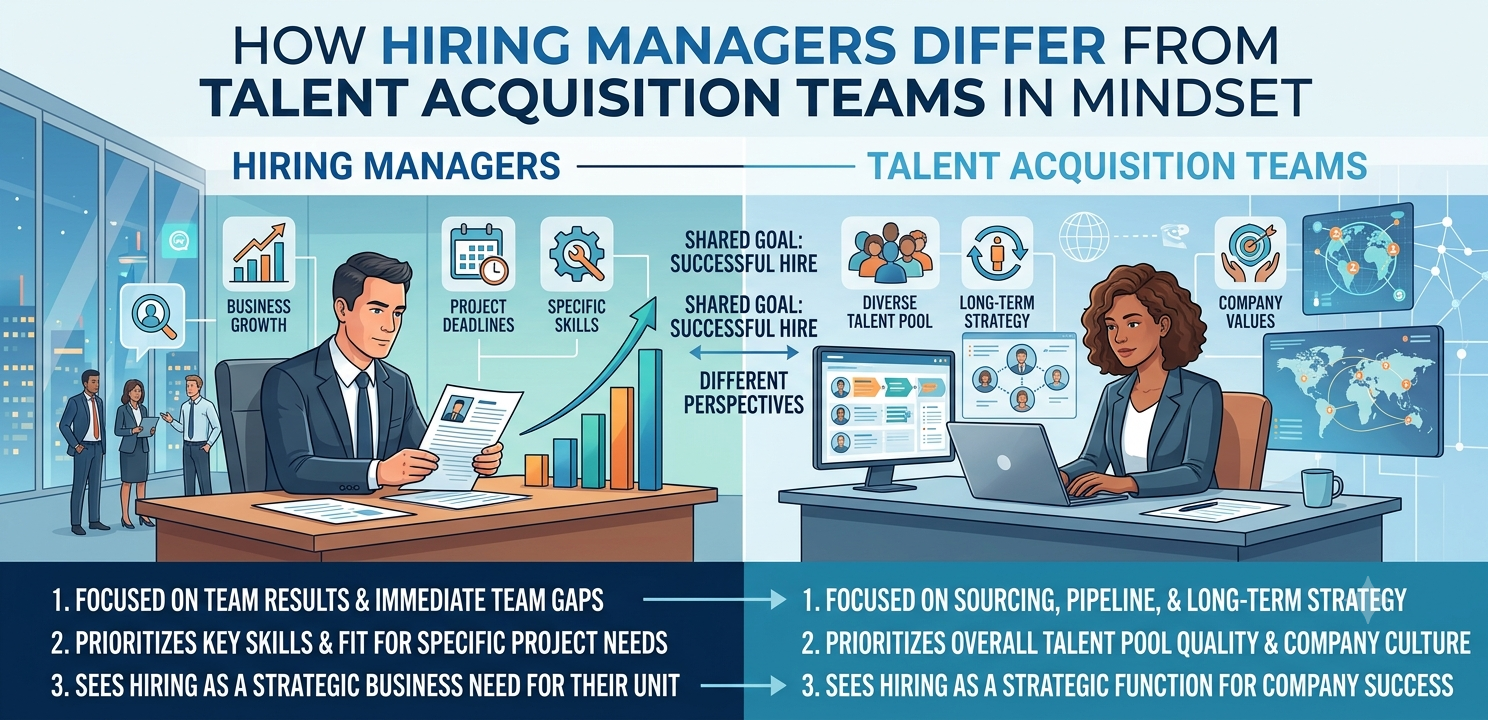
Typically, talent acquisition (TA) professionals have the recruitment funnel in charge and are responsible for screening and interviewing the candidates. Their primary interest is to identify the best fit for the hiring team considering the requirements of the position and the expectations of the company.
TA managers have a more generalized perspective on the candidate’s information, meaning that they are interested in whether you meet the basic standards of the job offer. These may include your working conditions and environment, location, salary expectations, learning and growing opportunities, and other elements.
Therefore, I assume that your first conversation with a recruiter will be more focused on general information rather than specific aspects of the position. After you provide the basic details, the hiring manager will determine the next steps in the hiring process. Notably, TA managers are unlikely to ask detailed questions about your work ethic during the interview because they focus more on whether you meet the requirements for the next level.
2. The Hiring Manager’s Perspective
A hiring manager (HM) is primarily interested in your capacity to fulfill the responsibilities of the position. Ideally, HM will be your future boss if you successfully pass the next round of the hiring process. Therefore, it is expected that they will explore your work ethic, work-related achievements, and problem-solving approach in great detail.
They will probably ask more complex questions about your job experience helping them better understand whether you can perform the tasks listed in the job description. For example, if you are interviewing for a content writer position, the TA managers may ask you about your salary expectations and past work experience in the field.
However, the HMs will focus on how you perform specific tasks, such as finding the content ideas, working with keywords, collaborating with other team members, receiving and implementing feedback, and improving the quality of your work.
3. Different Questions, Different Goals
Perhaps the best way to identify the difference between the mindsets of HMs and TAs is to look at the questions they are likely to ask.
Generally, TA managers will focus on the following:
- Why are you looking for a new opportunity?
- What are your salary expectations?
- When can you start working with us?
- Do you have any restrictions regarding the work location or hours?
- Why are you interested in our company?
The hiring managers will most likely pay more attention to these questions: Tell me about the most challenging project you have undertaken.
- How would you approach the task X?
- How do you usually address the challenges in your work?
- Describe a time when you failed to meet the goals and how you handled the situation.
- What are your achievements in the current position?
Evidently, there are differences in the sets of questions, but it does not mean that the hiring managers are more interested in your work ethic and TA managers care only about your overall interest in the position. Instead, there is a more profound meaning behind these differences.
4. What Are They Looking For?
TA managers are primarily interested in the congruence between the applicant’s qualifications and the company’s expectations. They want to ensure that you are the best fit for the position based on the requirements listed in the job description.
However, they also want to confirm that your personal and career-related expectations match the working conditions and benefits offered by the company. This is why they may ask about the salary range and other elements of the compensation policy. The primary goal of the hiring managers is to find the best candidate to fit the requirements of the position.
The ability to perform the tasks listed in the job description is crucial for getting the job. Therefore, the hiring managers will focus on your work ethic, work-related achievements, and the problems you have encountered to determine if you can successfully perform the duties of the position.
5. How to Prepare?
From the perspectives of TA managers and hiring managers, job applicants have different sets of information to prepare for the interview. Therefore, you need to review the basic questions asked by TA professionals and be ready to provide more information regarding your qualifications and career goals.
You also need to look at the job description from the perspective of the hiring manager and prepare more detailed answers regarding your experience, work ethic, and achievements. Memorizing the answers will not help much since you need to sound more natural in the conversation with the interviewer.
When necessary, provide specific examples of how you handled situations similar to the ones you may encounter in the position you are applying for. Explain the actions you took and the results of these actions.
6. Do Not Underestimate the Role of Recruiters
Some candidates mistakenly believe that they can impress the hiring managers and get the job without preparing for the interview with TA managers. It is a wrong assumption because TA managers play a critical role in the hiring process and set the expectations for the next stage.
After the first interview, the TA managers typically have the authority to decide whether you meet the requirements of the position. If they are not impressed with your achievements and work experience, they may not pass you to the next stage of the hiring process.
Even if you sound impressive in the conversation with a recruiter and provide the information required by the hiring managers, you will have a harder time at the next level of the interview process. You should be professional in the communication with all participants of the hiring process to increase the likelihood of getting the job.
Conclusion: Talent Acquisition Teams
Understanding the difference between hiring managers and talent acquisition teams can help job seekers approach the hiring process more strategically. While talent acquisition professionals often focus on sourcing, screening, and aligning candidates with organizational needs, hiring managers typically concentrate on team fit, job performance, and the skills required for the role. Recognizing these different priorities allows candidates to tailor their resumes, interviews, and communication accordingly.
Understanding the difference between hiring managers and talent acquisition teams can help you approach each conversation more effectively. As you refine your job search strategy, use the Best Job Tool platform to discover relevant opportunities, organize your search, and take the next step toward your career goals.






Comments
Be the first to leave a comment.