

Introduction
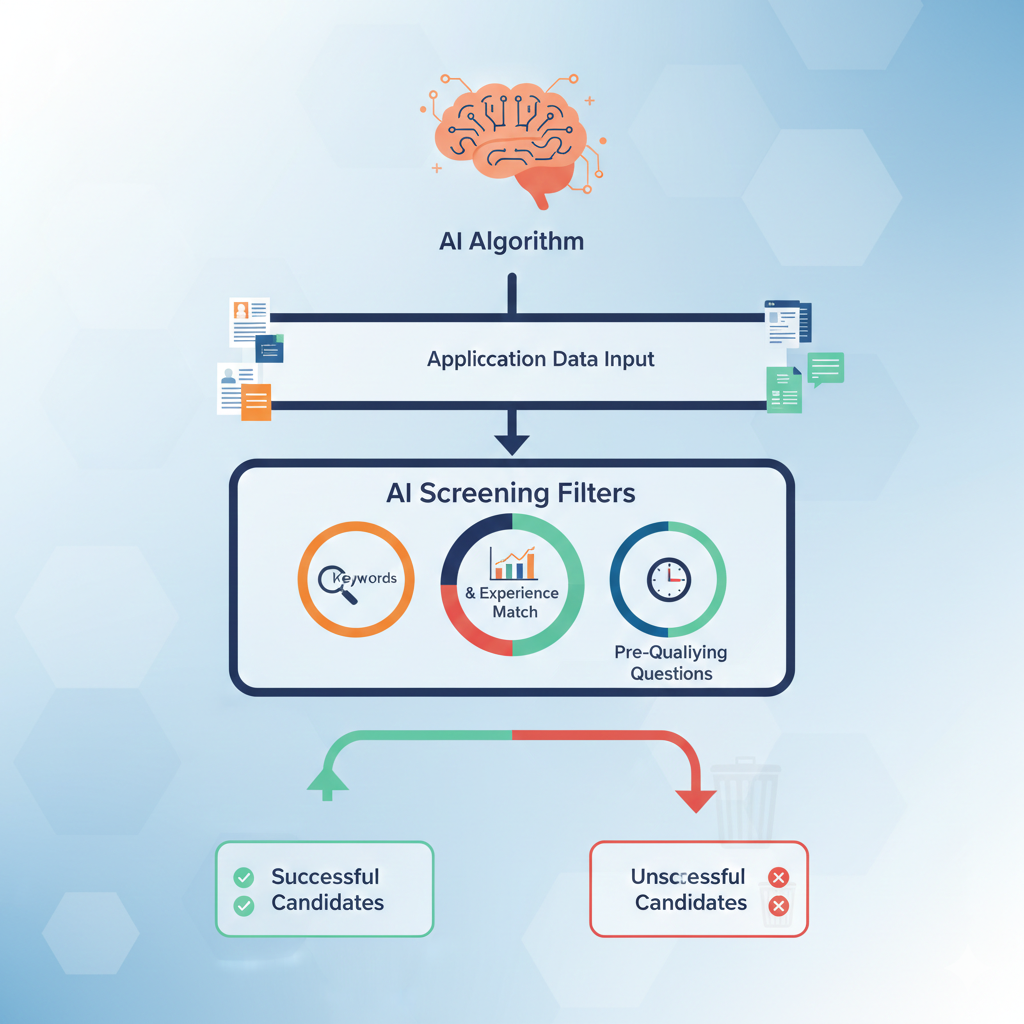
AI screening has changed the way hiring works. Candidates apply quickly, but companies also filter quickly. This is why many job seekers feel they are getting rejected without a real review. The truth is simple. AI screening does not “judge” you like a person does. It filters based on signals, rules, and patterns.
Understanding how AI screening actually filters applications helps you avoid silent rejection. It also helps you build a resume that performs better in automated and manual review.
AI screening starts with basic eligibility checks
The first level of filtering is usually eligibility. This stage removes candidates who do not meet mandatory conditions. These conditions depend on the company and role.
Common eligibility checks include location, work authorization, notice period, shift preference, and minimum education. Some roles also include required certifications or specific tool knowledge.
If you fail one eligibility rule, the system may reject the application instantly. This happens even if you have strong skills. It is not personal. It is a rule-based filter.
That is one of the most important parts of how AI screening actually filters applications.
Resume parsing decides what the system can read
Before any scoring happens, the system must parse your resume. Parsing means extracting your details into structured fields like skills, experience, and education.
If your resume has heavy formatting, the system may misread it. Columns, tables, icons, and text boxes can break extraction. As a result, your profile may appear incomplete.
For example, your skills might not get captured. Your job titles might appear incorrect. Your work dates might become unclear.
When parsing fails, even a strong resume can look weak inside the system. That can lead to early rejection or low ranking.
Keyword matching influences relevance scoring
After parsing, AI screening checks keyword relevance. It compares your resume content to the job description and role requirements.
The system looks for job titles, tools, technical skills, certifications, and role-specific terms. If your resume includes those terms naturally, your match improves.
However, keyword matching is not always intelligent. Many systems still rely on exact terms. That means different wording can reduce your match even if the skill is similar.
For example, “client support” may not match “customer support” strongly in some systems. This is why resume language matters.
Keyword matching is a core part of how AI screening actually filters applications.
Screening questions create instant rejection paths
Many applications include screening questions. These questions are often used as knockout filters.
Examples include willingness to relocate, salary expectations, shift flexibility, and experience with specific tools. A single answer can trigger rejection.
This is why candidates should not rush through these questions. You should read carefully and apply only when the requirements fit your situation.
Knockout filters reduce recruiter workload, but they also remove many candidates early.
AI screening uses ranking, not just rejection
AI screening does not always reject candidates immediately. Often, it ranks candidates into groups.
Some candidates appear as high match. Others appear as medium match. Some appear as low match. Recruiters then review profiles based on time, urgency, and hiring priorities.
This is why two candidates can both be qualified, but only one gets contacted. The recruiter starts from the top-ranked list.
Ranking is also affected by the number of applications. When the volume is high, recruiters may only review the top segment.
So the goal is not only to avoid rejection. The goal is to improve ranking.
AI screening detects consistency across your profile
Many companies evaluate candidates using more than a resume. They may check your LinkedIn profile, portfolio links, and application form entries.
If your resume says one thing and your LinkedIn says another, the system may reduce confidence. In some cases, inconsistencies can lower ranking.
This includes differences in job titles, employment dates, and skill claims. Consistency builds trust. It also helps automated systems understand your profile better.
A clean, consistent professional presence improves your results.
Some systems flag suspicious patterns
AI screening also helps detect low-quality or risky applications. It may flag resumes that appear copied, overly generic, or inconsistent.
It may also flag applications with missing information, unrealistic skill claims, or unclear timelines.
This does not always lead to rejection, but it can reduce ranking. Recruiters may avoid profiles that look unreliable.
That is why clarity and credibility matter. A professional resume should be specific and structured.
What improves your chances in AI screening
The strongest strategy is to optimize for both systems and people. Your resume should be readable, relevant, and proof-based.
Use a clean single-column format. Include a clear summary aligned to the role. Mention key skills naturally in your projects and experience. Add measurable outcomes wherever possible.
Apply early when jobs are newly posted. Use referrals to increase visibility. Follow up professionally when appropriate.
Also, avoid random keyword stuffing. It may increase match temporarily, but it reduces trust during manual review.
A balanced approach wins more interviews.
Conclusion
AI screening filters applications through eligibility rules, resume parsing, keyword matching, and ranking logic. It also uses screening questions and consistency checks to reduce recruiter workload. That is how AI screening actually filters applications in modern hiring.
If you want better results, focus on clean formatting, role-aligned language, and strong proof of skills. Improve your visibility early and build a consistent professional profile.
To explore better opportunities and apply with confidence, use the best job tool.
Find Your Dream Job Today – Explore Endless Career Opportunities and Secure Your Next Role with Best Job Tool.
v






Comments
Be the first to leave a comment.