

Introduction
Salary is one of the most discussed aspects Internally of any job offer, yet it’s also one of the least understood by candidates. Many job seekers assume hiring managers can simply offer any salary they choose or match whatever a candidate requests. In reality, compensation decisions are usually governed by structured salary bands, internal pay policies, budget approvals, and long-term workforce planning.
Understanding how hiring managers think about salary bands can help you negotiate more effectively, set realistic expectations, and avoid common mistakes during the hiring process. Instead of viewing salary discussions as a negotiation between two individuals, it helps to recognize that hiring managers must balance fairness, budget constraints, internal equity, and business objectives.
Whether you’re applying for remote, hybrid, or on-site roles, this guide explains how salary bands work internally and how you can position yourself for the strongest possible offer.
What Are Salary Bands?
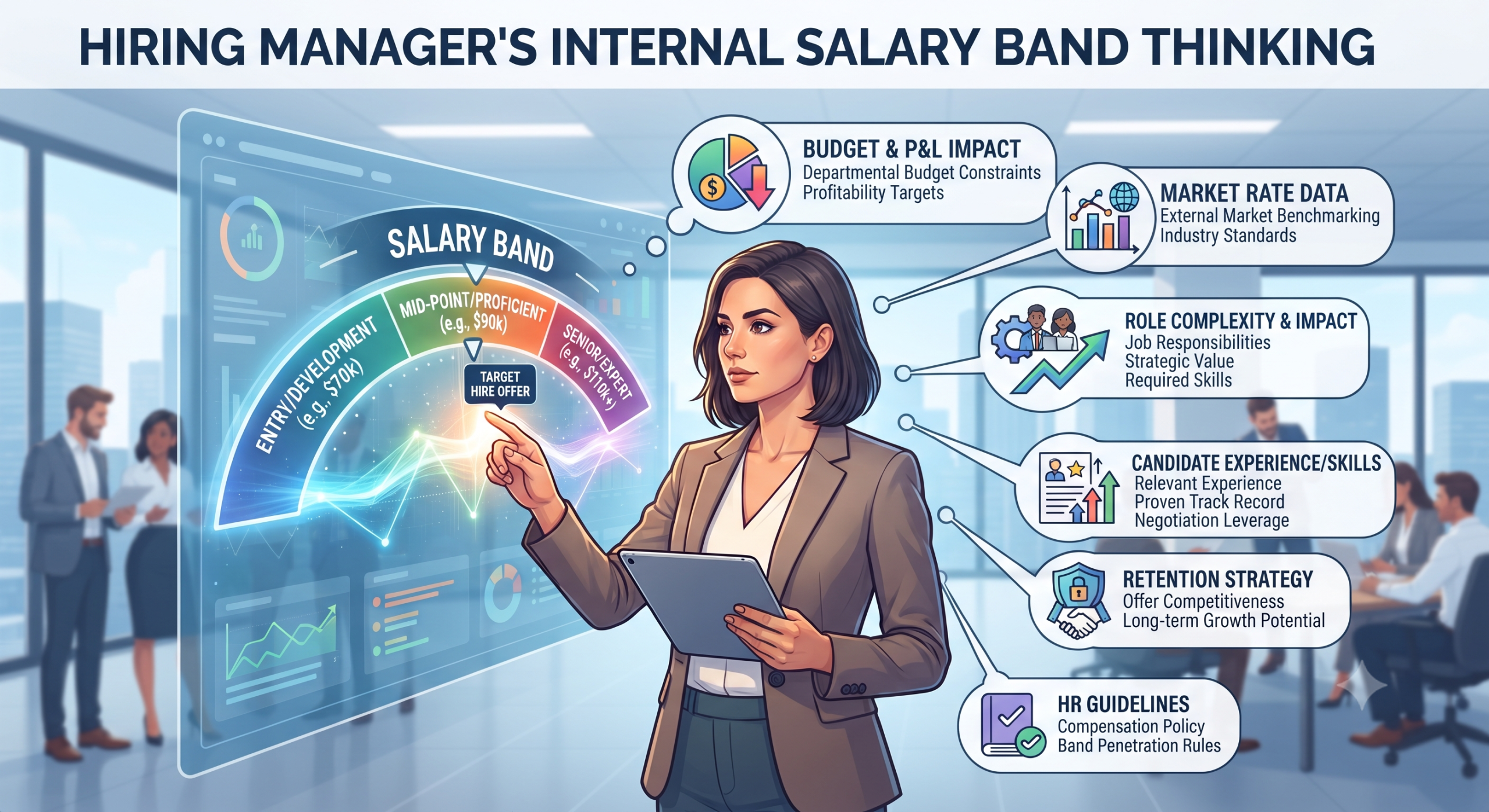
Salary bands are structured compensation ranges established for specific job levels within an organization.
A salary band typically includes:
- Minimum salary
- Midpoint salary
- Maximum salary
These ranges are based on factors such as:
- Market compensation data
- Job responsibilities
- Required experience
- Skill requirements
- Geographic location
- Internal pay structure
Rather than creating a salary for every individual candidate, companies usually determine compensation within these predefined ranges.
This helps maintain consistency and fairness across the organization.
Hiring Managers Usually Don’t Control the Entire Budget
One common misconception is that hiring managers have complete authority over compensation.
In most organizations, salary decisions involve multiple stakeholders, including:
- Human Resources
- Compensation teams
- Finance departments
- Business leaders
- Executive management
Hiring managers often recommend a Internally salary, but final approval depends on company policies and available budget.
Even if a manager wants to offer more, they may be restricted by organizational guidelines.
Understanding this process can make salary discussions more productive.
Experience Is Only One Part of the Decision
Candidates often expect additional years of experience to automatically justify higher compensation.
However, hiring managers also evaluate:
- Relevant skills
- Business impact
- Industry expertise
- Leadership ability
- Certifications
- Technical knowledge
- Communication skills
- Growth potential
Someone with fewer years of experience but stronger alignment with the role may receive a higher offer than a candidate with a longer employment history.
The emphasis is on the value you bring to the position rather than time spent in the workforce.
Internal Pay Equity Matters
One of the biggest considerations during salary discussions is internal equity.
Hiring managers ask questions such as:
- How does this salary compare with employees already performing similar work?
- Will this offer create pay disparities?
- Could existing employees feel undervalued?
- Does the offer align with promotion pathways?
Maintaining fair compensation across teams helps organizations retain employees and avoid internal dissatisfaction.
For this reason, companies may be unable to match exceptionally high salary requests even when they value a candidate.
Salary Bands Support Long-Term Career Growth
Many candidates focus exclusively on the starting salary.
Hiring managers often think more broadly.
They consider:
- Future promotions
- Annual salary reviews
- Performance bonuses
- Equity programs
- Professional development
- Career progression
Offering the maximum salary within a band Internally immediately can sometimes reduce flexibility for future raises.
As a result, employers often aim to position new hires where meaningful salary growth remains possible over time.
Geographic Location Can Influence Compensation
Although remote work has expanded hiring opportunities, location continues to influence many salary structures.
Organizations may adjust salary bands based on:
- Cost of living
- Local labor markets
- Tax considerations
- Regional competition
- Business operating costs
Some employers maintain location-based Internally pay models, while others use standardized national or global compensation structures.
If you’re searching for flexible opportunities across different regions, best job tool, a global job platform, can help you discover remote and international positions with compensation models that match your career goals.
Performance and Potential Influence Salary Offers
Hiring managers rarely evaluate only what you’ve accomplished previously.
They also consider your future contribution.
Questions often include:
- Can this candidate grow into leadership?
- Will they develop new skills quickly?
- Can they take on additional responsibilities?
- Are they likely to remain with the company?
Candidates who demonstrate strong learning ability, strategic thinking, and long-term commitment may receive more competitive offers within the available salary band.
Negotiate Professionally and With Evidence
Salary negotiations are generally expected for many professional roles.
However, successful negotiations rely on evidence rather than emotion.
Support your request with:
- Relevant experience
- Specialized certifications
- Measurable achievements
- Market research
- Industry demand
- Unique technical expertise
Avoid ultimatums or unrealistic salary expectations.
Professional, collaborative discussions often produce better outcomes than aggressive negotiation tactics.
Remember that compensation also includes benefits, bonuses, retirement contributions, learning opportunities, and workplace flexibility.
Focus on Total Career Value, Not Just Base Salary
An attractive offer often extends beyond monthly compensation.
Consider factors such as:
- Performance bonuses
- Stock options or equity
- Health insurance
- Retirement plans
- Paid leave
- Learning budgets
- Flexible work arrangements
- Career development opportunities
In many cases, a role with slightly lower base pay may provide significantly greater long-term career value.
As you evaluate opportunities, best job tool can help you explore employers offering competitive compensation packages, remote flexibility, and long-term career growth.
Conclusion
Salary bands are designed to balance market competitiveness, internal fairness, business budgets, and employee growth. While hiring managers play an important role in compensation decisions, they usually work within structured guidelines rather than setting salaries independently. Understanding this process allows candidates to negotiate more effectively while maintaining realistic expectations.
Instead of focusing solely on maximizing your initial Internally salary, evaluate the complete opportunity, including career progression, learning opportunities, benefits, and long-term earning potential. By demonstrating measurable business value, researching market compensation, and approaching salary discussions professionally, you can position yourself for stronger offers and sustainable career growth. As you continue your job search, best job tool, a global job platform, can help you connect with employers offering competitive opportunities across remote, hybrid, and global markets.






Comments
Be the first to leave a comment.