

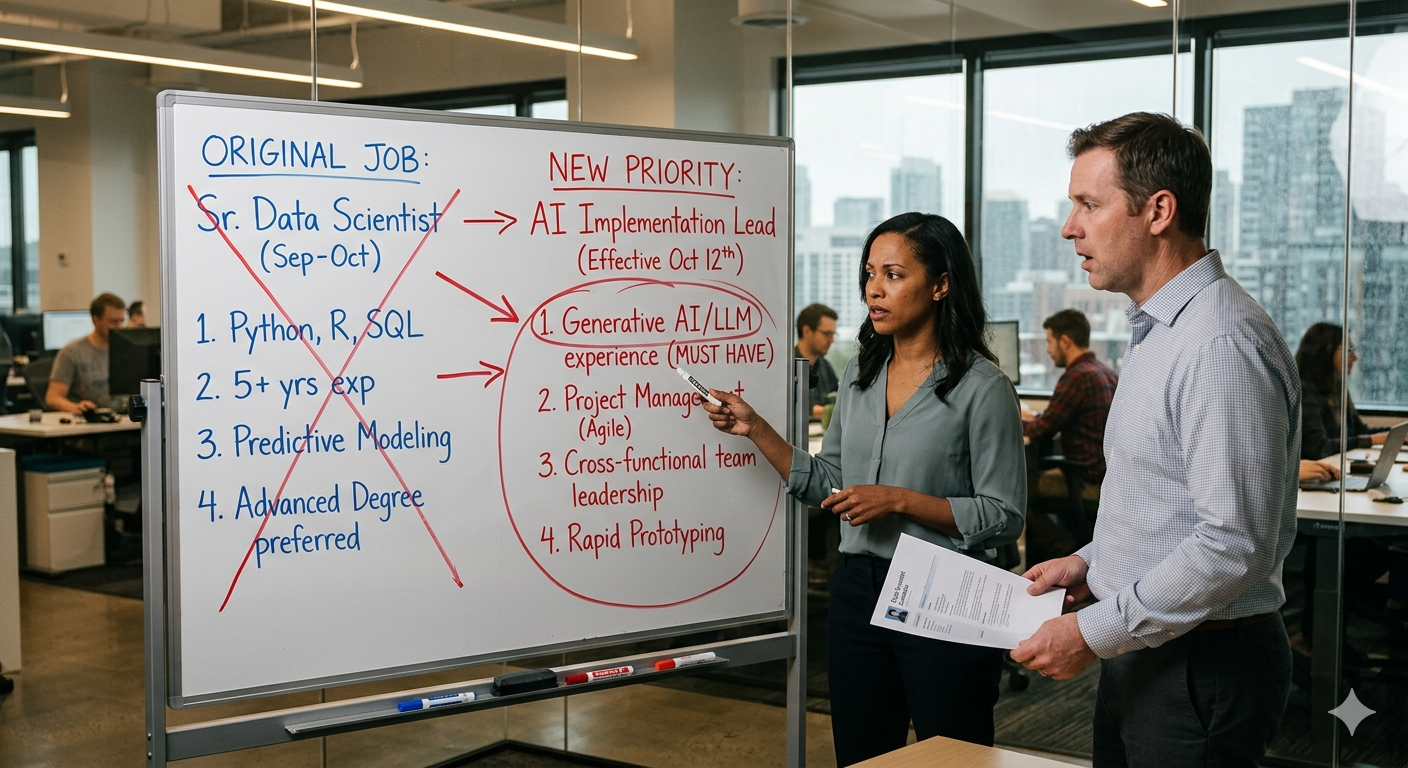
Why hiring priorities rarely stay fixed
Hiring often looks structured from the outside. However, internally it keeps evolving based on business needs. Companies start with clear requirements, but those requirements rarely remain unchanged. Therefore, understanding how hiring priorities change mid-recruitment helps candidates stay prepared for unexpected shifts.
Moreover, business environments move quickly. New projects, budget updates, or leadership inputs can alter hiring goals. As a result, hiring managers continuously adjust expectations during the process.
How hiring priorities change mid-recruitment in real scenarios
In real hiring situations, priorities shift more often than candidates realize. A role may start with a focus on experience, but later shift toward adaptability or speed. Therefore, hiring managers stay flexible while evaluating candidates.
Additionally, companies respond to internal and external factors. Market conditions, competition, and team needs all influence decisions. This dynamic approach explains how hiring priorities change mid-recruitment in modern workplaces.
The impact of business goals on hiring direction
Business goals directly shape hiring decisions. When priorities change at the organizational level, hiring strategies follow immediately. Therefore, a company focusing on growth may prioritize aggressive talent, while a cost-focused company may prefer efficiency.
Moreover, leadership decisions often come suddenly. These decisions force hiring teams to adjust expectations mid-process. As a result, candidates may notice changes in interview focus or questions.
Budget and compensation adjustments during hiring
Budget plays a critical role in recruitment. If financial plans shift, hiring priorities also change. Therefore, companies may look for candidates who align with revised salary expectations.
This often leads to subtle changes in evaluation criteria, such as:
- Preference for candidates within a specific salary range
- Focus on multi-skilled candidates to reduce hiring costs
- Selection of candidates who can deliver faster results
As a result, candidates must remain flexible and open to evolving expectations.
Candidate pipelines reshaping hiring decisions
Candidate availability can influence hiring direction significantly. When hiring managers encounter strong candidates, they may adjust role requirements to match available talent. Therefore, hiring becomes more opportunity-driven.
Additionally, talent scarcity forces companies to rethink expectations. If ideal candidates are not available, companies may relax certain requirements. This shows how hiring priorities change mid-recruitment based on real market conditions.
The role of urgency in decision-making
Urgency often drives faster hiring decisions. When a role remains open for too long, teams face pressure. Therefore, hiring managers may prioritize speed over perfection.
This urgency leads to changes such as:
- Selecting candidates who can join quickly
- Reducing the number of interview rounds
- Focusing on immediate impact instead of long-term potential
As a result, hiring decisions become more practical and time-sensitive.
Internal team influence on hiring priorities
Hiring is not just a management decision. Teams play an important role in shaping hiring priorities. Therefore, feedback from team members often changes evaluation criteria.
For example, a team may require specific technical support or communication skills. This feedback can shift hiring focus instantly. Moreover, collaboration ensures that the final decision aligns with team needs.
What candidates should do when priorities shift
Candidates often feel confused when hiring expectations change. However, adaptability becomes the key to success in such situations. Therefore, candidates should stay flexible and open to evolving requirements.
Additionally, they should focus on demonstrating value in multiple ways. Showing versatility, learning ability, and problem-solving skills increases their chances. This approach helps candidates stay relevant even when priorities shift.
Final thoughts on adapting to changing hiring priorities
Understanding how hiring priorities change mid-recruitment gives candidates a strong advantage. Hiring is not a fixed process, but a dynamic one influenced by multiple factors. Therefore, candidates who adapt quickly stand out more effectively.
Moreover, flexibility and awareness help candidates navigate uncertainty with confidence. Instead of relying on fixed expectations, they can align themselves with changing needs. In conclusion, how hiring priorities change mid-recruitment reflects the evolving nature of modern hiring.
For job seekers looking to succeed in such environments, using the best job tool can provide better opportunities and insights. It helps candidates stay ahead in competitive markets and adapt to changing hiring trends.
Find Your Dream Job Today – Explore Endless Career Opportunities and Secure Your Next Role with Best Job Tool.






Comments
Be the first to leave a comment.