

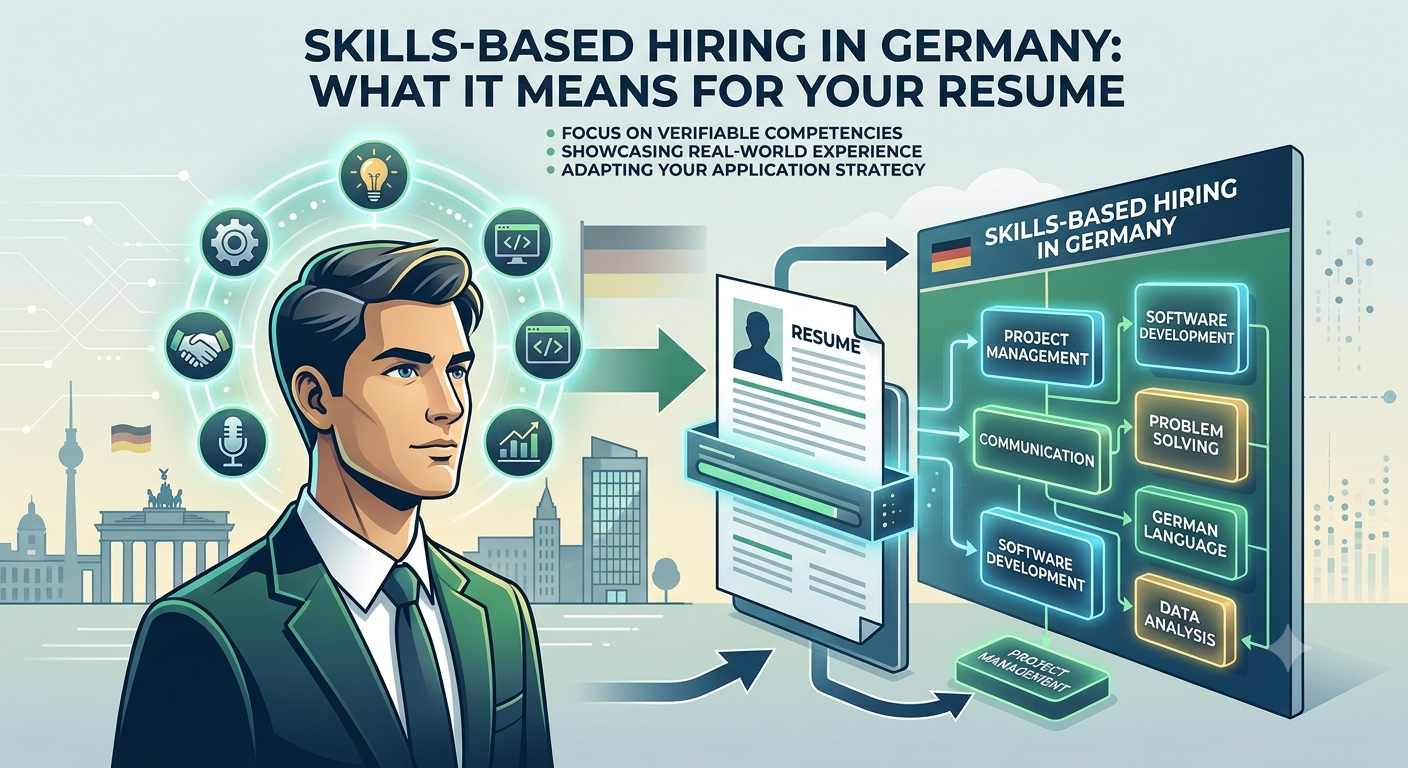
Introduction: Skills-Based Hiring in Germany
Across Germany there is a shift towards employing candidates based on their skills instead of their degrees. Many organisations are looking to see what skills you have and how they can be applied to achieve business objectives. Understanding what skills based hiring is in Germany will help you prepare a better application and give you a better chance of standing out to employers.
Within your application, focus on highlighting your skills that are relevant to the role, experiences, accomplishments and ability to carry out certain tasks. This will help you stand out whether you are an experienced candidate, recent graduate or an international candidate.
What is Skills-Based Hiring in Germany?
1. What is Skills-Based Hiring?
Skills-based hiring involves employers assessing candidates based on their skills, knowledge and experiences. For example, if a company is looking to hire someone for a Digital Marketing role they may look for candidates with knowledge of SEO, content marketing, Google Analytics and social media, rather than a certain degree from university.
If an employer is looking to hire software developers they may look at your knowledge of coding, problem solving and any completed projects. By using skills based hiring in Germany employers can identify candidates with practical skills. It can also help those who have gained their expertise through online courses, internships, freelance projects and professional experience.
2. Why are German employers using skills-based hiring?
There are several reasons why many German organisations are placing more importance on practical skills.
Technology & Automation – Businesses are becoming more digital so employers want professionals who can adapt to new tools.
Specialist Skills – Certain industries require professionals to have specific skills such as Information Technology, Engineering, Healthcare, Logistics & Finance.
Wider Talent Pool – Employers can look for candidates with the right skills regardless of their background.
Learning – Employers want employees who can learn new roles to help the businesses grow.
Those who can show they have the right skills and provide evidence of their experience may have an advantage.
3. How does skills-based hiring affect your resume?
Traditional resumes are usually focused on showing the skills you have from your education and previous employers. With a skills-based resume you will focus on the skills you can provide.
To help with your application, you may want to;
Highlight your relevant skills – This includes technical skills, communication, leadership and problem solving skills that are relevant to the role.
Show your accomplishments – Demonstrate how your work has helped the business.
Include practical experience – Mention your experience from internships, freelance, personal projects and volunteering.
Show your keywords – Use keywords mentioned in the vacancy related to skills.
Show your adaptability – Demonstrate how you have learnt to use new tools and overcome challenges.
This will help employers understand your professional skills.
4. Key skills to include on your German resume
Depending on the role and industry you will want to include different skills. However there are some key skills that are useful in most industries.
Technical Skills – Mention any relevant experience with software, coding languages, digital tools, data analysis and any industry specific skills.
Communication Skills – Employers like professionals who can clearly explain ideas, communicate with colleagues and customers.
Problem Solving – Demonstrate how you can identify problems, analyse situations and find practical solutions.
Teamwork – Mention any experiences that show you can work well with colleagues.
Adaptability – Employers like candidates who can learn new technologies, manage changing priorities and work in different environments.
Languages – Make sure to mention your proficiency in German and English e.g A1, B2 or C1.
Make sure to include relevant skills with examples.
5. How to showcase your skills
Sometimes just including a skills section isn’t enough. Employers will want to know how you have used these skills.
Instead of;
Social Media Management
You could write;
Managed 3 social media accounts, created monthly content calendars and increased engagement.
Instead of;
Strong communicator and team player
You could write;
Worked in a team of 5 to complete projects on time. Communicated well with colleagues.
Use action words such as managed, created, organised, analysed, improved and coordinated.
Try to include any quantifiable information. Including numbers, percentages and examples will help make your experience more believable.
6. Do you need a degree for skills-based hiring in Germany?
Degrees are still an important part of employment in Germany. Especially in certain regulated industries such as medicine, teaching and some engineering roles. However not all roles will require a certain degree from university. Some employers will be happy with candidates who have relevant professional experience, vocational experience, industry specific qualifications or can demonstrate their technical skills.
Some roles within marketing, sales, customer service and IT may allow you to show your skills through practical projects and previous experience. However international candidates should make sure they understand what qualifications are recognised. Certain professions require recognised qualifications, professional registration and authorisation. Candidates should make sure they show their education and skills clearly.
7. Common mistakes to avoid
Sometimes even the most skilled professionals can make mistakes on their resume.
Common mistakes include;
General statements – Avoid being too vague.
Irrelevant skills – Focus on skills that are relevant to the role.
No quantifiable information – Try to include accomplishments.
Too busy – Make sure your resume is easy to read by using clear headings, easy to read and short sentences.
Exaggerated – Only include skills you can confidently show during interviews or practical assessments.
Not mentioning languages – Make sure to mention your level in German and English.
Having a clear resume will help employers see your strengths.
8. Top tips for preparing your resume
To give yourself a better chance of getting a job in Germany, think strategically about your resume. Firstly look at the job description and identify what skills are essential. Then look at what you have done previously and identify what skills you can showcase.
Update your skills section and rewrite your experience to include examples. If you don’t have any professional experience you can include examples from your education, personal projects, internships or any relevant online qualifications.
Make sure to keep your resume clear and professional. Most resumes in Germany use a reverse chronological format starting with your most recent experience. Check your spelling, grammar, contact details and formatting. Make sure to personalise your resume.
Conclusion: Skills-Based Hiring in Germany
Skills-based hiring is opening up new opportunities for those who can show their practical skills, professional knowledge and potential to grow. Understanding what skills-based hiring is in Germany will help you prepare a competitive application.
Focus on showing your relevant skills, provide evidence through your professional accomplishments and personalise your resume. This will help you stand out to employers in Germany by showing your skills clearly.
Ready to take the next step in your career? Use the Best Job Tools to explore the latest job opportunities in Germany, identify roles that match your skills and connect with potential employers. Build a strong resume, showcase your professional abilities and make your next career move with confidence. Start your job search today with Best Job Tools!





Comments
Be the first to leave a comment.