

Introduction
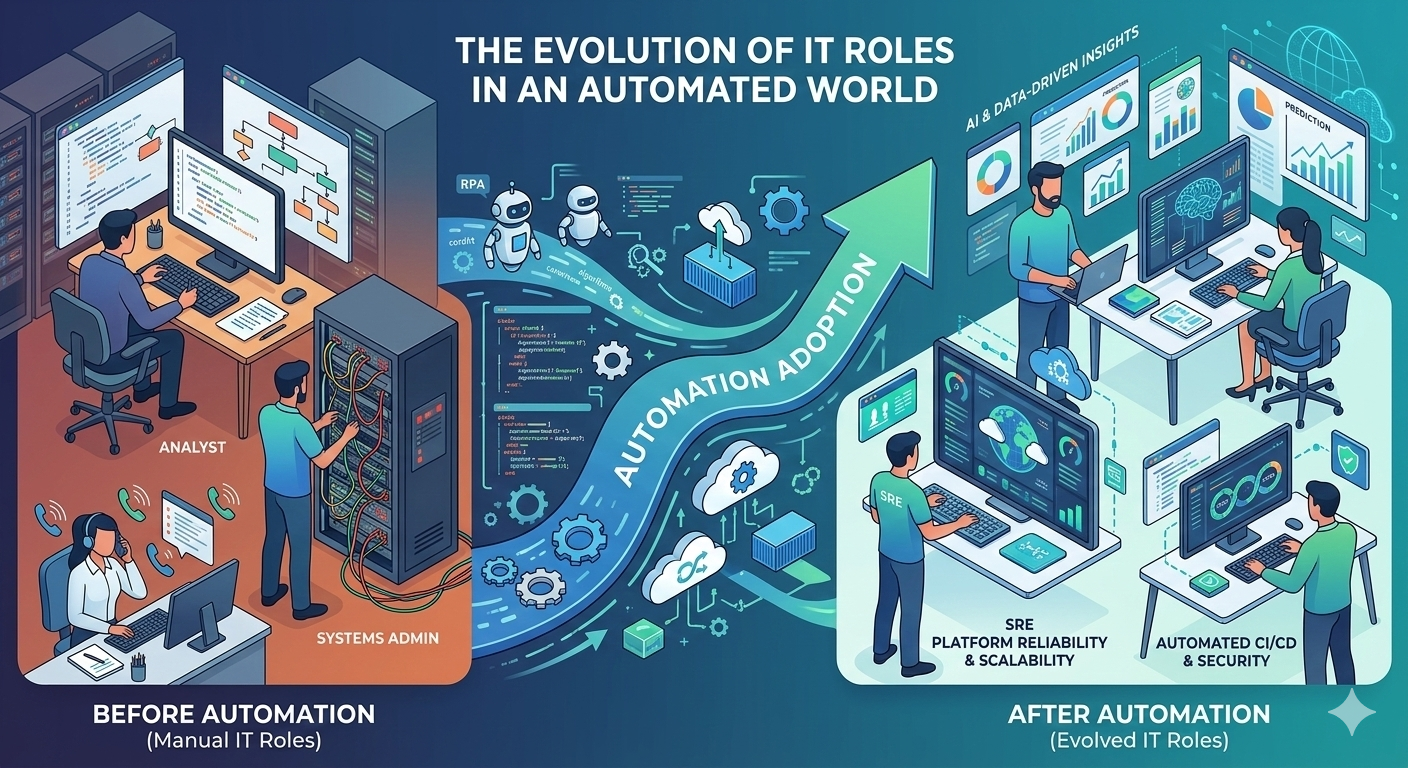
Automation is transforming the technology landscape across industries. Tasks that once required manual effort now run through automated scripts, workflows, and intelligent systems. As a result, the responsibilities of IT professionals are shifting significantly. Instead of focusing only on repetitive operational tasks, professionals now concentrate on system optimization, automation management, and strategic problem-solving. This shift explains exactly how IT roles are evolving with automation adoption in modern organizations.
Automation does not replace IT professionals. Instead, it changes the nature of their work. Companies now expect professionals to design, monitor, and improve automated systems while ensuring stability and efficiency.
Routine operational tasks are becoming automated
Traditionally, many IT roles involved repetitive activities such as server monitoring, system updates, or manual deployments. However, automation tools now handle many of these tasks.
For example, automated monitoring systems detect issues instantly, and CI/CD pipelines deploy software updates automatically. Because of this, IT professionals spend less time performing routine work and more time improving system performance.
Automation reduces manual workload while increasing strategic responsibilities.
DevOps practices integrate automation deeply
The rise of DevOps has significantly accelerated automation adoption in IT environments. DevOps workflows rely on automated testing, integration, deployment, and monitoring processes.
Developers and operations engineers now work together to create automation pipelines that improve delivery speed and reliability. This collaborative environment highlights how IT roles are evolving with automation adoption across development and infrastructure teams.
Automation-driven workflows increase efficiency and reduce operational errors.
Automation shifts focus toward system architecture
As automated tools handle routine processes, IT professionals focus more on system design and architecture. Instead of executing repetitive commands, engineers plan scalable and resilient infrastructure.
They evaluate how automated systems interact with applications, databases, and cloud services. This architectural thinking ensures systems remain stable even as automation increases.
Strategic planning becomes a central part of IT roles.
Monitoring and optimization become critical skills
Automation does not eliminate the need for human oversight. Automated systems require monitoring to ensure they function correctly.
IT professionals analyze logs, monitor dashboards, and evaluate performance metrics regularly. When automated workflows fail or behave unexpectedly, engineers must diagnose and fix the underlying issues.
Monitoring skills remain essential even in automated environments.
Automation increases the need for scripting skills
Modern IT roles require familiarity with scripting and automation tools. Languages such as Python, Bash, or PowerShell help professionals automate processes and integrate systems.
Instead of manually repeating tasks, engineers write scripts that perform actions consistently and efficiently. This skill allows teams to scale operations without increasing manual workload.
Scripting knowledge strengthens professional capability.
Cross-team collaboration becomes stronger
Automation often connects multiple systems and departments. For example, automated pipelines may involve development teams, testing teams, and infrastructure teams.
Therefore, IT professionals must collaborate across departments to design and maintain these systems. Clear communication ensures automated processes align with both technical requirements and business goals.
Collaboration becomes essential in automation-driven environments.
Security considerations grow with automation
Automation also introduces new security challenges. Automated scripts and workflows must follow strict security practices to prevent vulnerabilities.
IT professionals must ensure that access permissions, authentication processes, and data protection policies remain secure within automated systems. This responsibility requires both technical knowledge and operational awareness.
Security awareness becomes a key part of automated environments.
Continuous learning becomes essential
Automation tools evolve rapidly. New frameworks, platforms, and technologies appear regularly in the IT industry.
Professionals must stay updated with automation platforms, cloud technologies, and orchestration tools. Continuous learning helps IT professionals remain relevant as technology evolves.
Adaptability supports long-term career stability.
Career opportunities expand with automation expertise
Automation adoption creates new roles such as DevOps engineer, automation architect, site reliability engineer, and cloud operations specialist.
Professionals who understand both technical systems and automation frameworks become highly valuable in the job market. These roles often involve designing automated solutions rather than executing manual processes.
Automation expertise opens new career pathways.
Conclusion
Technology environments continue to evolve rapidly, and automation plays a major role in this transformation. That is precisely how IT roles are evolving with automation adoption across development, operations, and infrastructure functions.
Automation reduces repetitive work while increasing the demand for strategic thinking, system design, monitoring, and collaboration. Professionals who learn automation tools and develop strong analytical skills will remain competitive in the modern IT workforce. To explore IT roles that value automation expertise and long-term career growth, use the best job tool to discover opportunities aligned with your evolving technical skills.
Find Your Dream Job Today – Explore Endless Career Opportunities and Secure Your Next Role with Best Job Tool.






Comments
Be the first to leave a comment.