

Introduction: Job Search in the UAE
Many fresh graduates, professionals and those looking to work internationally in the UAE will be excited to start looking for a job. However, a common question people ask is ‘how long does it take to get a job in the UAE?’ The answer to this will depend on you industry, experience, qualifications, salary requirements and much more. “Planning a job search in the UAE requires patience, a clear strategy, and an understanding of the local recruitment process. Knowing what to expect can help you set realistic goals and prepare for different hiring stages.”
Some people may get an offer within a few weeks, whilst others could take several months. Knowing realistic timescales can help you plan ahead and ensure you have the right strategy in place. Below we discuss how long it typically takes to find a job, factors affecting your hiring process and how to find a job quicker.
Job Search in the UAE: Realistic Timelines & Tips for 2027
1. How Long Does It Take to Get a Job in the UAE?
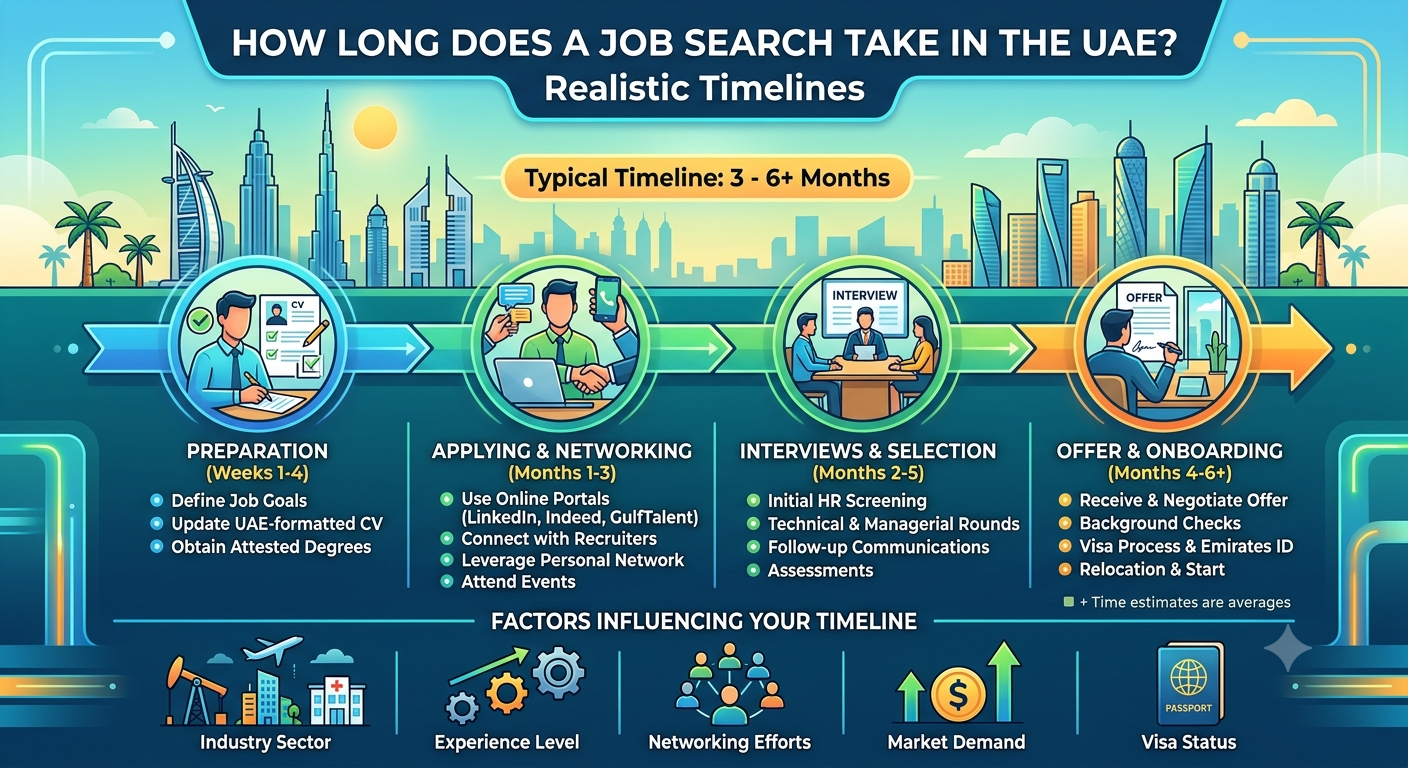
The amount of time it takes to get a job in the UAE will depend on the individual. On average candidates will find a role within 1 – 6 months. This can vary depending on the individual.
Typically:
Fresh Graduates – 1-4 Months
Experienced Professionals – 1-3 Months (This can depend on how relevant your skills are to your current employer.)
Senior Professionals – 2-6 Months (Or longer) as many roles will involve multiple interviewing stages.
Specialised Professionals – 1-3 Months (However niche jobs can take longer to find.)
International Candidates – 1-6 Months (or longer) depending on employer sponsorship, your location and the job requirements.
This is just an estimate and can vary depending on your experience.
2. Factors That Affect How Long It Takes to Get a Job in the UAE
There are many factors that can affect how quickly you get an interview and an offer.
I) Industry and Role Requirements
Some industry’s will always be looking to hire whereas others will not have as many roles available. Many roles will be available within sectors like healthcare, construction, technology, hospitality, logistics and finance. However, this will depend on your occupation, employer and current economic climate.
Before applying for roles, do some research into the industry you are looking to work within and what roles are available for you to apply for based on your qualifications and experience.
II) Experience and Qualifications
Those with relevant experience, recognised qualifications and skills may find it easier to show they are suitable for the role. Employers will often be looking for someone who can meet their immediate needs.
Fresh Graduates can stand out by showing any internship experience, projects completed during their studies, good communication skills and technical knowledge. Creating a strong portfolio can also help.
III) CV
A strong CV is essential. If your CV is not well structured you may struggle to show your strengths.
Tailor your CV for each role, include any key words from the job description and show your achievements. Don’t apply for hundreds of roles with the same CV. Apply for roles that are suitable for you.
IV) Salary Expectations
If you have unrealistic salary expectations this could reduce your chances with certain employers. Research what the average salary is for the role, experience and location.
Also think about your overall package, such as housing allowance, health insurance, transport benefits etc. “A successful job search in the UAE depends on choosing the right industry, matching your skills to employer requirements, and applying for relevant vacancies.”
3. Understanding the Hiring Process in the UAE
Understanding the typical hiring process can help you know how long it could take.
Application – 1-3 Weeks
Once you have applied, your CV will be reviewed by the recruiters. Some employers will reply to you quickly whilst others may take a few weeks or not reply at all.
Use reliable job sites, company career pages and professional networking sites. Keep track of the roles you have applied for.
Interview – 1-4 Weeks
Shortlisted candidates may be asked to complete an initial phone interview, an online interview, a technical test, or an in-person interview. Additionally, some companies conduct multiple interview rounds before making a final decision.
Therefore, prepare examples of your achievements, research the employer, and practise common interview questions. Moreover, respond to interview invitations promptly and maintain professional communication throughout the recruitment process.
Offer and Paperwork – 1-4 Weeks (or longer)
Once an employer has chosen you, they may check your references, qualifications, discuss salary and create an offer.
International candidates may have delays with their work permit and residence visa. This will depend on your employer, the relevant authorities, your situation and if you need any extra documentation. Don’t assume you can start working straight away. Double check with your employer what the legal requirements are.
4. How to Get a Job in the UAE Quicker
Whilst you cannot control the hiring process there are a few things you can do to increase your chances. “To make your job search in the UAE more effective, use trusted job portals, customise your CV, and connect with recruiters who specialise in your industry.”
I) Job Sites
Look for popular job sites like LinkedIn Jobs, Bayt, GulfTalent and Indeed. You can also look at company career pages.
Set up job alerts for the roles you are interested in. Apply for roles quickly once they are posted. Double check the employer and job description.
II) Tailor Your CV
Create a professional CV showing your experience, education, skills and achievements. Keep it simple to make it easy for recruiters and ATS to read.
Include key words from the job description. Don’t include skills/qualifications you don’t have. If you are applying for different types of roles keep multiple versions of your CV.
III) Networking
By networking, you can discover roles that may not be widely advertised. Additionally, connect with recruiters, professionals in your industry, and people working for companies that interest you.
Furthermore, personalise your LinkedIn messages, ask thoughtful questions, and maintain professional communication. Although networking does not guarantee a job, it can help you discover new opportunities and better understand what employers are looking for. As a result, you can build valuable professional relationships and improve your job search strategy.
IV) Interview Preparation
Research the company, what they provide, their customers, culture and recent news. Prepare short examples of your problem solving, teamwork, communication and technical skills.
Practice explaining why you want to work in the UAE and how your experience can benefit them. Being prepared can help you make a better impression.
5. Common Mistakes to Avoid When Looking for a Job
Avoid the following mistakes to prevent your job search taking longer.
Don’t apply for roles that aren’t relevant to your skills and experience. Not use one job site when there are multiple reliable options. Never use the same generic CV for every role.
Be wary of scams. A legitimate hiring process should be transparent. If they ask you to pay or provide sensitive information double check. In the UAE it is usually illegal for employers to charge workers for recruitment.
Don’t get disheartened if you get rejected. regularly review your application strategy and make improvements.
6. Create a Realistic Strategy
Creating a routine can help you stay organised.
Week 1 – Update your CV, improve your LinkedIn profile and find suitable employers. Week 2 – Start applying for roles and connecting with recruiters. Weeks 3+ – Continue to apply, prepare for interviews and follow up.
Set yourself goals for each week based on your schedule and how many relevant roles there are. For example aim to apply for 10-15 roles that are a good fit.
Every 2 weeks review how you are getting on. If you are not getting many interviews improve your CV or consider changing the roles you are looking for. If you are not getting offers from interviews focus on preparing for them and improving.
7. Best Time to Look for Jobs in the UAE
Depending on when you look for jobs you could find more opportunities. The hiring process varies throughout the year depending on the industry, budget and needs of the company. Some employers will hire more when starting new projects.
Don’t wait for a specific month. Keep checking job sites and company career pages. Prepare your CV, set up job alerts and apply as soon as relevant roles come up. If there are fewer roles available during certain times use this time to improve your skills, gain relevant certifications and network.
8. What to Do If It Takes Longer than Expected
If you have been looking for a while (a few months), review your strategy. Ensure your CV is relevant to the roles you are looking for and that your qualifications match the employers’ requirements.
Consider looking for similar job titles, different industries or locations within the UAE. Get feedback on your CV, practice interview questions and improve your skills that are commonly requested by employers.
Keep track of your applications. If you are not getting many interviews improve your CV and application strategy. If you are getting interviews but not offers focus on your interview performance. Most importantly keep your expectations realistic and don’t pay any suspicious recruitment fees.
Conclusion: Job Search in the UAE
So, how long does it take to get a job in the UAE? On average it will take between 1-6 months however your time may be shorter or longer. This will depend on your industry, experience, CV, interview performance and work authorisation. “An organised job search in the UAE can help you identify suitable opportunities, prepare for interviews, and manage your expectations throughout the recruitment process.”
The best way to find a job is to apply for relevant roles, network with professionals, prepare for interviews, and follow up regularly. Additionally, use reliable job sites and continuously improve your strategy to increase your chances of success.
Ready to move your career forward? To get started, explore the best job search tools to find relevant roles in the UAE, improve your CV, prepare for interviews, and stay organised. Furthermore, by following a focused and consistent strategy, you can gradually move closer to securing your next career opportunity.
Ready to find your next opportunity in the UAE? Use the best job tools to explore the latest vacancies, optimise your CV, track job applications, and prepare for interviews. Start using trusted platforms like LinkedIn Jobs, Bayt, and GulfTalent to discover suitable roles and take the next step towards your career goals.






Comments
Be the first to leave a comment.