

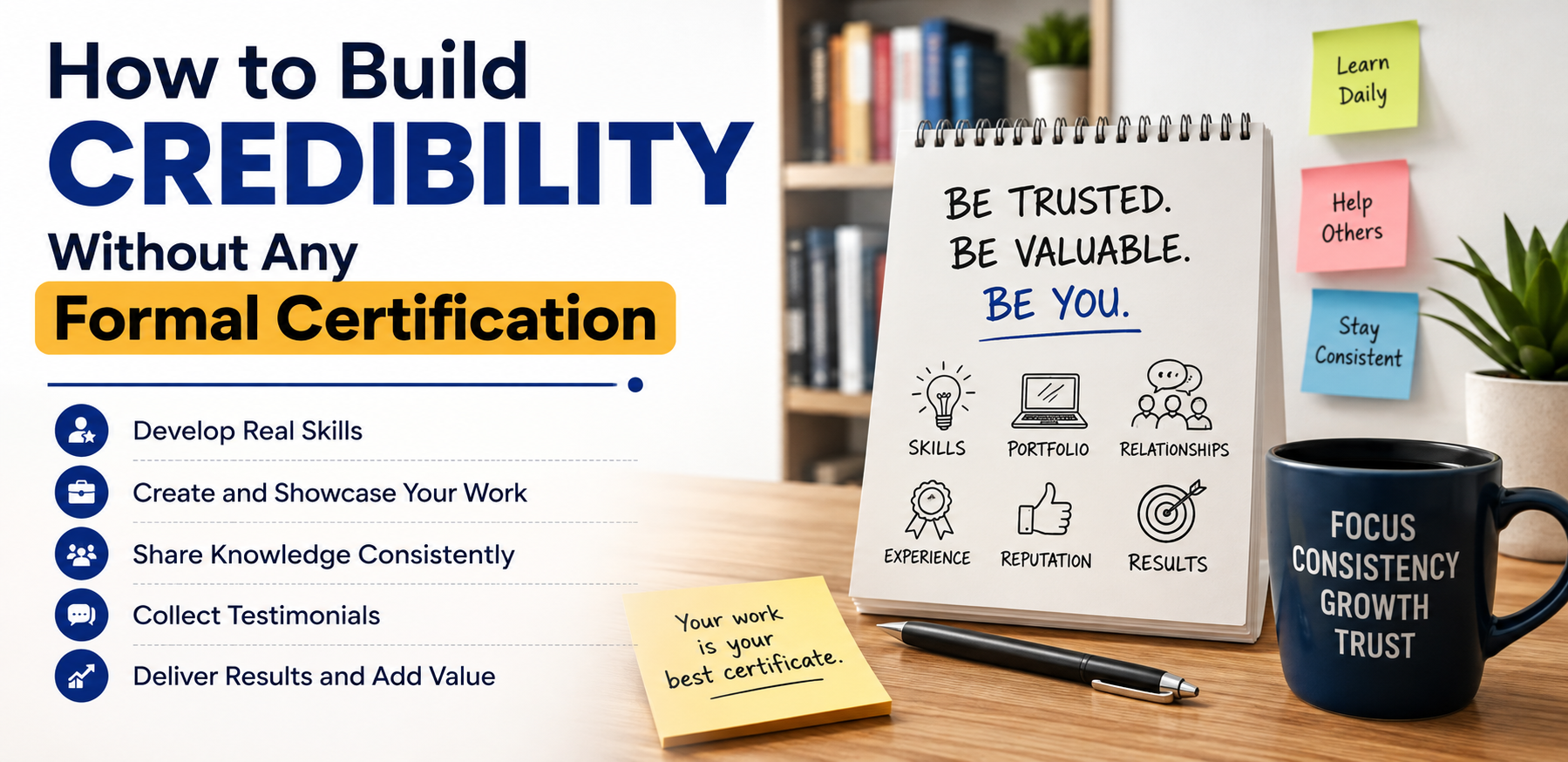
Introduction: Build Credibility
Credibility does not only mean being talented or having certifications. Credibility is a combination of trust, reliability, and confidence. When people trust on you, that whatever you say, you complete it, then it builds credibility. In new role, people mostly think everything should be perfect, but reality is, credibility does not come with perfection, it build with consistency.
If you complete every task on time, take your responsibilities seriously, and do clear communication, then people naturally take you as reliable.
Another important part of credibility is, you can accept your limitations. When you openly say, you have to learn this, or you will take some time to learn, then people see you as honest, and honesty create trust, and trust is a foundation of credibility.
How to Build Credibility Without Any Formal Certification?
1. Match Communication Style
Communication is one of the fastest ways to build trust. But this does not mean you can communicate in any random way with everyone. To build credibility, you need to follow the right communication style.
If you follow communication style, it helps you make a good impression quickly. It also helps understand your points easily, which builds trust faster.
For example, some managers prefer long, detailed answers, while some prefer short bullet-point updates. So first, observe your manager. Do they reply fast or slow? Do they prefer Slack messages or emails? Or do they ask for summaries or detailed explanations?
Then, based on this, adapt your communication style. This not only improves your clarity and professionalism but also reduces confusion and helps build trust.
2. Build a Strong LinkedIn Profile
Your LinkedIn profile is your digital first impression — it’s often the first place recruiters and potential employers check before contacting you. To make it effective, start with a professional profile picture and a clear, keyword-rich headline that reflects your role or target position (e.g., “Aspiring Digital Marketer | Content Creator | SEO Enthusiast”).
Let’s see in detail;
Professional Profile Picture
Your profile photo is the first thing people notice. Make sure it’s:
- High quality (clear, not pixelated)
- Professionally dressed
- Friendly and approachable expression
- Clean background
Catchy & Clear Headline
Your headline doesn’t have to be just your job title. Use it to show your value, skills, and target role.
Examples:
“Unemployed | Looking for work”
“Content Writer | SEO Specialist | Helping Brands Grow with Engaging Content”
A good headline grabs attention and helps you appear in searches.
Strong About Section (Summary)
This is where you tell your professional story. Use simple language to cover:
- Who you are
- Your top skills and experience
- Your goals or what you’re looking for
- A call to action (e.g., “Open to new opportunities” or “Let’s connect!”)
- Use short paragraphs or bullet points to make it easy to read.
Experience & Roles
Don’t just list job titles — explain what you actually did. For each role:
- Mention your key responsibilities
- Highlight accomplishments
- Add numbers or results when possible
“Increased blog traffic by 60% in 6 months through SEO strategy and content updates.”
This helps recruiters understand your impact.
Skills & Endorsements
Add relevant skills to your profile — LinkedIn allows up to 50, but focus on your top 10–15. Ask colleagues or past clients to endorse your top skills to build credibility.
3. Build a Portfolio Website
A personal website or portfolio is your online space to showcase skills, work, and achievements. It builds credibility, gives you full control over your personal brand, and makes it easy for recruiters or clients to find you. Include a professional bio, best work samples, testimonials, resume/CV, and contact details.
You can also add a blog to share insights and establish authority. Keep the design clean, mobile-friendly, and easy to navigate. Use high-quality visuals and clear descriptions for each project. A strong portfolio not only highlights your expertise but also leaves a lasting impression that can open doors to new career opportunities.
A portfolio acts as proof of your abilities.
4. Share Content to Show Your Expertise
A key part of building career credibility is actively contributing value online. Posting content that reflects your expertise helps establish credibility and positions you as a thought leader.
Ways to Share Content Professionally:
- Write Articles or Blog Posts: Share insights, tutorials, or industry news.
- Comment Thoughtfully: Engage in discussions on LinkedIn, Twitter/X, or relevant forums. Avoid spammy or off-topic comments.
- Share Industry News: Curate articles and provide your own analysis or opinion.
- Showcase Achievements: Share completed projects, certifications, or awards professionally.
Consistency is key. Posting regularly keeps you visible to your network.
Conclusion: Build Credibility
Building credibility without any formal certification is entirely possible when you focus on demonstrating your skills through action. Employers, clients, and professional networks are often more impressed by consistent performance, a strong portfolio, positive testimonials, and real results than by certificates alone. Every project you complete, every problem you solve, and every commitment you honor adds to your professional reputation.
“You don’t need a certificate to prove your value. Consistent results, practical skills, and a strong portfolio can build lasting credibility. Showcase your potential with Best Job Tool.”






Comments
Be the first to leave a comment.