

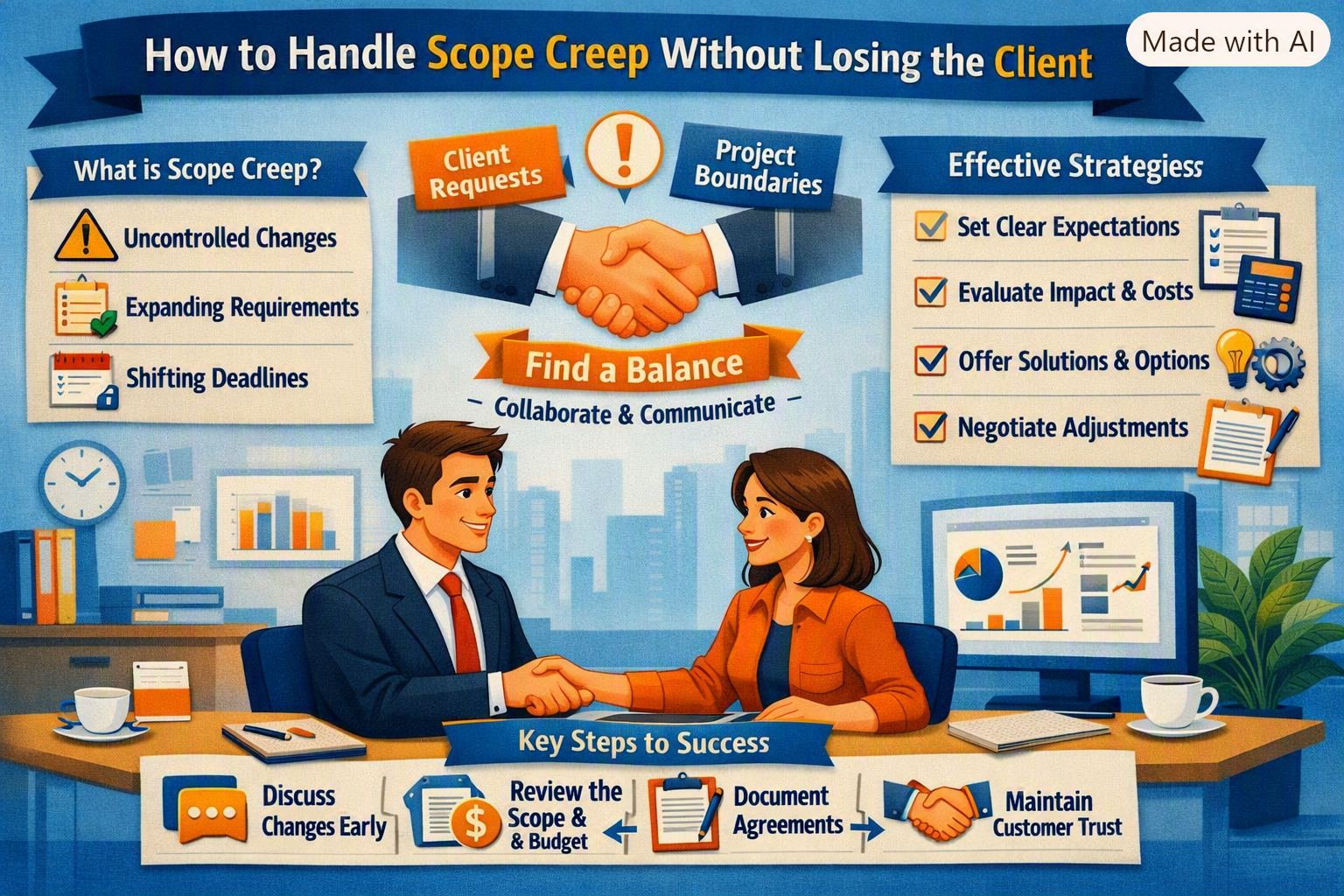
Introduction: Handle Scope Creep
Client work can be exciting stuff, especially if you’re building a long-term relationship with a prospect. But at some point, most solopreneurs and agencies will face the dreaded scope creep. This happens when the client wants to add more changes, amendments or justifications to the initially discussed plan of action.
These requests often seem harmless at first – just one or two more tweaks. Except that these two tweaks turn into twenty, and suddenly you’ve spent twenty hours on a project that only paid you ten. And if you say no, you risk losing the client. So how can you avoid scope creep and manage your client’s expectations without losing your profits?
How to Handle Scope Creep Without Losing the Client?
1. First Things First, Define the Scope
The surest way to avoid scope creep is to discuss and define it in the first place. Be precise with your client about what exactly you deliver and what you don’t. Number of hours or pages, policy on revision, project deadline – put it all in writing.
Instead of “I’ll design your website”, try specifying precisely what you will do: Website design – 5 pages, responsive layout, SEO optimization, 2 rounds of revisions.
That way, you and your client have a clear picture of what the project entails
2. Say No to Additional Requests Immediately
When the client tries to add more requests, try not to agree or disagree immediately. You need to give yourself time to understand exactly what the customer is asking for.
Sometimes it’s clear that the client wants something outside the initially discussed plan. But sometimes, they may think something is included when it isn’t. You can take a step back and say, “Allow me to review the scope of this project and get back to you”.
This way, you won’t feel tied to giving an immediate answer. The client will see that you are serious and organized.
3. Educate the Client
When faced with an additional request, try educating the client instead of simply refusing. For instance, explain to them how exactly their amendment will affect the project:
Adding three more pages to your website will require additional hours of work. I will also need to update the layout, conduct additional research and perform another round of revisions. This will also push the deadline a few days.
Make sure to explain all the nuances and clarify any questions.
4. Provide an Alternative
Perhaps, the best way to negotiate with clients and avoid scope creep is to offer alternatives. Instead of outright refusing to make additional changes, offer to make them as separate work:
I can certainly do those changes for you, but since they weren’t included in our original scope of work, I’ll have to charge you an additional ₹5000 for 3 more hours of work. We can also discuss adding those changes to your next project.
Try to sound flexible and willing to help. You can also mention deadlines and additional expenses:
I can definitely add these two more pages to your project, but since we only had 2 pages in the original scope, I’ll have to charge you an additional ₹5000 for 3 more hours of work. We could also agree to add another phase of the project, which will include those 2 pages and a new price.
No one wants to be unpleasant, but framing the additional requests in the context of a deal will seem less mean.
5. Document Everything
Always keep track of what was discussed and what changes were made. Email, tools, paper – anything you can use to keep the record is a viable option. The most important thing is to document everything your client says yes to. If the additional request was made over the phone, make sure to send an email confirming this:
Following our conversation, I wanted to confirm that you’d like to order two more pages, which we hadn’t previously included in our scope of work. This will add 2 working days and an additional ₹5000.
This way, you and your client will always have a reliable reference to what was agreed upon
6. Limit the Revisions
Unlimited revisions are the single biggest contributor to scope creep, especially when it comes to editing or writing services. The more revisions a client asks for, the more work they expect you to do for free. This is why it’s so important to limit them:
As we discussed, your project includes 2 rounds of revision. Should you need more than that, I’ll be happy to offer a separate quote for that.
It’s important to stay consistent though – if you made a mistake or an error, it’s always good to fix it for free. The main advantage of a revision limit is that it stops clients from changing their minds about the entire project.
Conclusion: Handle Scope Creep
Handling scope creep without losing the client requires a balance between flexibility and clear boundaries. Instead of rejecting new requests outright, discuss how they affect the timeline, budget, and original goals. Keep communication transparent, document agreed changes, and offer practical options that work for both sides.
By managing expectations while staying focused on delivering quality work, you can protect your time, maintain a professional relationship, and build lasting client trust.
Want to handle scope creep confidently while keeping clients satisfied? Use the Best Job Tool platform to strengthen your professional skills, manage client expectations, and build better long-term working relationships.






Comments
Be the first to leave a comment.