

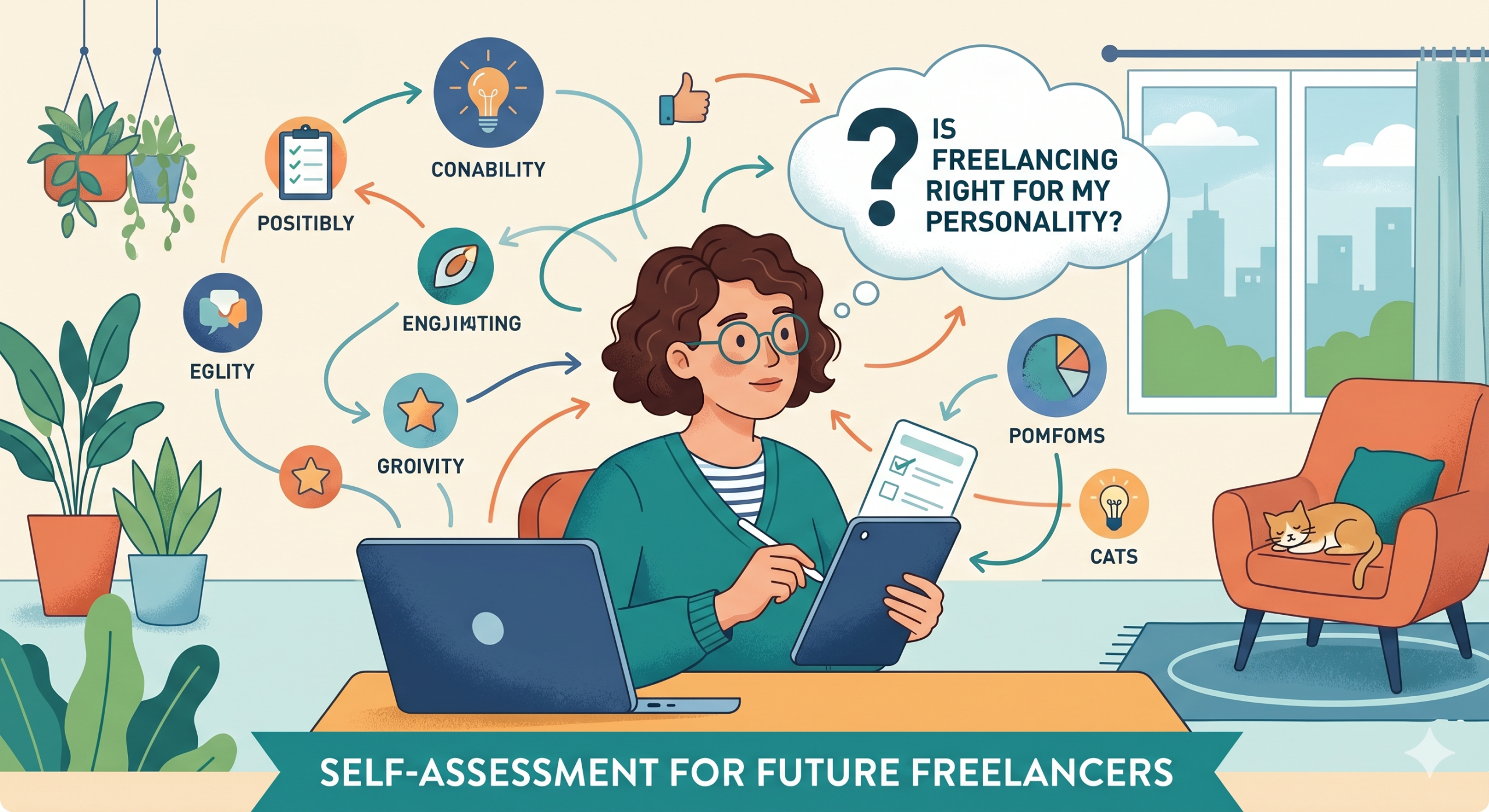
Introduction: Freelancing Is Not for Everyone and That’s Okay
Freelancing looks right attractive from the outside because it promises freedom, flexible schedules, and the ability to work from anywhere. However, what many people do not realize is that freelancing is not just a career choice—it is a personality fit.
Some professionals thrive in freelancing environments, while others struggle with isolation, inconsistent income, or lack of structure. The key is not whether freelancing is “good or bad,” but whether it matches how you naturally work, think, and stay motivated.
Before making the switch or even starting part-time, it is important to understand your personality patterns and working style.
How You Handle Structure and Routine Matters Most
Freelancing removes the traditional office structure. There are no fixed timings, no direct supervision, and no daily reporting system unless you create one yourself.
Ask yourself:
- Do I naturally create my own schedule?
- Can I stay disciplined without external pressure?
- Do I perform well without strict routines?
If you struggle without structure, freelancing may feel overwhelming at first. However, if you enjoy designing your own routine and working independently, freelancing may feel very natural.
Many successful freelancers build their own systems instead of relying on external structure, but that requires self-discipline.
Your Focus Style Reveals a Lot About You
Different people focus in different ways. Freelancing requires deep, uninterrupted focus because there are no managers constantly guiding your workflow.
Freelancing may suit you if:
- You can work alone for long hours
- You enjoy deep focus tasks
- You are not easily distracted at home
- You can manage your attention intentionally
Freelancing may feel difficult if:
- You need frequent social interaction to stay motivated
- You get distracted easily without supervision
- You struggle to complete tasks independently
Understanding your focus style is one of the strongest indicators of freelancing success.
Discipline and Self-Motivation Are Non-Negotiable
Freelancing does not reward talent alone—it rewards consistency. You will not always have someone reminding you of deadlines or checking your progress.
Ask yourself honestly:
- Can I stay consistent without pressure?
- Do I complete tasks even when I don’t feel motivated?
- Can I manage multiple deadlines responsibly?
Freelancers who rely only on motivation Right usually struggle. Successful freelancers depend on systems, habits, and discipline.
If you naturally procrastinate or delay tasks without external pressure, freelancing will require significant behavioral adjustment.
Communication Style Plays a Big Role
Freelancing is heavily communication-driven. You will constantly interact with clients through messages, emails, calls, and feedback loops.
Freelancing suits people who:
- Communicate clearly in writing
- Respond professionally and on time
- Can explain ideas simply
- Handle feedback without taking it personally
If you dislike client communication or avoid follow-ups, freelancing can feel stressful. On the other hand, strong communicators often grow faster because clients trust them more.
How You Handle Uncertainty and Income Fluctuations
Unlike traditional jobs, freelancing income Right is not fixed. Some months may bring multiple projects, while others may feel slow.
This is a key personality test point.
Freelancing suits you if:
- You can manage financial ups and downs
- You are comfortable with variable income
- You plan expenses and savings wisely
Freelancing may be difficult if:
- You need predictable monthly income Right for stability
- Financial uncertainty causes anxiety
- You struggle with budgeting
Strong freelancers usually develop financial planning habits early to handle inconsistency.
Your Comfort With Working Alone vs. With Teams
- Freelancing often involves working alone for long periods
- Communication happens digitally rather than physically
- Collaboration is project-based, not daily
If you enjoy independent work and minimal supervision, freelancing will feel comfortable. However, if you rely heavily on team environments for motivation, freelancing may feel isolating.
Some freelancers solve this by working from co-working spaces or maintaining part-time office interactions.
Time Management Skills Are a Major Indicator
Freelancers manage their own schedules completely. This includes balancing multiple clients, deadlines, revisions, and sometimes even different time zones.
Strong time management looks like:
- Prioritizing tasks Right effectively
- Meeting deadlines consistently
- Avoiding last-minute rushes
- Structuring daily work plans
If time management is weak, freelancing quickly becomes stressful and chaotic. However, this is also a skill that can be developed with practice and systems.
Ability to Learn Continuously Matters More Than Experience
Freelancing industries evolve quickly. Tools, platforms, and client expectations change regularly.
Successful freelancers:
- Learn new tools quickly
- Adapt to different client needs
- Upgrade skills continuously
- Stay updated with market trends
If you enjoy learning and experimenting, freelancing can feel exciting. If you prefer fixed skills and predictable workflows, it may feel challenging over time.
Testing Freelancing Before Fully Committing
You don’t have to decide immediately. One of the best ways to understand your personality fit is to test freelancing gradually.
You can start with:
- Small freelance projects
- Part-time gigs
- Weekend assignments
- Skill-based practice work
This helps you evaluate:
- Stress levels
- Work satisfaction
- Productivity patterns
- Client communication comfort
Real experience is more accurate than assumptions.
Using a Best Job Tool can also help you explore freelance opportunities, track projects, and understand whether this career path matches your personality over time.
Emotional Resilience Is Often Overlooked
Freelancing involves rejection, feedback, negotiation, and sometimes difficult clients. Emotional stability becomes very important.
You should ask yourself:
- Can I handle criticism Right professionally?
- Do I recover quickly from setbacks?
- Can I stay calm during client conflicts?
Freelancers who take things personally often struggle, while those with emotional resilience grow faster and build stronger reputations.
Conclusion: Freelancing Is a Fit, Not a Trend
Freelancing is not simply a career option—it is a lifestyle and personality match. It rewards independence, discipline, communication skills, and emotional resilience. At the same time, it can feel overwhelming for people who depend heavily on structure, routine, or constant supervision.
The best way to know if freelancing is right for you is not by reading about it, but by testing it in real situations. Start small, observe your behavior, and evaluate how you respond to freedom, responsibility, and uncertainty.
If your personality aligns with independence, Right flexibility, and self-driven growth, freelancing can become a powerful long-term career path. If not, it can still remain a valuable skill-building experience that improves your professional abilities in any field.
With the right self-awareness and structured approach, supported by tools like a Best Job Tool, you can make a clear and informed decision about whether freelancing truly fits your personality and career goals.






Comments
Be the first to leave a comment.