

Introduction: Why Salary Negotiation Practice Matters More Than Ever
Salary negotiation is one of the most important yet uncomfortable parts of career growth. Many professionals, especially freshers and early-career employees, struggle to confidently ask for fair compensation. Negotiations The fear of rejection, losing an opportunity, or sounding unprofessional often leads people to accept lower salaries than they deserve.
Traditionally, people practiced negotiations through mentors or real interview situations, which can be stressful and risky. Today, AI offers a safer and more effective way to practice salary discussions without real-world consequences. It allows you to simulate employer conversations, test responses, refine tone, and build confidence before facing actual negotiations.
The goal is simple: prepare better so you can negotiate smarter in real interviews.
Why AI Is a Powerful Tool for Negotiation Practice
AI tools can simulate realistic recruiter conversations and respond dynamically to your answers. This creates a safe learning environment where you can practice multiple scenarios repeatedly.
AI helps you:
- Simulate real interview negotiation conversations
- Practice responses without fear of judgment
- Test different salary expectations
- Improve tone and confidence
- Learn better phrasing for professional communication
Unlike human practice sessions, AI is available anytime and allows unlimited repetition without pressure or embarrassment.
Start With Realistic Salary Scenarios
Before practicing, you need to set realistic conditions. AI works best when you provide it with context.
You can input:
- Job role and industry
- Years of experience
- Location or remote job type
- Expected salary range
- Company type (startup, MNC, agency)
For example, you can ask AI to act as a hiring manager for a “remote marketing associate role with 1–2 years of experience.”
This helps create realistic negotiation environments instead of generic responses.
Practice Different Negotiation Styles Using AI
One of the biggest advantages of AI practice is experimenting with multiple negotiation approaches.
You can try:
Confident Negotiation Style
This approach focuses on assertive communication where you clearly state your expected salary based on skills and market value.
Flexible Negotiation Style
Here you show openness to discussion while still maintaining a clear salary range.
Value-Based Negotiation Style
This focuses on explaining your achievements, skills, and impact rather than just stating numbers.
Practicing different styles helps you understand which approach fits your personality and comfort level.
Use AI to Simulate Difficult Recruiter Responses
Real salary negotiations are rarely smooth. Recruiters often push back, question expectations, or offer lower salaries.
AI can simulate situations like:
- “This is above our budget.”
- “We can only offer a lower package.”
- “You are a fresher, so this is standard pay.”
- “We need someone willing to accept this range.”
Practicing responses to these scenarios helps you stay calm and confident in real interviews instead of feeling surprised or pressured.
Build Strong Salary Justification Scripts
One of the most important negotiation skills is explaining why you deserve a certain salary.
With AI, you can practice building structured Negotiations responses like:
- Highlighting relevant skills
- Mentioning achievements or projects
- Comparing market salary data
- Showing learning potential and value contribution
AI can help refine your language so you sound professional instead of emotional or uncertain.
A strong justification improves your chances of receiving better offers without sounding aggressive.
Practice Tone Control and Professional Communication
Salary negotiation is not just about what you say, but how you say it. Many candidates lose opportunities due to poor tone rather than weak arguments.
AI can help you refine:
- Polite but confident language
- Professional phrasing
- Balanced assertiveness
- Emotional control during rejection scenarios
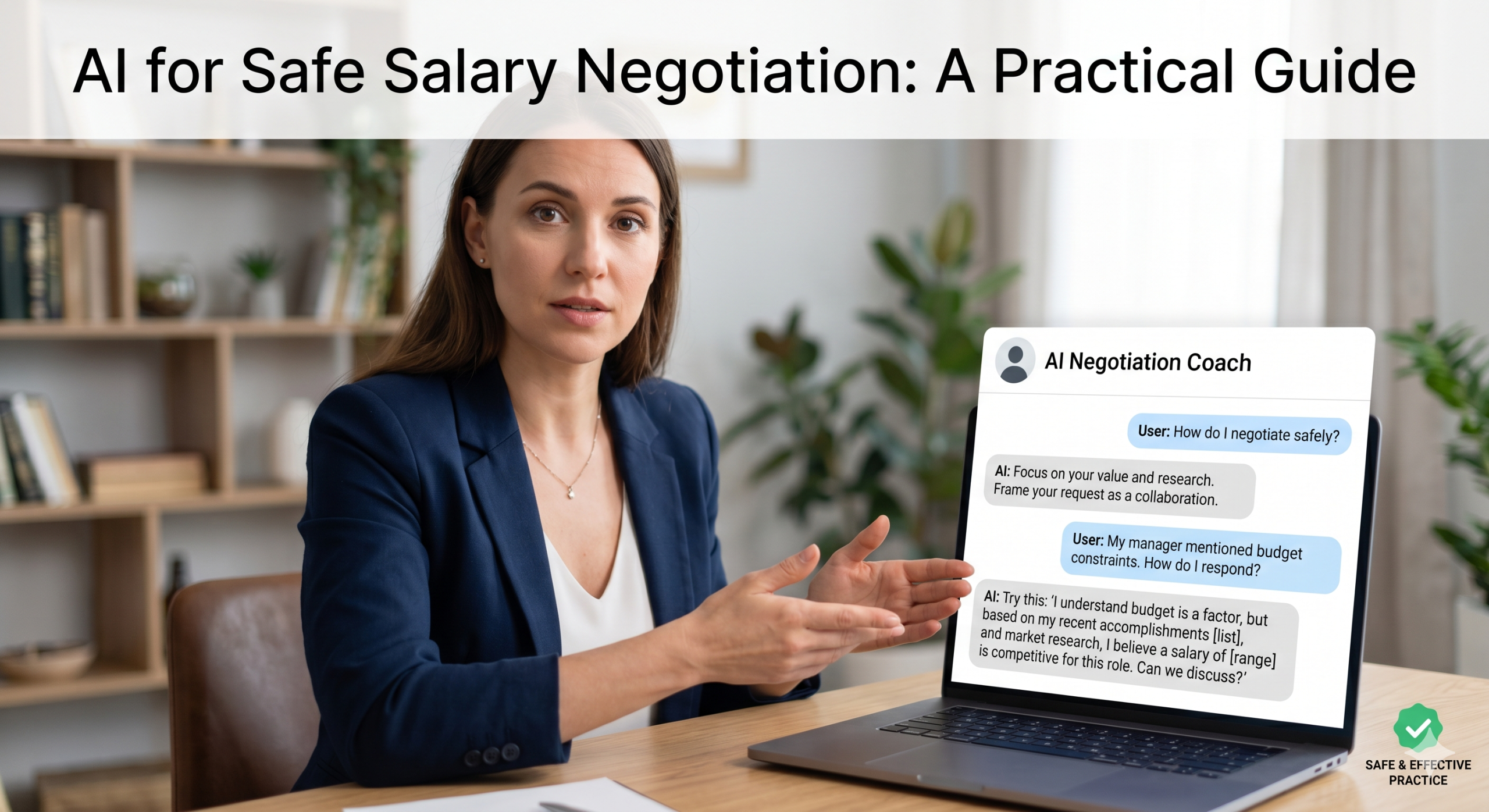
For example, instead of saying “I need more money,” you can practice saying “Based on my skills and market research, I believe a revised range would better reflect my value.”
Simulate Full Interview-to-Offer Conversations
Instead of only practicing salary questions, you can simulate the entire journey:
- Interview introduction
- Skill discussion
- Job role explanation
- Salary expectation question
- Offer negotiation
This helps you understand how salary discussions fit into the full interview process, not just as an isolated moment.
You can also repeat the simulation multiple times with different outcomes to improve adaptability.
Use AI Feedback to Improve Weak Areas
One of the most powerful features of AI practice is instant feedback. After each simulation, you can ask AI to evaluate your response.
It can analyze:
- Clarity of communication
- Strength of justification
- Tone and professionalism
- Negotiation strategy effectiveness
This feedback loop helps you improve faster than traditional practice methods.
You can refine your answers step by step until they feel natural and confident.
Combine AI Practice With Real Market Research
AI practice becomes more powerful when combined with real salary data. You should always compare your expectations with actual industry standards.
You can research:
- Average salary for your role
- Entry-level vs experienced ranges
- Remote vs in-office compensation differences
- Company-specific salary patterns
This ensures your negotiation practice is grounded in reality, not assumptions.
Using a Best Job Tool can help you analyze job listings, salary trends, and role expectations more effectively while preparing for interviews.
Build Confidence Through Repetition, Not Memorization
The goal of AI practice is not to memorize scripts but to build confidence in thinking and responding naturally.
Repeat exercises such as:
- Asking for higher salary
- Responding to rejection
- Negotiating benefits instead of salary
- Handling counter offers
Over time, your responses become smoother, more natural, and more confident.
Confidence in negotiation comes from exposure, and AI allows unlimited safe exposure.
Common Mistakes AI Helps You Avoid
Practicing with AI also helps you identify mistakes early, such as:
- Accepting first offer too quickly
- Over-explaining or sounding uncertain
- Not justifying salary expectations
- Being too aggressive or too passive
- Failing to research market value
Fixing these mistakes during practice prevents costly errors in real interviews.
Conclusion: AI Turns Salary Negotiation Into a Trainable Skill
Salary negotiation is not a natural talent—it is a skill that can be learned and improved with practice. AI makes this process safer, more flexible, and highly effective by allowing unlimited simulations without real-world consequences.
By practicing different scenarios, refining Negotiations communication, and building strong justification skills, professionals can enter real negotiations with confidence and clarity instead of fear or hesitation.
When combined with real market research and tools like a Best Job Tool, AI-based practice helps you approach salary discussions strategically rather than emotionally. This ultimately leads to better offers, stronger career positioning, and long-term financial growth.






Comments
Be the first to leave a comment.