

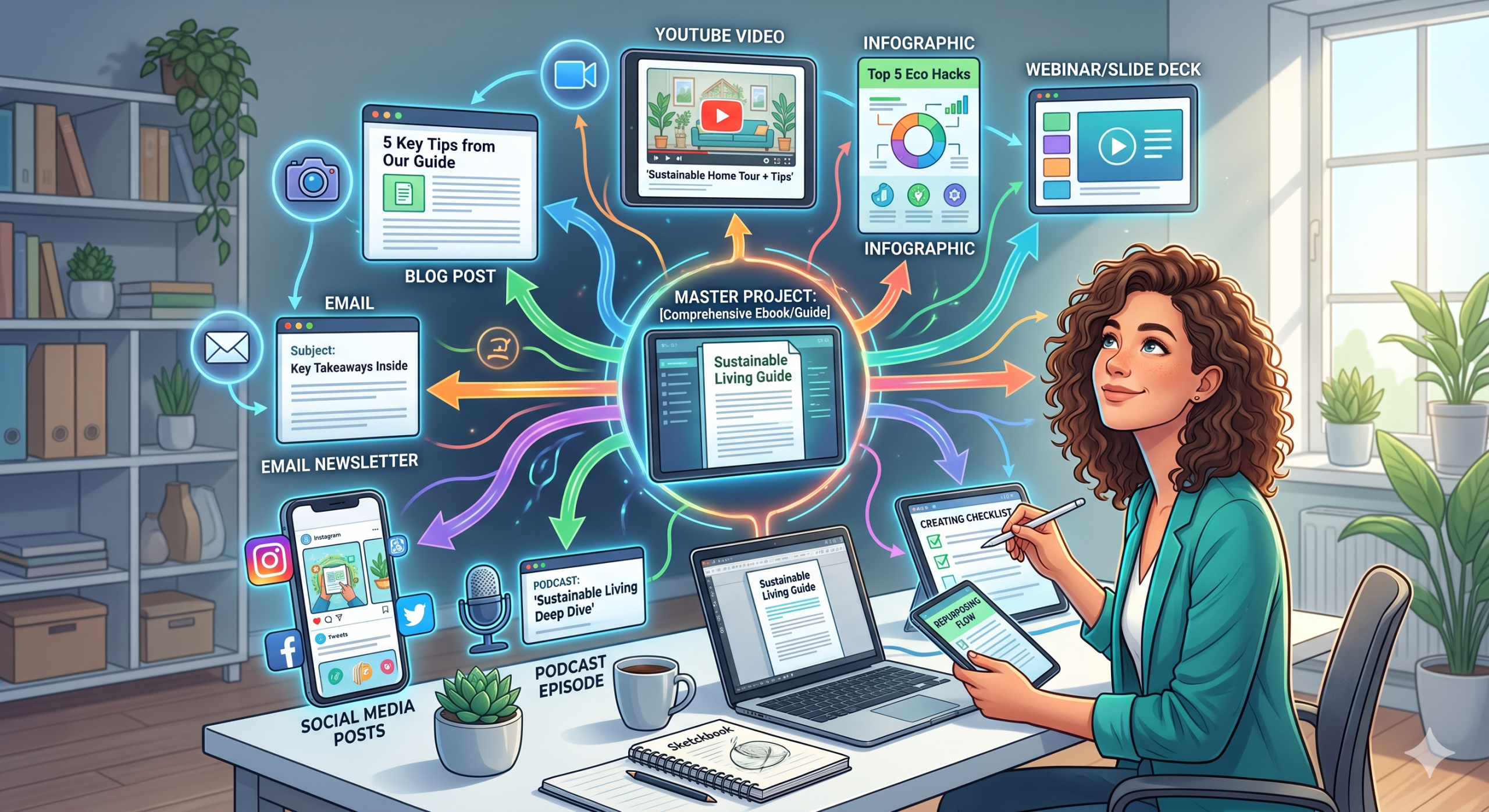
Creating high-quality content consistently is one of the biggest challenges for professionals, marketers, creators, and businesses. Many people assume they need a brand-new idea every time they publish, but that’s rarely the most effective strategy. The most successful content creators maximize the value of every project by transforming one piece of work into multiple content formats across different platforms. Repurpose
Whether you’ve completed a case study, webinar, research report, product launch, or client project, that single asset can become blogs, social media posts, videos, newsletters, presentations, infographics, and more. Repurposing content not only saves time but also improves productivity, strengthens your professional brand, and increases your reach without constantly starting from scratch.
For professionals working remotely or managing multiple responsibilities, repurposing content is an efficient way to maintain a consistent online presence while focusing on high-impact work. This guide explains how to turn one project into multiple valuable content pieces using practical strategies that support long-term growth.
Why Content Repurposing Matters
Repurposing means adapting existing content into new formats rather than creating entirely new material.
Instead of publishing one blog and moving on, you expand its value by sharing the same insights through different channels that reach different audiences.
Benefits include:
- Saves time and effort
- Increases content lifespan
- Improves SEO performance
- Reaches audiences on multiple platforms
- Strengthens brand consistency
- Supports thought leadership
- Improves return on content investment
- Maintains a steady publishing schedule
Every well-executed project contains enough insights to generate weeks—or even months—of valuable content.
Start with a High-Value Core Project
The best repurposing strategy begins with a comprehensive piece of content.
Examples include:
- Research reports
- Case studies
- White papers
- Webinars
- Podcasts
- Client success stories
- Product launches
- Industry surveys
- Conference presentations
- Long-form blog posts
These assets typically contain multiple ideas, statistics, examples, and actionable insights that can be broken into smaller, standalone pieces.
Creating a strong foundation first makes repurposing easier and more effective.
Break the Project into Smaller Topics
Instead of viewing your project as a single piece of Repurpose content, identify individual themes that can stand alone.
For example, a case study might include:
- The business challenge
- The proposed solution
- Implementation process
- Results achieved
- Lessons learned
- Best practices
- Common mistakes
- Future recommendations
Each of these sections can become its own article, social media post, presentation, or video.
This approach allows you to deliver focused content tailored to different audience interests.
Transform Content into Multiple Formats
Different people prefer consuming information in different ways. Repurposing allows you to meet those preferences without creating new ideas.
A single project can become:
Blog Articles
Expand individual topics into detailed, SEO-friendly articles that answer specific questions.
LinkedIn Posts
Highlight key lessons, statistics, or insights to engage a professional audience.
Short Videos
Summarize important takeaways in concise videos for platforms that favor visual content.
Infographics
Present complex information in a clear, visually engaging format.
Email Newsletters
Share practical insights directly with subscribers and encourage further engagement.
Presentation Slides
Convert project findings into presentations for internal meetings, webinars, or conferences.
Podcasts
Discuss project outcomes, challenges, and lessons in an interview or solo episode.
Publishing across multiple formats increases visibility while reinforcing consistent messaging.
Optimize Each Piece for SEO
Repurposed content should be tailored—not duplicated.
Every article or post should target a unique keyword, answer a specific user intent, and provide additional value.
Best practices include:
- Write unique headlines.
- Update introductions and conclusions.
- Include relevant internal links.
- Use descriptive headings.
- Add actionable examples.
- Optimize metadata.
- Refresh statistics when necessary.
This approach helps each content piece perform independently in search results.
Use Repurposing to Build Your Professional Brand
Consistently sharing expertise strengthens your credibility within your industry.
Repurposed content helps demonstrate:
- Subject matter expertise
- Problem-solving ability
- Industry knowledge
- Communication skills
- Consistent professional activity
Professionals working remotely can use webinars, LinkedIn articles, presentations, and educational content to build visibility with employers, clients, and industry peers.
Some remote professionals may also attend conferences Repurpose or client meetings that require occasional travel. Staying informed about company travel policies and travel testing requirements helps ensure smooth participation in business events while maintaining productivity.
If you’re looking to expand your career while showcasing your expertise, the best job tool, a global job platform, helps professionals discover remote and international opportunities where a strong personal brand can make a significant difference.
Productivity Strategies for Efficient Content Repurposing
Repurposing works best when supported by a structured workflow.
Create a Content Calendar
Plan publication dates for each repurposed asset over several weeks or months.
This maintains a consistent content schedule without requiring constant idea generation.
Build Content Templates
Develop reusable templates for:
- Blog posts
- LinkedIn updates
- Newsletters
- Video scripts
- Presentation decks
Templates reduce production time and ensure brand consistency.
Organize Content Assets
Store research, images, presentations, and Repurpose project files in a centralized location.
Well-organized resources make future repurposing faster and more efficient.
Review Content Performance
Monitor analytics to identify which formats perform best.
Track metrics such as:
- Website traffic
- Engagement rates
- Social shares
- Newsletter opens
- Video views
- Lead generation
Performance data helps prioritize the most effective content formats.
Financial Benefits of Content Repurposing
Repurposing isn’t just a productivity strategy—it also offers financial advantages.
Lower Content Production Costs
Creating multiple assets from one project reduces the need for additional research, design, and writing.
This allows businesses and professionals to produce more content without significantly increasing budgets.
Improve Return on Investment
Maximizing every project extends its value and increases the return on the time and resources invested in creating it.
Support Career Growth
Professionals who consistently publish valuable content often gain:
- Better networking opportunities
- Speaking invitations
- Consulting requests
- Freelance projects
- Higher-paying job opportunities
Investing in content creation can generate long-term professional and financial rewards.
Practical Steps to Repurpose One Project Successfully
Follow these strategies to maximize the value of every project:
- Start with a comprehensive, high-quality core asset.
- Identify multiple standalone topics within the project.
- Adapt content for different platforms and audiences.
- Rewrite rather than copy content.
- Optimize each piece for SEO.
- Schedule content over time instead of publishing everything at once.
- Measure performance and refine your approach.
- Update older content with new insights and examples.
- Reuse successful content formats for future projects.
Professionals seeking organizations that value expertise, communication, and thought leadership can also use the best job tool, a global job platform, to explore career opportunities across remote, hybrid, and in-office roles.
Future Trends in Content Repurposing
As digital marketing and professional branding continue to evolve, content repurposing is becoming more strategic.
Emerging trends include:
- AI-assisted content adaptation
- Interactive learning content
- Personalized content experiences
- Short-form educational videos
- Multimedia storytelling
- Voice-based content
- Community-driven discussions
- Cross-platform content ecosystems
Professionals who master these approaches will be better positioned to increase visibility, improve efficiency, and build stronger personal and business brands.
Conclusion
Repurposing one project into multiple content pieces is one of the smartest ways to increase productivity, strengthen your professional presence, and maximize the value of your work. Instead of constantly creating new ideas, focus on extracting multiple insights from a single high-quality project and adapting them for different audiences and platforms.
By combining thoughtful planning, SEO optimization, consistent publishing, remote Repurpose collaboration, awareness of travel testing requirements for business travel, and sound financial planning, you can create a sustainable content strategy that supports long-term career and business growth.
Whether you’re building a personal brand, growing a business, or advancing your career, the best job tool can help you connect with global employers who value professionals capable of creating meaningful impact through expertise, communication, and strategic content.






Comments
Be the first to leave a comment.