

Introduction
Portfolio careers offer flexibility and multiple income streams. However, without proper structure, they can become unpredictable. This is exactly why understanding how to use contracts and structures for portfolio work is essential.
Contracts bring clarity, while structure brings consistency. Together, they create stability in a flexible career model.
Professionals who manage both effectively reduce risk and improve long-term success.
Why contracts are essential in portfolio work
Contracts define expectations between professionals and clients. They outline responsibilities, timelines, and deliverables.
Without contracts, misunderstandings can occur. This can lead to disputes or delayed payments.
Additionally, contracts provide legal protection. They ensure both parties follow agreed terms.
Therefore, contracts are a critical part of professional work.
How to use contracts and structures for portfolio work effectively
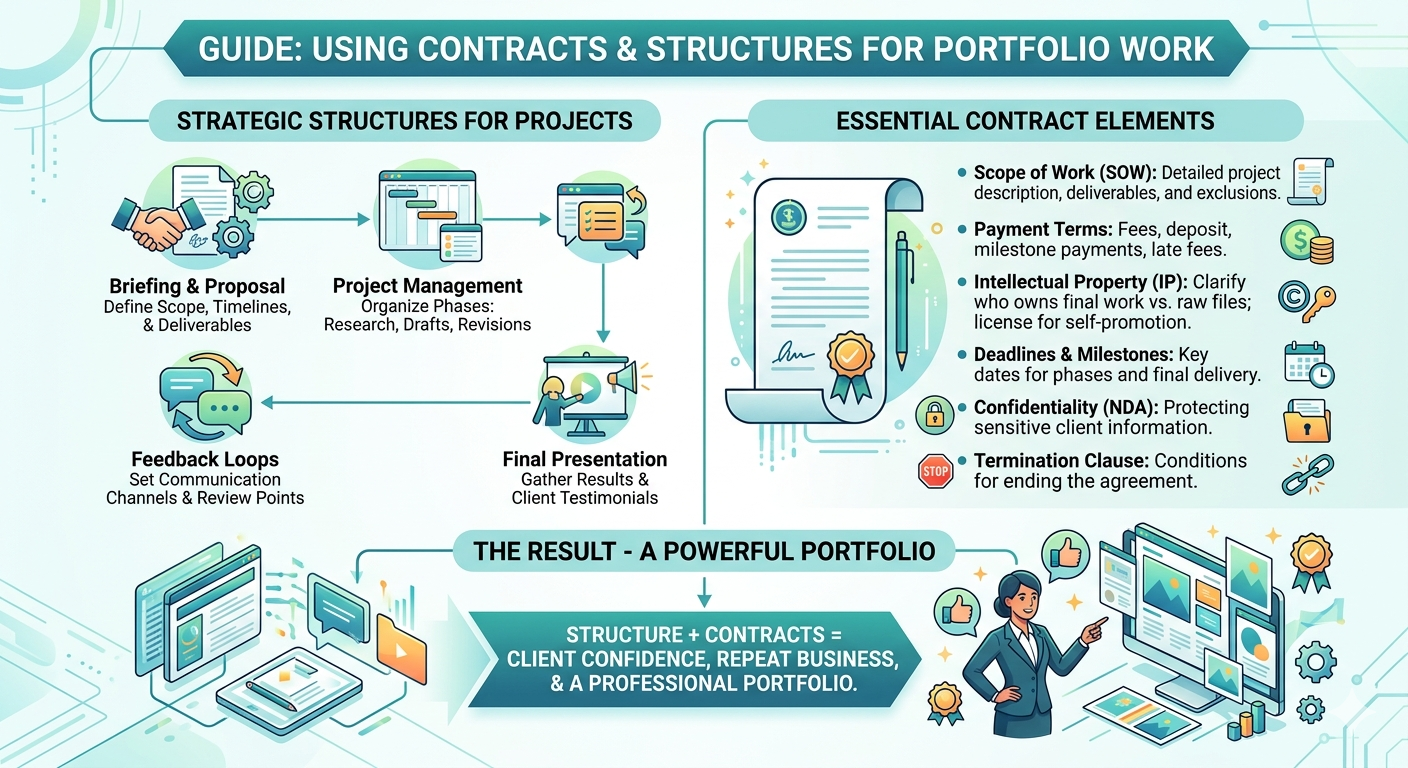
Using contracts effectively requires clarity and consistency. Every project should have a written agreement.
Clearly define the scope of work. This prevents confusion about responsibilities.
Additionally, include timelines and payment terms. This ensures accountability.
Moreover, establish revision limits. This avoids excessive changes.
Thus, structured contracts improve workflow and professionalism.
Key elements every contract should include
A strong contract should cover important details:
- Scope of work and deliverables
- Payment terms and schedule
- Project timeline and deadlines
- Revision and feedback policy
- Termination and cancellation clauses
These elements create clarity and reduce misunderstandings.
Therefore, well-defined contracts support smooth collaboration.
The role of structure in managing multiple projects
Structure helps professionals manage multiple roles effectively. Without it, work can become chaotic.
Create systems for tracking projects and deadlines. This improves organization.
Additionally, standardize workflows. This saves time and effort.
Moreover, use templates for contracts and communication. This increases efficiency.
Thus, structure supports productivity and consistency.
How contracts improve financial stability
Financial stability is a major concern in portfolio careers. Contracts help address this issue.
Clear payment terms ensure timely compensation. They reduce the risk of delayed payments.
Additionally, contracts can include advance payments or milestones. This improves cash flow.
Moreover, long-term agreements provide consistent income.
Therefore, contracts contribute to financial security.
Building long-term client relationships through contracts
Contracts are not just legal tools. They also build trust.
Clear agreements show professionalism. Clients feel confident working with structured professionals.
Additionally, consistent terms create predictability. This strengthens relationships.
Moreover, satisfied clients often return for future work.
Thus, contracts support long-term collaboration.
Avoiding common mistakes in contracts and structure
Many professionals make mistakes when managing contracts:
- Starting work without a written agreement
- Using unclear or vague terms
- Ignoring payment conditions
- Overlooking revision limits
These issues can create problems later.
Therefore, attention to detail is essential.
How to create a structured workflow for portfolio work
A structured workflow improves efficiency. It helps manage multiple projects effectively.
Start by defining clear processes. Outline each step from onboarding to delivery.
Additionally, use tools to track progress. This improves visibility.
Moreover, review workflows regularly. This ensures continuous improvement.
Thus, structured systems enhance performance.
The importance of consistency in contracts and processes
Consistency is key in portfolio careers. Standardized contracts and workflows reduce complexity.
Professionals who follow consistent processes save time. They also reduce errors.
Additionally, consistency builds credibility. Clients trust professionals who are organized.
Therefore, consistency strengthens stability and growth.
How the best job tool supports structured portfolio work
Using the best job tool can improve portfolio management. It helps professionals find reliable opportunities.
Additionally, it connects them with clients who value structured work processes.
Moreover, advanced features help track applications and projects.
Therefore, the best job tool supports both growth and organization.
Conclusion
Understanding how to use contracts and structures for portfolio work is essential for building a stable and successful career. Contracts provide clarity and protection, while structure ensures efficiency and consistency.
By combining both, professionals can reduce risk, improve financial stability, and build strong client relationships.
In today’s flexible work environment, structure is the key to freedom. Use the best job tool to find opportunities that support your structured and professional approach.
Find Your Dream Job Today – Explore Endless Career Opportunities and Secure Your Next Role with Best Job Tool.






Comments
Be the first to leave a comment.