

Introduction
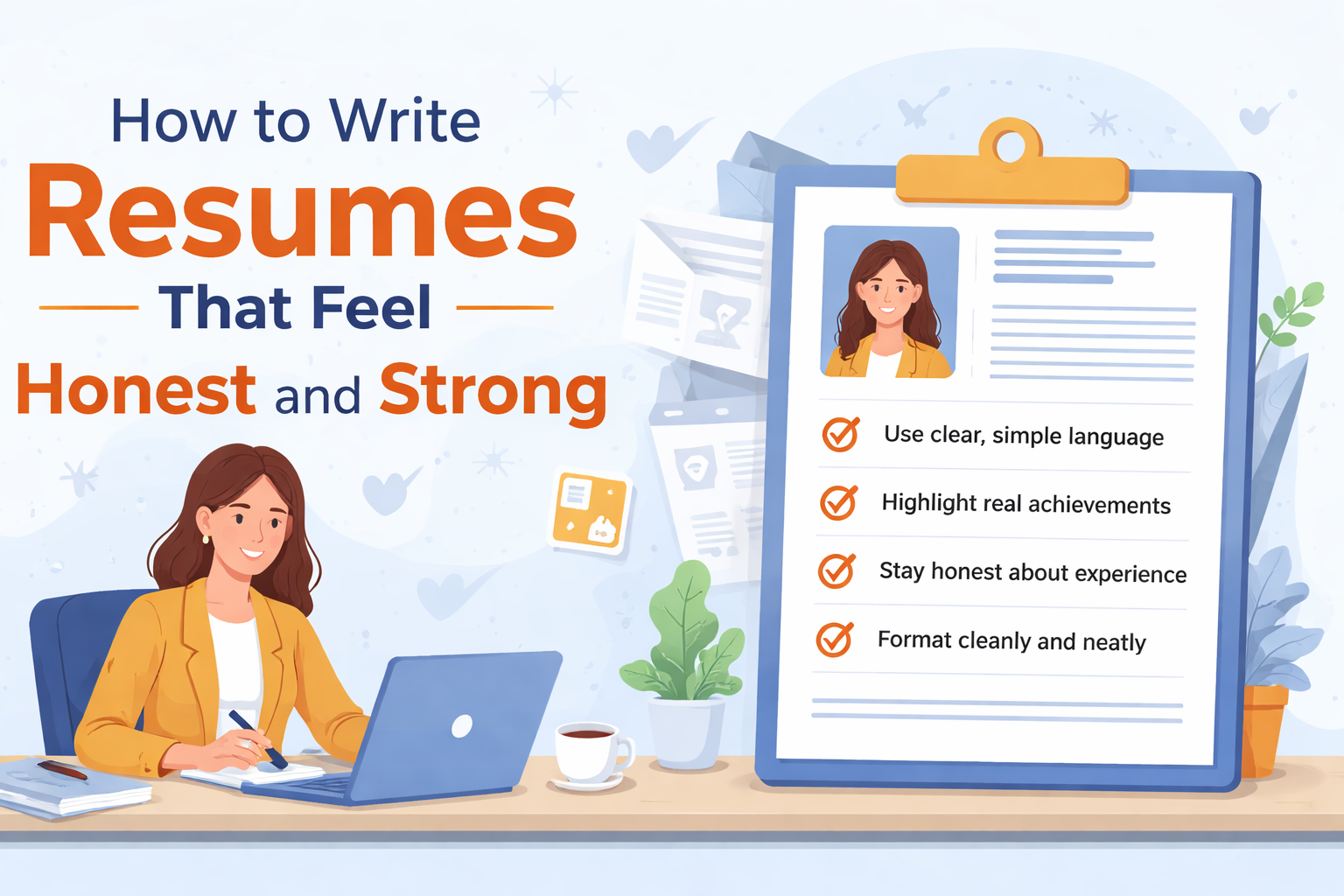
Resumes are not just a document. It is your first introduction to a recruiter. Before you speak in an interview, before you shake hands, your resume speaks for you. That is why it is very important that your resume feels both honest and strong.
Many people think a strong resume means using difficult words, big claims, or impressive sounding sentences. But that is not true. A strong resume is clear, simple, and real. It shows your value without exaggeration. It builds trust from the first line.
In this article, we will understand how to write resumes that feel honest and strong, step by step.
Understand the Purpose of a Resume
Before writing anything, you must understand why you are writing a resume.
A resume has three main purposes:
- To show your skills
- To show your experience
- To show your potential
Recruiters read hundreds of resumes. They can quickly understand when something feels fake or copied. But when a resume feels honest, they pay attention.
So always remember:
Clarity builds trust. Honesty builds strength.
How to Write Resumes that Feel Honest and Strong?
1. Start With a Clear and Simple Summary
The summary is the first section recruiters read. It should be short, clear, and direct.
Avoid writing:
- “Highly dynamic and result-oriented professional with excellent synergy skills.”
Instead write:
- “Content writer with 2 years of experience in blog writing and SEO. I help brands create clear and engaging content.”
See the difference? The second one feels real and simple. It shows:
- What you do
- How much experience you have
- What value you provide
That is strong and honest.
2. Use Real Achievements, Not Just Responsibilities
Many resumes only list job duties. But duties do not show strength. Results show strength.
Weak example:
- Managed social media accounts
- Wrote blog posts
Strong and honest example:
- Managed Instagram page and increased followers by 40% in 6 months
- Wrote 25 SEO blog posts that improved website traffic
Numbers make your resume stronger. They show proof. Even small numbers matter.
If you do not have exact numbers, you can still write clearly:
- Helped team complete project before deadline
- Assisted senior writer in editing 15+ articles
Real facts make your resume powerful.
3. Do Not Lie or Exaggerate in Resumes
Some people think small lies will help them get selected. But lies are dangerous.
For example:
- Writing “expert in SEO” when you only know basics
- Writing “team leader” when you only assisted
Recruiters ask deep questions in interviews. If they feel your resume is not honest, they lose trust immediately.
Instead of exaggerating, show growth:
- “Basic knowledge of SEO, currently learning advanced strategies.”
- “Supported team leader in managing client communication.”
This shows honesty and willingness to improve. That is more impressive than fake confidence.
4. Keep Language Simple and Natural
A resume should not sound like a dictionary. It should sound like a confident professional.
Avoid:
- Complicated grammar
- Very long sentences
- Too many buzzwords
Use:
- Short sentences
- Clear action words
- Easy vocabulary
For example:
Instead of:
- “Leveraged cross-functional collaboration to optimize operational frameworks.”
Write:
- “Worked with different teams to improve work process.”
Simple language feels human. And human resumes feel stronger.
5. Focus on Relevant Skills
Do not write every skill you know. Only write skills related to the job.
If you are applying for a content writing job, focus on:
- Blog writing
- SEO
- Research
- Editing
- WordPress
- Keyword research
If you add unrelated skills, your resume becomes weak and confusing.
A strong resume is focused. It clearly shows:
“I am right for this job.”
6. Show Growth Over Time
Recruiters like to see progress.
For example:
- Started as intern
- Became junior writer
- Handled independent projects
This shows learning and improvement. Growth shows dedication. Dedication builds strength.
Even small growth matters:
- Improved writing speed
- Learned new tools
- Took online courses
Always show how you are better today than yesterday.
7. Be Honest About Career Gaps
Many people hide career gaps. But hiding creates doubt.
Instead, explain simply:
- “Took a 6-month break for family responsibilities.”
- “Took time to improve skills and complete online certifications.”
You do not need to give too many personal details. Just be clear and confident.
Honesty removes suspicion.
8. Use a Clean Format in Resumes
A resume should look neat and organized.
Follow these basic rules:
- Use one simple font
- Keep font size readable
- Use proper spacing
- Keep margins equal
- Avoid too many colors
A messy resume feels unprofessional. A clean resume feels strong even before reading.
Structure example:
- Name and contact details
- Summary
- Skills
- Work experience
- Education
- Certifications
Simple structure works best.
9. Tailor Your Resume for Each Job
One common mistake is sending the same resume everywhere.
Every job description is different. Read it carefully. Notice:
- What skills they mention
- What experience they want
- What keywords they use
Then adjust your resume.
If the job focuses on “SEO writing,” highlight your SEO projects more.
If the job focuses on “research skills,” highlight your research work.
Tailoring shows effort. Effort shows seriousness.
10. Use Action Words in Resumes
Strong resumes use action words. They show energy.
Examples:
- Created
- Developed
- Managed
- Designed
- Improved
- Organized
- Coordinated
- Led
Instead of writing:
- “Responsible for writing articles”
Write:
- “Created 30+ blog articles for lifestyle website”
Action words make your resume active and confident.
11. Keep It Short and Clear
Your resume should ideally be:
- 1 page (for beginners or less than 5 years experience)
- 2 pages (for experienced professionals)
Do not add unnecessary information like:
- Hobbies that are not relevant
- Long paragraphs
- School achievements (if you are experienced)
Respect the recruiter’s time. Clear and short resumes feel stronger.
12. Proofread Carefully
Spelling and grammar mistakes reduce trust.
Before sending your resume:
- Read it slowly
- Check spelling
- Check dates
- Check formatting
- Ask someone to review
Even small mistakes can make you look careless.
A polished resume shows attention to detail.
13. Show Confidence Without Arrogance
There is a difference between confidence and arrogance.
Arrogant tone:
- “Best content writer in the industry.”
Confident tone:
- “Delivered high-quality content that improved engagement and website traffic.”
Confidence comes from proof, not from big claims.
Let your results speak.
14. Add Portfolio or Work Samples
If possible, add links to:
- Portfolio website
- Published articles
- LinkedIn profile
- Projects
This increases credibility. When recruiters see real work, your resume becomes stronger automatically.
For content writers, this is especially important. Your work is your proof.
15. Align Resumes With Your Real Personality
Your resume should match who you are.
If you are calm and thoughtful, your resume should feel structured and clear.
If you are creative, your resume can show creativity in a simple professional way.
Do not copy someone else’s style completely. Use inspiration, but keep authenticity.
Authenticity creates connection.
16. Think Like a Recruiter
Ask yourself:
- If I read this resume in 30 seconds, what will I understand?
- Is it clear what I can offer?
- Does it feel real?
- Does it show value?
Recruiters often scan resumes quickly. Make sure important information stands out.
17. Avoid Overloading With Buzzwords in Resumes
Words like:
- Hardworking
- Passionate
- Dedicated
- Team player
These words are common. Instead of writing them directly, show them through actions.
Instead of writing:
- “Hardworking professional”
Write:
- “Completed 20 articles in one month while meeting all deadlines.”
Show, don’t just tell.
18. Keep Updating Your Resumes
Do not wait until you need a job.
Update your resume:
- After completing a project
- After learning a new skill
- After achieving a milestone
This keeps your resume fresh and accurate.
19. Remember: Strength Comes From Truth
At the end, the most important rule is this:
A strong resume is built on truth.
You do not need to be perfect.
Don’t need 10 years of experience.
You do not need big job titles.
You need:
- Clarity
- Honesty
- Proof of effort
- Willingness to grow
Recruiters do not look for perfect humans. They look for reliable professionals.
When your resume feels honest, it builds trust.
When it shows results, it feels strong.
And when it feels both honest and strong, it opens doors.
Conclusion
Writing a resume that feels honest and strong is not about using complex words or making big claims. It is about presenting your real journey in a clear and confident way.
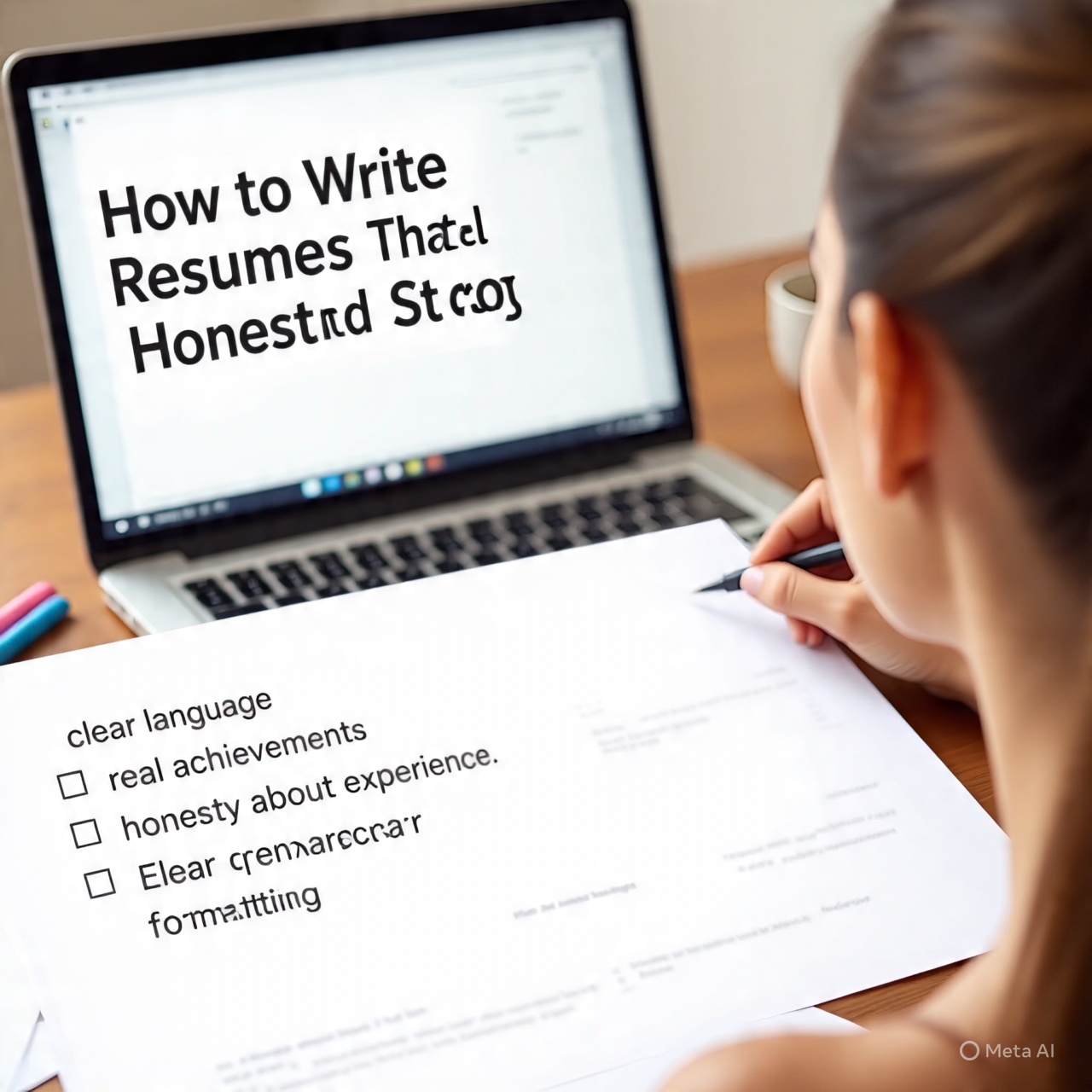
Focus on:
- Simple language
- Real achievements
- Relevant skills
- Clean formatting
- Honest presentation
Trust is the foundation of every professional relationship. Your resume is the first step in building that trust.
So write with clarity.
Write with honesty.
Write with confidence.
And let your real strength shine through.






Comments
Be the first to leave a comment.