

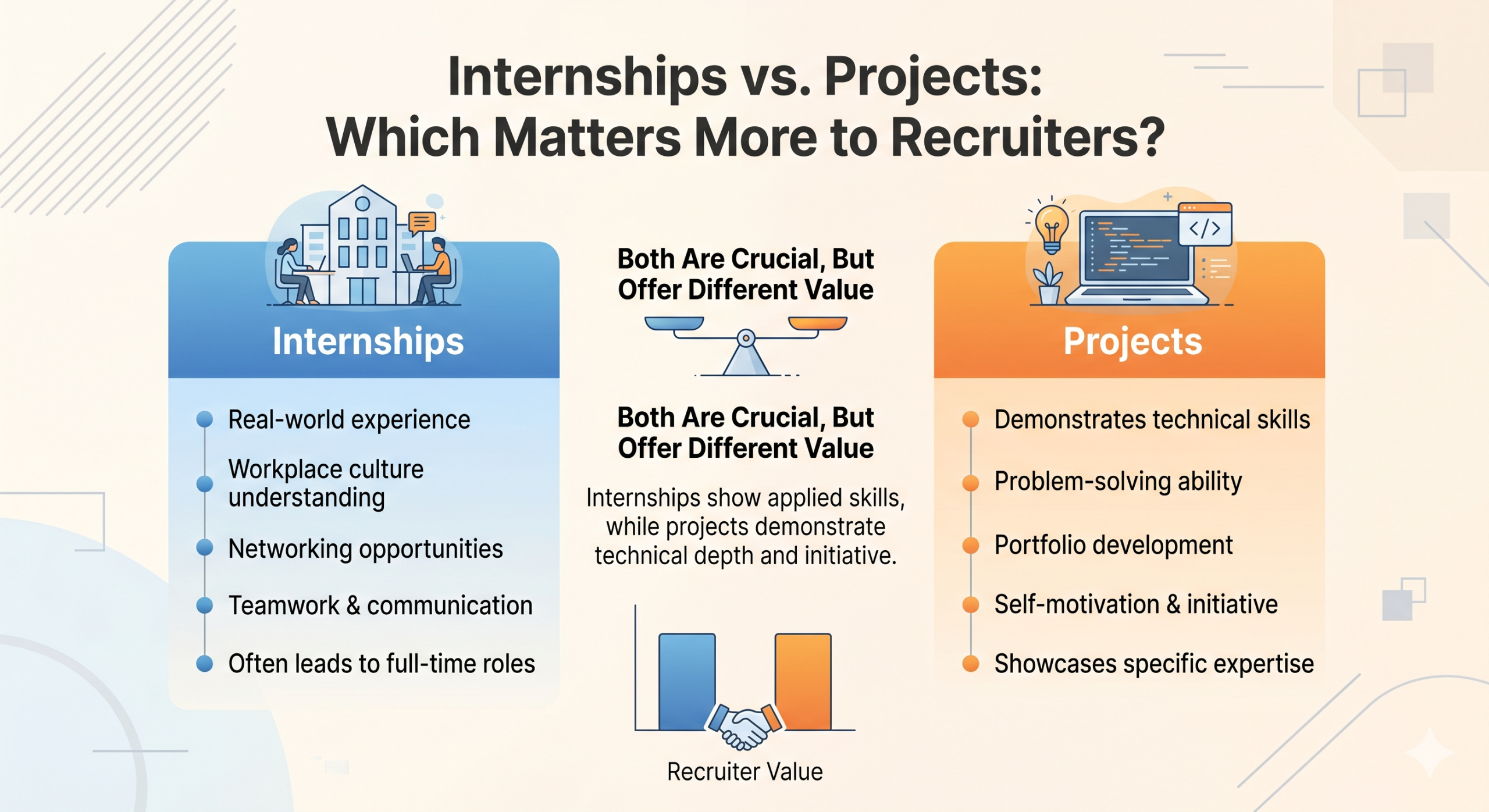
The modern hiring market has changed significantly over the last few years. Recruiters are no longer focused only on academic degrees or theoretical knowledge. Companies now prioritize practical skills, adaptability, communication, execution ability, and real-world problem-solving. Because of this shift, students and fresh graduates Internships vs Projects often ask one important question: should they focus more on internships or projects?
Both internships and projects help candidates build professional credibility, but they serve different purposes. Internships provide exposure to real workplace environments, while projects showcase independent execution and technical capability. Recruiters evaluate both based on the role, industry, and overall candidate profile.
In competitive industries where thousands of applicants apply for the same position, understanding how recruiters view internships and projects can help candidates build smarter career strategies. Whether someone wants a corporate role, remote opportunity, freelance career, or startup position, balancing practical experience and visible skills has become essential.
Why Recruiters Prioritize Practical Experience
Recruiters today want candidates who can contribute quickly without requiring extensive training. Companies value professionals who already understand workflows, communication systems, deadlines, and execution.
This is why practical experience has become more important than theoretical qualifications alone.
Recruiters commonly evaluate:
- Problem-solving ability
- Communication skills
- Adaptability
- Team collaboration
- Technical execution
- Creativity
- Professional consistency
- Time management
Both internships and projects help demonstrate these qualities differently.
Modern hiring systems, especially in remote and global recruitment, focus heavily on practical output. Platforms like best job tool increasingly connect professionals with companies looking for skill-based hiring instead of only degree-based hiring.
What Recruiters Learn From Internships
Internships expose candidates to real professional environments. They help students and fresh graduates understand how organizations function beyond classrooms.
Recruiters value internships because they show that candidates have already experienced:
- Workplace communication
- Team collaboration
- Reporting systems
- Deadlines
- Professional accountability
- Structured workflows
Internships also indicate that another company trusted the candidate Internships vs Projects enough to assign responsibilities and include them in professional operations.
Benefits of Internships
Real Workplace Exposure
Candidates understand how professional environments operate daily.
Team Collaboration
Interns learn how to communicate and coordinate with managers and colleagues.
Industry Understanding
Internships help candidates understand practical industry expectations before committing long-term.
Networking Opportunities
Professional relationships developed during internships often create future job referrals and opportunities.
Resume Credibility
Recognized internships strengthen resume trustworthiness and improve recruiter confidence.
For industries like management, HR, operations, finance, and communication, internships often carry strong importance because companies value workplace readiness.
What Recruiters Learn From Projects
Projects demonstrate execution ability and independent learning. They help recruiters evaluate what candidates can actually create, solve, or build.
Projects usually showcase:
- Technical skills
- Creativity
- Problem-solving
- Initiative
- Self-learning ability
- Portfolio quality
- Execution capability
Unlike internships, projects often allow candidates to work independently and experiment with ideas freely.
Benefits of Projects
Practical Skill Demonstration
Projects provide visible proof of ability rather than theoretical claims.
Portfolio Development
Candidates can create strong portfolios to showcase their work professionally.
Independent Learning
Self-initiated projects indicate motivation and curiosity.
Creative Freedom
Projects allow experimentation with innovative ideas and technologies.
Flexibility
Candidates can build projects anytime without waiting for internship opportunities.
For example:
- Developers can create applications
- Designers can build UI portfolios
- Writers can publish blogs
- Marketers can run campaign experiments
- Analysts can create dashboards and reports
In technical and digital industries, strong projects sometimes become more valuable than internships because recruiters can directly evaluate output quality.
Which Matters More in Different Industries?
The importance of internships versus projects depends heavily on industry requirements.
Technology and Development Roles
Projects often matter more for:
- Software development
- UI/UX design
- Data analytics
- Artificial intelligence
- Product development
Recruiters in these industries usually prioritize:
- GitHub repositories
- Technical portfolios
- Real applications
- Problem-solving projects
A strong portfolio often proves capability better than a short internship.
Marketing and Creative Roles
Both internships and projects matter equally.
Internships show:
- Team collaboration
- Client handling
- Campaign exposure
Projects show:
- Creativity
- Strategy
- Independent execution
- Personal branding ability
Business and Management Roles
Internships generally carry stronger importance because recruiters value organizational experience and workplace understanding.
Freelancing and Remote Careers
Projects often become highly valuable because clients care more about results and portfolio quality than formal corporate experience.
Remote hiring platforms such as best job tool increasingly emphasize practical skills, adaptability, and execution over traditional career paths.
Why Strong Projects Sometimes Beat Internships
Not all internships provide meaningful experience. Some interns spend months performing repetitive or low-impact tasks without developing valuable skills.
Strong projects can outperform weak internships because they demonstrate:
- Ownership
- Initiative
- Technical capability
- Creative thinking
- Real execution
For example:
- A candidate who developed a working application may impress recruiters more than someone who only observed meetings during an internship.
- A content creator managing a successful blog portfolio may stand out more than a passive marketing intern.
Recruiters increasingly prefer candidates who demonstrate practical problem-solving instead of only listing experiences.
This trend has become stronger in startup environments where companies value execution speed and adaptability.
Why Internships Still Remain Valuable
Despite the growing importance of projects, internships continue to provide major advantages because they validate workplace readiness.
Recruiters trust internship candidates because they already understand:
- Professional communication
- Workplace etiquette
- Team coordination
- Reporting systems
- Accountability
- Corporate workflows
Internships also reduce hiring risk. Companies feel more confident hiring candidates who already understand professional environments.
Even remote internships now provide valuable exposure to:
- Digital collaboration
- Remote productivity systems
- Asynchronous communication
- Online teamwork tools
Candidates entering competitive industries often benefit Internships vs Projects significantly from internship experience because it improves both credibility and networking opportunities.
The Best Strategy Is Combining Both
The strongest candidates usually combine internships and projects strategically instead of choosing only one.
A balanced professional profile may include:
- One or two quality internships
- Multiple strong projects
- A professional portfolio
- Consistent LinkedIn activity
- Skill certifications
- Freelance or collaborative work
This combination demonstrates:
- Workplace readiness
- Technical execution
- Creativity
- Communication skills
- Independent learning
- Professional adaptability
Example of a Strong Candidate Profile
A digital marketing candidate may include:
- Internship with a startup
- SEO blog portfolio
- Social media campaigns
- Analytics reports
- Content strategy projects
A software developer may include:
- Internship with a SaaS company
- GitHub portfolio
- Mobile application projects
- Open-source contributions
- UI prototypes
Balanced profiles often perform best because they reduce uncertainty for recruiters.
How to Present Internships and Projects Effectively
Even strong experience loses impact if presented poorly.
Resume Optimization Tips
For internships:
- Focus on measurable achievements
- Mention tools and responsibilities
- Highlight collaboration and outcomes
For projects:
- Explain the problem solved
- Mention technologies used
- Include measurable results
- Add portfolio or GitHub links
Interview Strategy
During interviews:
- Explain challenges faced
- Discuss decision-making processes
- Highlight lessons learned
- Share practical outcomes
Recruiters prefer candidates who understand their experiences deeply rather than simply memorizing tasks.
Build an Online Portfolio
A portfolio significantly improves visibility and credibility.
Include:
- Case studies
- Screenshots
- Reports
- Writing samples
- Design work
- Technical demos
Professionals applying for remote and international opportunities through best job tool especially benefit from strong digital portfolios because employers evaluate candidates online first.
Conclusion
The debate between internships and projects does not have a single universal answer because both offer different advantages. Internships provide workplace exposure, communication experience, and organizational understanding. Projects demonstrate execution ability, creativity, technical skills, and independent learning.
Recruiters ultimately care most about whether candidates can contribute effectively in real work environments. Strong internships and high-quality projects both help prove that capability.
Instead of focusing only on one path, Internships vs Projects candidates should aim best job tool to build balanced professional profiles that combine practical work experience with visible, skill-based execution. In today’s evolving hiring landscape, professionals who show adaptability, initiative, and measurable results consistently stand out from the competition.






Comments
Be the first to leave a comment.