

Introduction: Job References and Background Checks in Australia
Securing a job in Australia can be an exciting prospect whether you are a graduate or an experienced professional looking to start your career. With a variety of opportunities across many industries, including Healthcare, IT, Finance, Engineering, Education, Construction and Hospitality this can be an excellent way to start your career. However, many Australian employers may perform background checks and reference checks. Understanding Job References and Background Checks in Australia can help you get ready for the hiring process.
A key consideration when trying to secure a job in Australia is ensuring your CV, qualifications and previous experience are accurate. Employers will want to find out if you have the right skills, experience and professional background to undertake the role. They might contact your previous employer and ask about your education and qualification. Understanding the process can help you feel more confident.
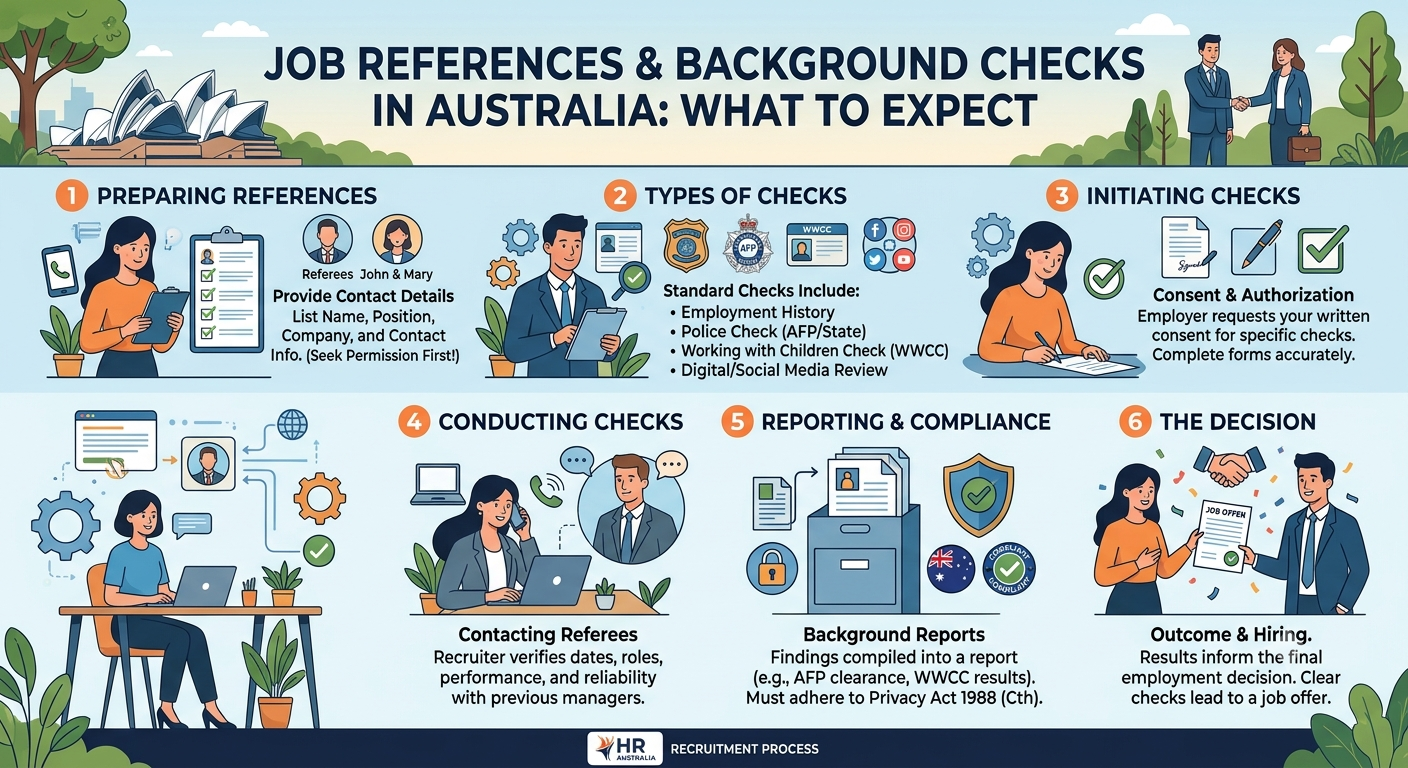
Job References and Background Checks in Australia: What to Expect
1. Employment References
Many Australian employers will perform employment references to ensure that you have worked for the company mentioned on your CV. This may include asking about your previous roles, dates of employment, duties and previous experience.
Ensure your CV is accurate. If you have frequently changed jobs or had gaps within your employment history, you should be prepared to explain why. Having previous employment letters, experience certificates and any supporting documents will also help.
2. Previous Employer References
Many employers in Australia will contact your previous manager, supervisor or team leader to gain an understanding of your professional behaviour and ability. They may ask about your communication skills, teamwork abilities, strengths, weaknesses, reliability and task completion.
Always ask permission to give someone’s details. Choose people who know you well in a professional setting and can give genuine feedback. Let them know what role you have applied for so they are prepared if they get contacted by a recruiter.
3. Criminal Records
Many employers will perform criminal record checks. Some employers will ask candidates to provide Nationally Coordinated Criminal History Check commonly referred to as a police check. This gives employers an understanding of whether you have a criminal history which may affect the role.
This is often common in certain industries such as Healthcare, Education, Security, Finance and Aged Care. If you are asked to provide a police check by an employer, follow their instructions and provide any identification documents they ask for. Just because you have a criminal record doesn’t mean you won’t be able to secure a role. The employer may take into consideration the nature of the crime and how relevant it is to the role.
4. Education and Qualifications
Employers may ask to see your education, certificate and training. This is often an important factor when applying for roles requiring specific degrees, licences and qualifications.
If you have studied outside of Australia, employers may ask for copies of your degree certificates, academic transcripts and any supporting documents. Ensure your qualifications are genuine and you can prove them. If the role requires any professional registration, ensure your qualifications meet the Australian requirements.
5. Right to Work
International job seekers will be asked by Australian employers to confirm they are legally allowed to work in Australia. They may ask about your visa status, working conditions and any restrictions.
Before applying for roles understand what visas you have that allow you to work in Australia. Check if there are any restrictions on your visa such as hours, employers or occupation. Use the Australian Government’s VEVO system to check your visa entitlements. Giving accurate information about your working rights will help prevent any issues.
6. Working with Children Check
If you are applying for a role involving working with children you may need to complete a Working with Children Check (WWCC). This is often required for certain roles within schools, childcare centres, sports organisations and community services.
Requirements vary depending on the state or territory you are in. You may need to apply, provide identification documents and complete the screening process. Check the specific requirements for your state or territory if you are applying for a role involving children.
7. Professional Licence and Registration
Some roles in Australia require you to have a valid professional licence or registration. This is common within Healthcare, Engineering, Construction, Accounting and Education. Employers may ask to see if you have a current licence or registration.
For example, Healthcare professionals may need to be registered with their relevant Australian professional body. Certain roles within Construction will require specific safety training or licences. Ensure your certificates and registration information are up to date.
8. References and Documents
Having your references and documents ready will make the hiring process much easier. Many candidates will leave it until an employer asks for information which causes unnecessary delays.
Have an up to date CV, education certificates, employment history, identification and any professional licences. Choose two or three reliable professional references. If you are a fresh graduate you could use a lecturer from your university, internship supervisor or project mentor. Being organised will help you reply quickly and professionally.
Conclusion: Job References and Background Checks in Australia
Understanding Job References and Background Checks in Australia will help you prepare for the recruitment process. Employers will perform these checks to ensure your employment history, qualifications, experience and suitability for the role. Whilst it might feel like a difficult process having your documents ready and using reliable references will make things easier.
Ensure your CV has accurate information and let your previous employers know they may be contacted. International candidates should understand their visa entitlements and working rights.
Be honest and organised throughout the hiring process. Reply to employers promptly, provide the documents requested and be prepared for any extra checks based on your industry. By following these simple tips you will feel more confident with the recruitment process and be one step closer to building a successful career in Australia.
Looking for the right job opportunities in Australia? Use the
Best job Tools to explore vacancies, find suitable employers, improve your CV and prepare for the hiring process. Start your job search today and take the next step towards building your career in Australia.






Comments
Be the first to leave a comment.