

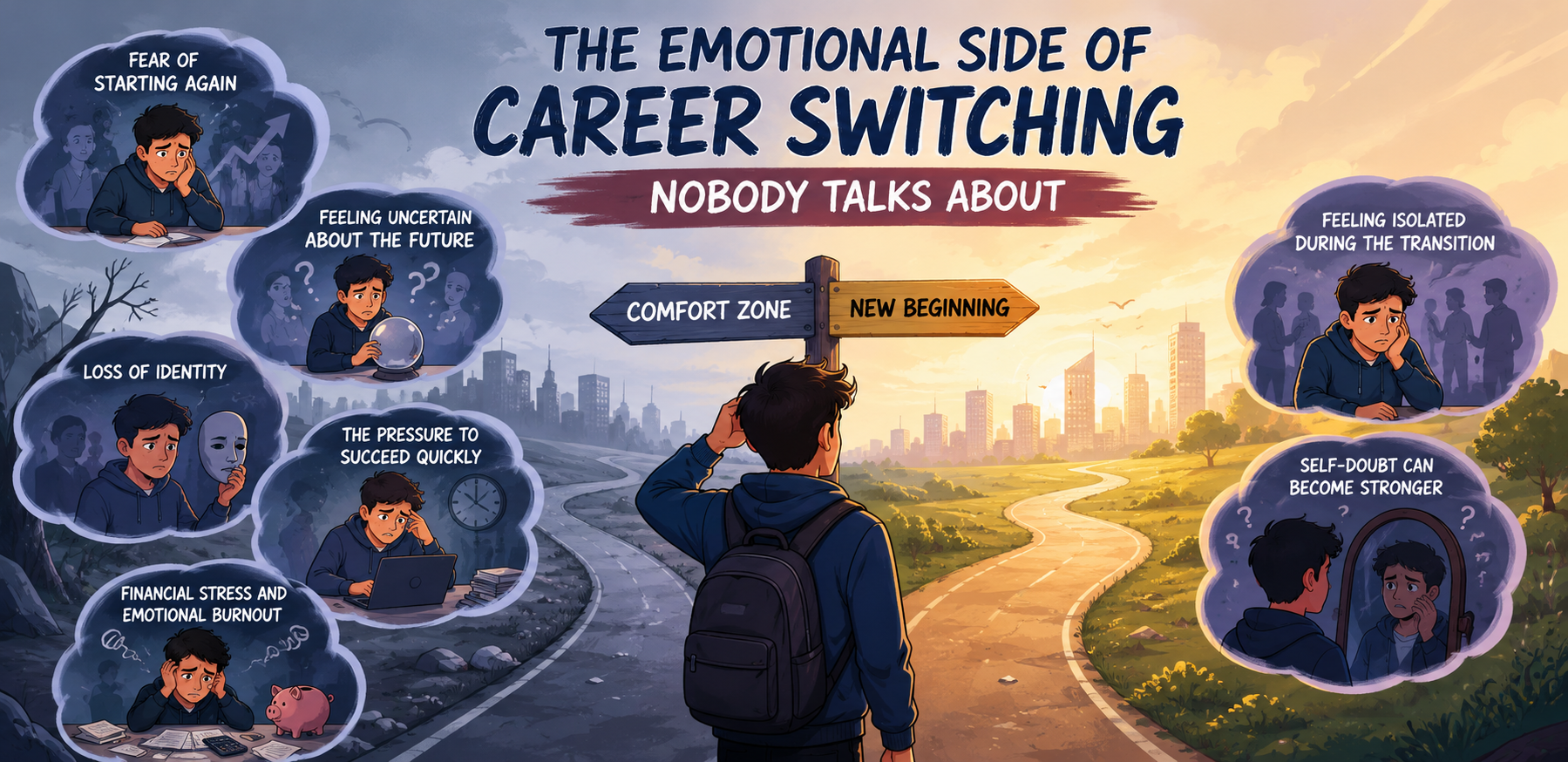
Introduction: Emotional Side of Career Switching
There are many people around us who switch their careers. Some become successful, while some fail. When someone asks them about career switching, many people talk about salary, skills, resumes, and job opportunities. But very few people talk about the emotional side of career switching because they think it is not important to share. However, just like other things are important in career switching, talking about the emotional side is equally important.
In this article, we are going to understand the emotional side of career switching that nobody talks about.
The Emotional Side of Career Switching Nobody Talks About
1. Fear of Starting Again
One of the biggest emotional struggles that almost every career switcher faces in the starting phase is the fear of starting again. A person spends a lot of time gaining experience in one field. Sometimes it takes a few months, and sometimes many years. Experience comes after a lot of struggle and hard work.
When a person thinks about switching careers, the first thought that comes to their mind is that they have already spent so many years gaining experience in one field, and now they will have to start again from zero in a new field. They feel that gaining experience in the new field will again take a lot of effort and time. Because of this, they become demotivated and start comparing themselves with other professionals.
But you need to understand that you are not truly starting from zero. There are many transferable skills that can also be useful in your new field, such as communication, discipline, teamwork, and problem-solving skills.
2. Feeling Uncertain About the Future
Feeling uncertain about the future is normal during a career switch because nobody truly knows what will happen in the future. When a person changes their career, stress and tension often increase even more. Career switchers usually worry about what will happen if they fail in the new field they are trying to build a career in, or if they earn very little money. Because of these thoughts, their stress level increases.
Sometimes this tension becomes even stronger because family members and friends do not support their career change decision. This creates more doubts in the mind, and controlling those doubts becomes difficult. That is why, if you have decided to change your career, you need to stay mentally strong from the beginning.
3. Loss of Identity
Loss of identity is another emotional side of career change. It means that when a person works in a particular field, they become known because of their job, and they also start seeing themselves through that role. For example, a teacher, engineer, or accountant.
When people decide to change their career, they often feel lost for some time because they are leaving the identity they were connected with for many years.
That is why, if you are also planning to change your career, make yourself mentally strong and remind yourself that a job title does not define your entire identity. You are capable of building another strong and powerful identity for yourself.
4. The Pressure to Succeed Quickly
During a career change, career switchers often feel a lot of pressure to become successful quickly. They expect immediate results and success, but career transitions take time. You may have to face many rejections and slow progress, which can make you feel frustrated and discouraged.
But you do not need to lose motivation because with every small step, you are moving closer to your success. Soon, you will start seeing progress. You just need to stay focused on your work, maintain your productivity, and trust yourself.
5. Financial Stress and Emotional Burnout
Career change can create financial stress and emotional burnout because when a person thinks about switching careers, they often leave their stable job and try a new field while learning new skills. Because of this, their income may suddenly stop, and financial problems can begin, which increases emotional stress.
To reduce financial stress and emotional burnout, create realistic goals, ask for support, and take breaks while working because taking breaks is equally important as working. Otherwise, you may become mentally exhausted.
6. Feeling Isolated During the Transition
During a career change, you may sometimes feel lonely because very few people get support from their family and friends while switching careers. Because of this, many people feel isolated during the transition, which can make them emotionally heavy and stressed.
To reduce this feeling of isolation, you can connect with people who are also changing their careers or with those who have already gone through a career change. They can help you with guidance, mentoring, and support.
Conclusion: Emotional Side of Career Switching
Career switching is not only about changing jobs. It is also about dealing with fear, uncertainty, self-doubt, pressure, and emotional adjustment. These feelings are completely normal, even though people rarely talk about them openly.
The journey may feel uncomfortable at times, but it can also help you grow personally and professionally. With patience, emotional resilience, and consistent effort, career switching can become an opportunity to build a career that aligns better with your goals, interests, and future vision.
“Navigate your career transition with confidence and explore new opportunities on Best Job Tool where growth and fresh starts matter.”






Comments
Be the first to leave a comment.