

Introduction: Safest Jobs
Artificial Intelligence (AI) and automation are changing the way people work. Many tasks that were once done by humans can now be completed by machines, software, or AI tools. Businesses use automation to save time, reduce costs, and improve productivity. Because of this, many workers worry about whether their jobs will still exist in the future.
While AI can perform many tasks, it cannot completely replace every job. Some jobs require human creativity, emotional intelligence, critical thinking, leadership, and personal interaction. These skills are difficult for machines to copy. As technology continues to grow, certain careers are expected to remain safe and valuable.
In this article, we will explore some of the safest jobs in a world of automation and AI and understand why these careers are likely to stay important in the future.
Why Some Jobs Are Safer Than Others?
Before discussing specific careers, it is important to understand why some jobs are less likely to be replaced.
Jobs are usually safer when they require:
- Human emotions and empathy
- Creativity and innovation
- Complex decision-making
- Leadership and management
- Personal relationships
- Physical work in changing environments
- Ethical judgment and responsibility
AI can analyze data and perform repetitive tasks, but it struggles to understand human feelings, build trust, and make decisions in complex situations.
The Safest Jobs in a World of Automation and AI
1. Healthcare Professionals
Healthcare is one of the safest fields in the future.
Doctors, nurses, therapists, and healthcare workers help people during difficult times. They not only diagnose illnesses but also provide emotional support and reassurance. Patients often need human interaction, compassion, and trust.
Although AI can help doctors by analyzing medical data and identifying diseases, it cannot replace the human connection that healthcare professionals provide.
Examples of healthcare jobs include:
- Doctors
- Nurses
- Physiotherapists
- Occupational therapists
- Mental health counselors
- Medical specialists
As populations continue to grow and age, the demand for healthcare professionals is expected to increase.
2. Mental Health Professionals
Mental health has become a major focus around the world. Many people seek support for stress, anxiety, depression, and other emotional challenges.
Counselors, psychologists, and therapists help people understand their feelings and improve their mental well-being. These jobs require empathy, listening skills, and emotional intelligence.
AI chatbots can provide basic support, but they cannot fully understand human emotions or build deep therapeutic relationships.
Because mental health care depends heavily on human interaction, these careers are likely to remain safe from automation.
3. Teachers and Educators
Education is another field that relies on human connection.
Technology can help students learn through online courses and educational platforms, but teachers do much more than deliver information. They motivate students, answer questions, encourage growth, and adapt lessons based on individual needs.
Good teachers understand emotions, learning styles, and classroom dynamics. These are areas where human skills are still very important.
Safe careers in education include:
- School teachers
- College professors
- Tutors
- Special education teachers
- Corporate trainers
- Learning and development professionals
As long as people need guidance and mentorship, educators will remain valuable.
4. Learning and Development Specialists
Organizations constantly need employees to learn new skills. As technology changes, companies invest in training programs to keep their workforce updated.
Learning and Development (L&D) professionals create training programs, identify skill gaps, and help employees improve their performance.
While AI can assist with content creation and learning platforms, human professionals are needed to understand employee needs and design effective learning experiences.
The growing importance of employee development makes this a promising career for the future.
5. Human Resource Professionals
Human Resources (HR) is another field where human interaction is essential.
HR professionals recruit employees, resolve workplace conflicts, support company culture, and help workers grow in their careers.
Although AI can screen resumes and automate administrative tasks, it cannot fully replace the personal relationships involved in hiring and employee management.
Important HR roles include:
- Recruiters
- HR managers
- Employee relations specialists
- Talent development managers
- Organizational development consultants
Companies will continue to need people who understand employees and workplace behavior.
6. Skilled Trades
Many skilled trade jobs require physical work in different environments. These jobs can be difficult to automate because every situation is unique.
Examples include:
- Electricians
- Plumbers
- Carpenters
- Mechanics
- Construction workers
- Technicians
A robot may perform specific tasks in a factory, but repairing a problem in a home or construction site often requires human judgment and adaptability.
As infrastructure continues to develop, skilled trades are expected to remain in demand.
Conclusion: Safest Jobs
AI and automation are transforming workplaces across the world, but they are not replacing every job. Careers that depend on creativity, empathy, leadership, communication, and complex decision-making are likely to remain valuable for many years.
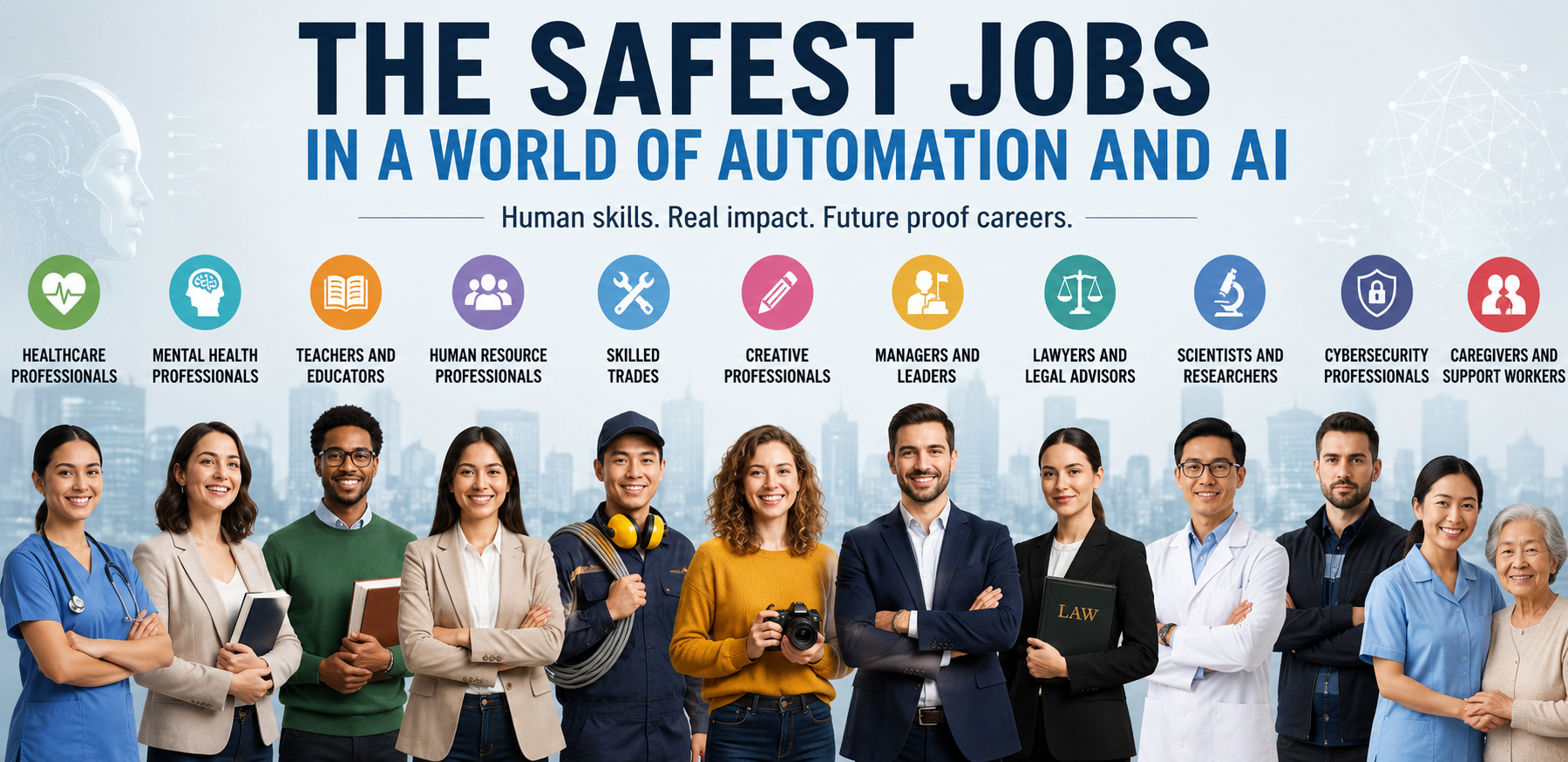
Healthcare professionals, teachers, learning and development specialists, HR professionals, skilled trades workers, creative professionals, entrepreneurs, cybersecurity experts, and caregivers are among the safest careers in an automated world.
Instead of fearing AI, workers can focus on developing human skills that technology cannot easily replace. The future belongs to people who are willing to learn, adapt, and work alongside AI. By combining human strengths with technological tools, professionals can build successful and secure careers in the years ahead.






Comments
Be the first to leave a comment.