

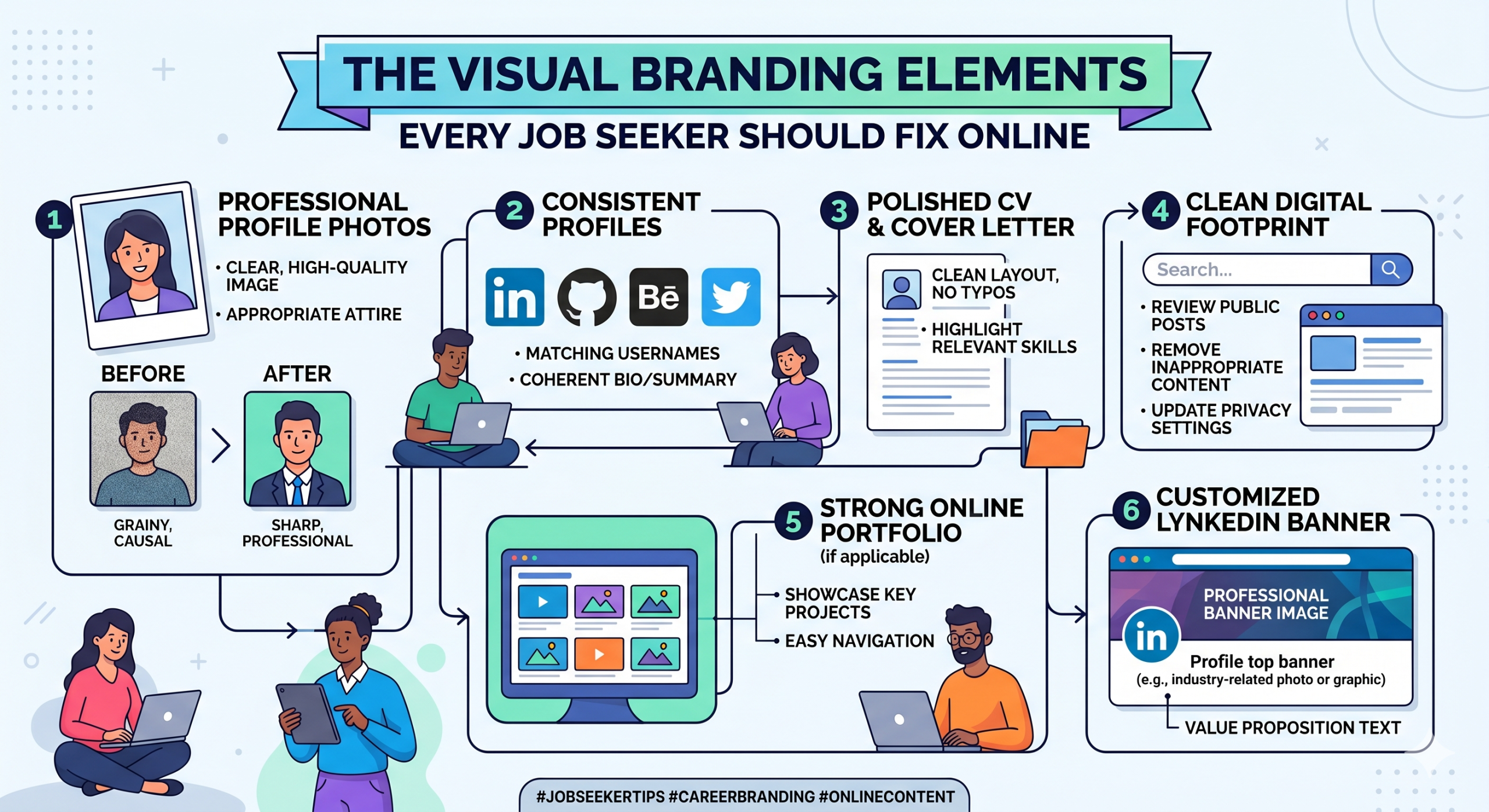
Your Online Image Shapes First Impressions
Recruiters often see your online presence before they ever speak with you. Whether it is LinkedIn, a portfolio website, or even social media, your visual branding directly affects how professional, trustworthy, and job-ready you appear. Many job seekers focus only on resumes while ignoring the online image attached to their name.
A weak digital presence creates confusion. An inconsistent one reduces credibility. Strong visual branding, however, immediately communicates professionalism and clarity. It helps recruiters understand who you are, what you do, and whether you fit the role they are hiring for.
Today, online branding matters even more for remote work opportunities because employers evaluate candidates digitally first. Your online appearance should support your skills, not weaken them.
Your Profile Photo Needs Professional Positioning
A profile picture is often the first thing recruiters notice. Poor lighting, casual selfies, distracting backgrounds, or low-quality images instantly reduce professionalism.
A strong professional photo should:
- Have clear lighting
- Use a clean background
- Show a confident and approachable expression
- Be high-resolution
- Match the industry you are targeting
For example, creative professionals may use slightly more relaxed branding, while corporate roles often require cleaner and more formal presentation.
The goal is not perfection. The goal is credibility and clarity.
Fix Inconsistent Branding Across Platforms
Many job seekers look completely different across platforms. Their LinkedIn profile appears professional, but their portfolio, resume, or other public profiles feel disconnected.
Important branding elements to keep consistent:
- Profile photos
- Name formatting
- Color themes
- Bio descriptions
- Professional tone
- Portfolio style
Consistency helps recruiters recognize and remember you more easily.
Using a Best Job Tool can also help organize your professional profiles and maintain branding consistency across platforms.
Your LinkedIn Banner Should Communicate Something Useful
Most people ignore the LinkedIn banner section completely, even though it is highly visible. A blank or random banner wastes valuable branding space.
A good banner can include:
- Your specialization
- Key skills
- Professional tagline
- Industry focus
- Portfolio website or contact details
For example, a remote content writer could use a clean banner mentioning SEO writing, remote collaboration, and content strategy expertise.
The banner should support your positioning, not distract from it.
Improve the Visual Quality of Your Resume
- Use clean spacing and alignment
- Avoid overcrowded sections
- Maintain consistent fonts
- Use readable formatting
- Keep the design professional and minimal
Many resumes fail visually before recruiters even read the content. A cluttered resume feels harder to trust and more difficult to scan quickly.
Recruiters spend very little time reviewing applications. Strong formatting improves readability and creates a better first impression instantly.
Portfolio Design Matters More Than Most Job Seekers Realize
Even strong work can look weak when presented poorly. Whether you are a writer, designer, developer, marketer, or freelancer, your portfolio should feel organized and intentional.
A strong portfolio should:
- Clearly explain your work
- Include project outcomes
- Use clean visuals
- Be easy to navigate
- Work properly on mobile devices
Remote employers especially value portfolios because they often rely on digital proof rather than in-person interviews alone.
Simple and organized always performs better than visually overloaded.
Remove Unprofessional Public Content
Recruiters frequently search candidates online. Public content that feels careless can damage opportunities even if your resume is strong.
Things to review include:
- Old social media posts
- Offensive jokes or comments
- Poor-quality public photos
- Aggressive online arguments
- Inappropriate usernames
This does not mean removing personality completely. It means ensuring your public image aligns with professional opportunities.
Build a Recognizable Personal Style
Strong personal branding does not mean copying influencers or creating fake corporate personalities. It means creating a clear and recognizable professional identity.
Your branding should reflect:
- Your communication style
- Your industry focus
- Your strengths
- Your professional values
For example, someone focused on remote productivity consulting may consistently use clean visuals, organized layouts, and efficiency-focused messaging across platforms.
Small branding consistency improves memorability significantly.
Improve Visual Content on LinkedIn
- Use clean carousel posts
- Add simple graphics to insights
- Share organized case studies
- Avoid low-quality visuals
- Maintain professional formatting
LinkedIn has become highly visual. Strong content presentation increases engagement and improves professional credibility.
Even basic design improvements can make your profile feel more polished and modern.
Make Your Portfolio Mobile-Friendly
Many recruiters review profiles and portfolios directly from phones. A website that works perfectly on desktop but breaks on mobile creates a poor experience instantly.
Test your portfolio for:
- Mobile responsiveness
- Fast loading speed
- Readable text sizes
- Simple navigation
- Functional links
A clean mobile experience is especially important for remote job applications where first impressions happen entirely online.
Use Colors and Fonts Strategically
Visual branding should feel professional and readable, not overly decorative. Strong branding choices improve clarity rather than distract attention.
Good practices include:
- Using limited color palettes
- Choosing clean fonts
- Maintaining spacing consistency
- Avoiding excessive animations
- Keeping layouts simple
Minimal and professional designs generally create stronger trust than complicated visuals.
Create Strong Project Presentation
Many candidates simply upload projects without explaining them. Recruiters need context to understand value.
Instead of only showing the final result, explain:
- The problem solved
- Your role in the project
- Tools used
- Results achieved
This makes your work feel more professional and strategic.
A Best Job Tool can also help organize projects in a recruiter-friendly format that improves presentation quality.
Keep Your Online Presence Updated
An outdated online profile weakens credibility quickly. Old projects, inactive profiles, or outdated skills create confusion.
Update regularly:
- Current role or focus
- Portfolio projects
- Skills and certifications
- Contact details
- Resume versions
Even small updates help maintain relevance in fast-changing industries.
Conclusion
Visual branding is no longer optional for job seekers. Employers increasingly evaluate candidates online before making hiring decisions, especially for remote and digital-first roles. A strong visual presence improves trust, professionalism, and memorability.
Simple improvements such as better profile photos, cleaner portfolios, consistent branding, and organized project presentation can significantly strengthen career opportunities. The goal is not flashy design—it is clarity, professionalism, and consistency.
When supported by structured systems and tools like a best job tool, strong visual branding helps job seekers position themselves more effectively in a highly competitive market.






Comments
Be the first to leave a comment.