

Introduction
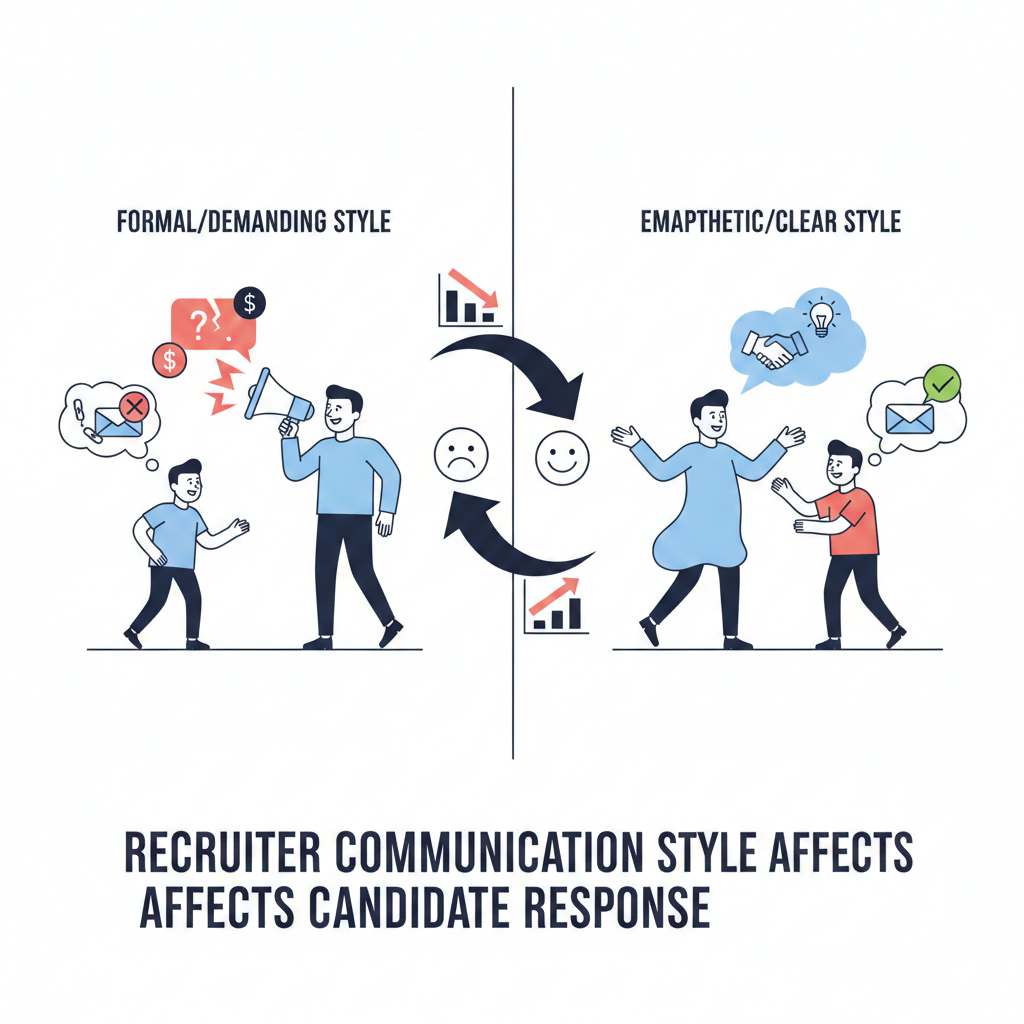
Recruitment is not just about sourcing and evaluating candidates. It is also about communication. The way recruiters interact with candidates can significantly shape engagement, trust, and response rates. Many organizations focus heavily on job descriptions and interview processes but overlook communication tone and timing. That is exactly why recruiter communication style affects candidate response more than most hiring teams realize.
Candidates do not respond only to opportunities. They respond to how those opportunities are presented. Communication style creates the first emotional impression of the company, and that impression influences whether a candidate replies, delays, or disengages entirely.
First contact sets the tone for engagement
The first message from a recruiter acts as a psychological gateway. Candidates quickly assess professionalism, clarity, and intent based on that interaction.
A clear and respectful message signals seriousness and credibility. In contrast, generic or overly automated messages feel impersonal and reduce motivation to respond.
This early perception strongly shapes candidate engagement throughout the hiring process.
Clarity reduces candidate hesitation
Candidates often hesitate when recruiter communication lacks clarity. Vague job details, unclear next steps, or incomplete information create uncertainty.
When communication is structured and transparent, candidates feel more confident in engaging. Clear timelines, role expectations, and process details reduce anxiety and improve response speed.
This clarity directly explains why recruiter communication style affects candidate response rates.
Tone influences trust and professionalism
Tone plays a critical role in how candidates interpret recruiter intent. A respectful and conversational tone builds trust quickly.
On the other hand, overly formal, robotic, or rushed communication can feel transactional. Candidates may perceive the opportunity as low priority or mass outreach.
Trust grows when communication feels human rather than scripted.
Personalization increases response probability
Candidates are more likely to respond when messages feel personalized. Mentioning relevant skills, experience, or career alignment shows genuine interest.
Generic outreach messages often get ignored because they signal low effort. Personalized communication, even if brief, increases engagement significantly.
This demonstrates how communication style impacts candidate psychology and responsiveness.
Response speed reflects perceived importance
Recruiter response time also shapes candidate behavior. Quick and consistent replies signal professionalism and organizational efficiency.
Delayed or inconsistent communication creates doubt about the hiring process. Candidates may lose interest or prioritize other opportunities.
Communication speed, combined with tone, strengthens overall engagement.
Transparency builds long-term candidate trust
Transparent communication about salary ranges, interview stages, and expectations increases candidate confidence. It reduces guesswork and builds credibility.
When recruiters avoid key details or provide partial information, candidates may disengage or delay their response.
Transparency makes candidates feel respected and valued.
Communication consistency across stages matters
Candidate experience depends on communication continuity. A strong first interaction followed by slow or unclear updates weakens engagement.
Consistent messaging across screening, interviews, and feedback stages maintains trust. Candidates feel guided rather than uncertain.
Consistency reinforces professionalism and improves response behavior.
Feedback style affects future responsiveness
Even rejection communication influences candidate response patterns. Thoughtful and constructive feedback maintains goodwill.
Cold or generic rejection messages reduce the likelihood of future engagement with the same organization. Candidates remember communication tone beyond the hiring cycle.
This long-term effect highlights why recruiter communication style affects candidate response even after decisions are made.
Cultural signals embedded in communication
Recruiter communication style often reflects company culture. Friendly and respectful communication suggests a collaborative environment.
Rigid or overly formal messaging may signal hierarchical or high-pressure workplaces. Candidates interpret these signals before accepting interviews.
Communication becomes a branding tool for employer perception.
Impact on passive candidates
Passive candidates are especially sensitive to communication style. Since they are not actively job hunting, engagement depends heavily on how the opportunity is presented.
A compelling and respectful approach increases curiosity and response rates. Generic outreach fails to capture their attention.
Communication style becomes the deciding factor for passive talent engagement.
How poor communication reduces hiring efficiency
Ineffective communication leads to slower responses, missed follow-ups, and candidate drop-offs. Recruiters then spend more time re-engaging or sourcing new candidates.
This increases time-to-hire and reduces hiring efficiency. Strong communication, on the other hand, accelerates the hiring funnel naturally.
Conclusion
Recruitment success depends not only on role quality but also on interaction quality. That is precisely why recruiter communication style affects candidate response across every stage of the hiring journey.
Clear, timely, respectful, and personalized communication builds trust, improves engagement, and increases response rates. When recruiters communicate effectively, candidates feel valued and are more likely to respond positively, stay engaged, and move forward confidently in the hiring process.
Find Your Dream Job Today – Explore Endless Career Opportunities and Secure Your Next Role with Best Job Tool.






Comments
Be the first to leave a comment.