

Introduction
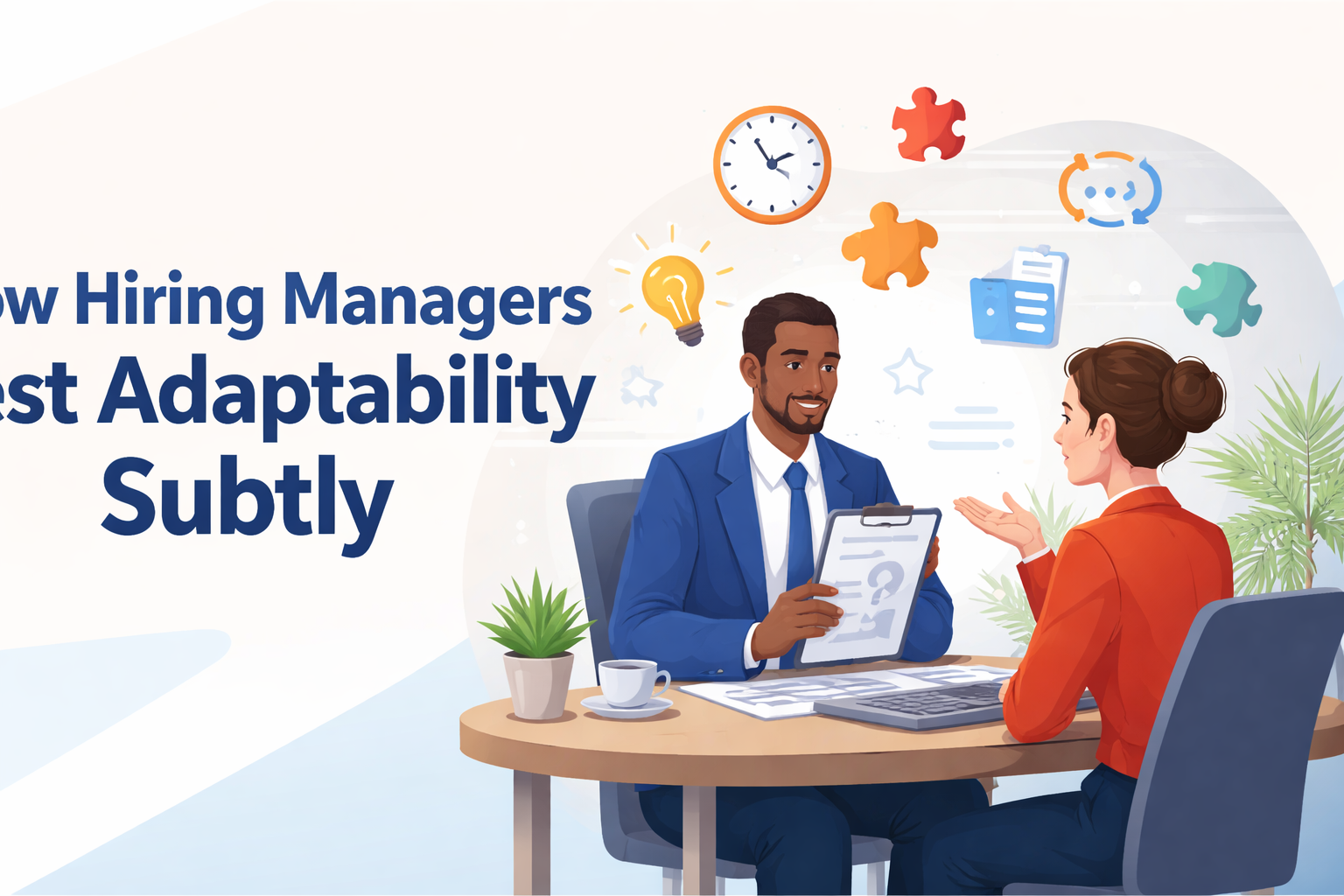
In this article, we will understand how hiring managers test adaptability without directly saying it.
In today’s professional world, change is constant. New technologies, new tools, new strategies, and even new team structures are becoming common in almost every industry. Because of this, companies are not just looking for skilled candidates. They are looking for adaptable candidates.
Adaptability means the ability to adjust to new situations, learn quickly, and stay calm during change. Hiring managers understand that skills can be taught, but adaptability is a mindset. That is why they often test adaptability during interviews — and many times, they do it subtly.
What Does Adaptability Really Mean?
Adaptability is not just about saying, “I can adjust.” It includes:
- Learning new tools quickly
- Handling unexpected problems
- Accepting feedback positively
- Staying calm under pressure
- Working with different types of people
- Managing sudden changes in priorities
An adaptable person does not panic when things change. Instead, they think, adjust, and move forward.
Hiring managers want employees who can grow with the company. If someone struggles with small changes, they may struggle more when the company faces bigger challenges.
How Hiring Managers Test Adaptability Subtly?
1. They Ask About Unexpected Situations
One common way hiring managers test adaptability is by asking behavioral questions. For example:
- “Tell me about a time when you faced a sudden change at work.”
- “Describe a situation where you had to learn something quickly.”
- “What did you do when a project did not go as planned?”
These questions are not random. They are designed to understand:
- How you react to change
- Whether you complain or find solutions
- If you take responsibility
Hiring managers carefully observe how you explain your experience. Do you blame others? Or do you focus on what you learned?
An adaptable candidate usually talks about growth, learning, and improvement.
2. They Change the Interview Structure
Sometimes hiring managers test adaptability by changing the interview flow.
For example:
- They may ask questions in a different order.
- They may interrupt you and move to another topic.
- They may give you a small task without prior notice.
This helps them see how you react to small disruptions.
Do you become nervous?
Do you lose focus?
Or do you stay calm and continue confidently?
Adaptability is visible in your body language and tone. Even if you are surprised, staying composed shows maturity.
3. They Introduce Hypothetical Scenarios
Hiring managers often use “What if” questions, such as:
- “What would you do if your manager suddenly changed the project deadline?”
- “What if you were assigned a task outside your job role?”
- “How would you handle a team member who disagrees with you?”
These questions test your thinking flexibility.
An adaptable person does not give rigid answers like:
“That’s not my job.”
Instead, they show willingness to adjust and collaborate.
Your answer should show:
- Openness
- Problem-solving ability
- Emotional control
4. They Observe How You Handle Silence
Sometimes, after you answer a question, the interviewer may stay silent. This silence can feel uncomfortable.
This is also a subtle test.
Do you panic and start over-explaining?
Or do you stay calm and wait confidently?
Silence tests your emotional stability. Adaptable candidates are comfortable with small discomforts. They do not rush unnecessarily.
Staying calm in silence shows confidence and self-control.
5. They Ask About Feedback to Test Adaptability Subtly
Hiring managers may ask:
- “Tell me about a time you received critical feedback.”
- “How do you handle negative feedback?”
Adaptability includes the ability to improve. A candidate who becomes defensive may struggle in dynamic environments.
When answering, show that:
- You listened carefully
- You reflected on the feedback
- You made improvements
Companies prefer people who see feedback as growth, not attack.
6. They Introduce Multiple Interviewers to Test Adaptability Subtly
Panel interviews are also a way to test adaptability.
In a panel interview:
- Different people ask different types of questions
- Personalities may vary
- Communication styles may differ
Hiring managers observe:
- How you adjust your tone
- How you maintain eye contact
- Whether you stay confident
Adaptable candidates connect with different personalities easily.
7. They Change the Topic Quickly to Test Adaptability Subtly
Some interviewers suddenly switch topics.
For example:
You are discussing technical skills, and suddenly they ask about teamwork or conflict.
This tests your mental flexibility.
If you take a small pause, think clearly, and respond logically, it shows adaptability.
You do not need to answer immediately. Taking a short pause is better than giving a rushed answer.
8. They Give Case Studies or Small Tasks
In many interviews, especially for professional roles, hiring managers give:
- Case studies
- Situational tasks
- Problem-solving exercises
They may not be testing only your technical knowledge. They are observing:
- How you approach a new problem
- Whether you ask clarifying questions
- If you remain calm under time pressure
Even if you do not know the perfect answer, showing structured thinking and flexibility is important.
9. They Observe Your Reaction to Technical Issues
Sometimes during online interviews:
- The internet connection may break
- Audio may not work
- Screen sharing may fail
These situations are common. Hiring managers watch how you react.
Do you complain?
Do you blame technology?
Or do you calmly say, “Let me reconnect” or “I’ll adjust”?
Adaptability includes handling small technical problems without stress.
10. They Ask About Learning New Skills
Hiring managers often ask:
- “How do you keep yourself updated?”
- “What new skill did you learn recently?”
This question checks if you are proactive.
An adaptable professional is always learning. Industries change fast. Companies want people who upgrade themselves regularly.
If you can show:
- Online courses
- Certifications
- Self-learning efforts
It shows you are future-ready.
11. They Observe Body Language to Test Adaptability Subtly
Adaptability is not only in words. It is also in behavior.
Hiring managers notice:
- Your posture
- Eye contact
- Facial expressions
- Tone of voice
If you become tense during difficult questions, it shows stress handling ability.
Calm posture and steady voice show emotional adaptability.
12. They Ask About Working with Different Personalities
Workplaces include different types of people:
- Strict managers
- Friendly teammates
- Difficult clients
Hiring managers may ask:
- “How do you handle conflicts?”
- “Describe a time you worked with someone very different from you.”
Your answer should show respect, understanding, and adjustment.
Rigid personalities struggle in diverse teams. Flexible professionals grow faster.
13. They Observe How You Talk About Past Changes
Companies go through:
- Restructuring
- Policy changes
- Leadership changes
When you talk about past jobs, hiring managers notice:
- Did you resist change?
- Or did you adapt positively?
If you say, “Everything was better before,” it may signal resistance.
Instead, show how you supported change and adjusted.
14. They Test Time Pressure to Test Adaptability Subtly
Sometimes interviewers give limited time to answer.
They may say:
“You have two minutes to explain this.”
This checks:
- Your clarity
- Your focus
- Your calmness
Adaptable candidates can organize thoughts quickly.
15. They Watch How You End the Interview
Even the final stage is important.
Do you:
- Ask thoughtful questions?
- Show curiosity about the company’s future?
- Express willingness to grow?
If you ask, “How does your company handle change?” it shows maturity and awareness.
Conclusion
Hiring managers rarely ask directly, “Are you adaptable?”
Instead, they observe your behavior, responses, tone, and attitude. They create small, unexpected situations to see your natural reaction.
Adaptability is not about being perfect. It is about being open, calm, and willing to learn.
In today’s fast-changing professional world, adaptability is a survival skill. The more flexible you are, the more valuable you become.
If you want to succeed in interviews and in your career, focus not only on building skills but also on building a growth mindset. Because in the end, companies do not just hire skills — they hire people who can grow with change.






Comments
Be the first to leave a comment.