

Introduction
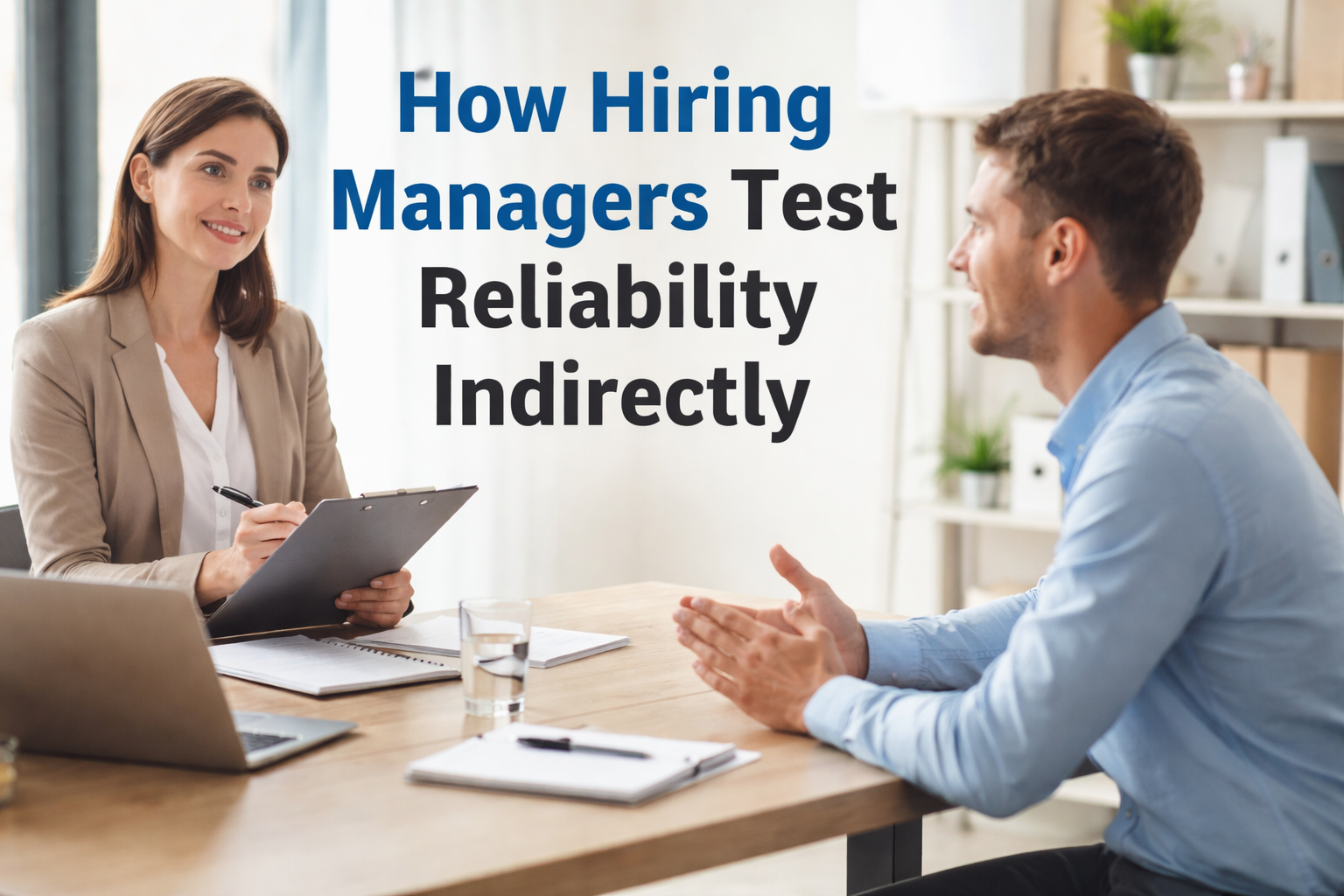
Reliability is one of the most important qualities that hiring managers look for in a candidate. Every company wants employees who are dependable, responsible, and consistent in their work. But in most interviews, hiring managers do not directly ask, “Are you reliable?”
Instead, they test reliability in indirect ways. They observe behavior, communication style, preparation, and small details. These small signals help them understand whether a candidate can be trusted with responsibilities.
In this article, we will discuss how hiring managers test reliability indirectly and why it matters so much in the hiring process.
What Does Reliability Mean in a Professional Setting?
Before understanding how hiring managers test reliability, we must first understand what reliability means.
In a professional setting, reliability means:
- Completing tasks on time
- Keeping promises
- Following instructions carefully
- Being consistent in performance
- Showing up regularly and punctually
- Taking responsibility for mistakes
Reliable employees make the workplace smooth and productive. Managers do not need to constantly check their work. They trust them.
Now let’s explore how hiring managers test this quality without asking directly.
How Hiring Managers Test Reliability Indirectly?
1. They Observe Punctuality for Reliability
One of the first indirect tests of reliability is punctuality.
If the interview is at 10:00 AM, they check:
- Did you join on time?
- Did you join 5–10 minutes early?
- Did you inform them if you were going to be late?
Even arriving too early without notice can sometimes show poor planning. Being exactly on time or slightly early shows professionalism and respect.
For virtual interviews, they observe:
- Is your internet connection stable?
- Are you prepared technically?
- Did you test your microphone and camera before joining?
These small details show whether you take commitments seriously.
2. They Notice How You Communicate Before the Interview
Reliability testing starts even before the interview.
Hiring managers observe:
- How quickly do you reply to emails?
- Is your email professional?
- Do you confirm interview timing properly?
- Do you follow instructions clearly?
For example, if they ask you to send your portfolio in PDF format and you send it in another format, it shows that you do not follow instructions carefully.
Timely and clear communication is a strong signal of reliability.
3. They Review Your Resume Carefully
Your resume itself gives indirect signals about reliability.
Hiring managers look for:
- Frequent job changes without explanation
- Large employment gaps
- Inconsistent dates
- Exaggerated claims
If your resume shows stability and growth, it builds trust. But if it shows sudden changes without clarity, they may question your reliability.
They may ask about job changes to see how honestly and calmly you explain them.
4. They Ask Behavioral Questions
Hiring managers often ask behavioral questions like:
- “Tell me about a time when you missed a deadline.”
- “Describe a situation where you had multiple tasks.”
- “Have you ever made a mistake at work?”
These questions are not random. They test reliability.
They observe:
- Do you accept responsibility?
- Do you blame others?
- Do you explain what you learned?
If you honestly explain your mistake and show improvement, it shows maturity and reliability.
5. They Test Consistency in Your Answers
During interviews, they may ask similar questions in different ways.
For example:
- “How do you manage deadlines?”
- Later: “How do you prioritize tasks under pressure?”
If your answers are consistent, it builds trust. If your answers change or contradict each other, it raises doubt.
Consistency is a strong indicator of reliability.
6. They Observe Body Language to Test Reliability
Body language also plays an important role.
Reliable candidates often show:
- Steady eye contact
- Calm posture
- Clear and confident voice
- Focused attention
If a candidate looks distracted, avoids eye contact, or seems careless, it may create a negative impression.
Body language reflects seriousness and commitment.
7. They Check Your Preparation Level
Preparation shows reliability.
Hiring managers notice:
- Did you research the company?
- Do you understand the job role?
- Do you ask meaningful questions?
If you come unprepared and ask basic questions that are already mentioned on the company website, it shows lack of effort.
Prepared candidates show that they take opportunities seriously.
8. They Look at How You Handle Small Tasks
Sometimes hiring managers give small assignments like:
- Writing a short sample
- Completing a case study
- Submitting a task within 24 hours
This is a direct test of reliability, but it is presented as a skill test.
They check:
- Did you submit it on time?
- Did you follow instructions properly?
- Is your work complete and organized?
Even if your skills are average, submitting work on time and properly formatted shows reliability.
9. They Observe Follow-Up Behavior to Test Reliability
After the interview, your actions still matter.
Hiring managers notice:
- Do you send a thank-you email?
- Do you follow up politely if needed?
- Do you respect their timeline?
Too many follow-ups may show impatience. No follow-up may show lack of interest.
Balanced and professional follow-up shows reliability and seriousness.
10. They Check References for Reliability
Reference checks are one of the strongest reliability tests.
Hiring managers may ask previous employers:
- Was the candidate punctual?
- Did they complete tasks on time?
- Were they dependable?
- How did they handle responsibility?
Past behavior often prdicts future behavior. That is why references matter so much.
11. They Observe Your Social Media Presence
In some cases, hiring managers review LinkedIn or other professional platforms.
They look for:
- Professional behavior
- Consistency in career story
- Engagement with relevant content
If your LinkedIn profile says something very different from your resume, it may create doubt.
Professional online presence supports your reliability image.
12. They Notice How You Handle Pressure in the Interview
Sometimes interviewers intentionally create slight pressure:
- Asking unexpected questions
- Interrupting politely
- Changing topics suddenly
They observe:
- Do you panic?
- Do you remain calm?
- Do you take a moment to think?
Reliable employees can handle pressure without losing control.
13. They Evaluate Attention to Detail
Small details matter.
For example:
- Is your resume free from spelling errors?
- Is your email subject line clear?
- Do you address the interviewer correctly?
Attention to detail shows responsibility.
If small details are ignored, hiring managers may think you will ignore important details at work too.
14. They Notice Commitment to Long-Term Growth
Hiring managers also test reliability by asking:
- “Where do you see yourself in 3 years?”
- “Why do you want to join this company?”
They are checking whether you are genuinely interested or just applying randomly.
Clear and thoughtful answers show long-term commitment, which is part of reliability.
15. They Observe Energy and Enthusiasm
Reliable candidates often show steady enthusiasm.
Not over-excited. Not careless.
Balanced energy shows:
- Interest
- Professionalism
- Emotional stability
Too much emotional fluctuation may create doubt about consistency.
16. They Test Deadline Sensitivity
Sometimes they may say:
“Please send the required documents by tomorrow.”
This is a simple but powerful test.
If you send documents before the deadline, it builds trust.
If you delay without explanation, it damages your impression.
17. They Look at Career Patterns to Test Reliability
Hiring managers observe patterns like:
- Have you completed projects successfully?
- Have you stayed long enough in previous roles?
- Did you grow in responsibilities?
Patterns of stability show reliability.
Frequent unexplained changes may create concern.
Conclusion
Hiring managers rarely ask directly if you are reliable. Instead, they observe your behavior from the first email to the final interview stage.
They test reliability indirectly through punctuality, preparation, consistency, communication, and responsibility. Every small detail matters.
Reliability is not shown in one big action. It is shown in small, consistent actions.
If you want to succeed in interviews, focus not only on skills but also on building habits that show dependability and responsibility.
Because in the professional world, talent may get you noticed — but reliability builds long-term trust.






Comments
Be the first to leave a comment.