

Introduction
Many professionals believe promotions depend only on performance ratings or tenure. However, managers look at something deeper. They assess readiness, not just results. This is exactly how managers assess readiness for promotion in real workplace settings.
Promotion decisions are future-focused. Managers ask whether someone can handle bigger scope, higher stakes, and greater ambiguity. Understanding what they look for helps professionals prepare intentionally instead of waiting passively.
When you align your behavior with readiness signals, promotion conversations become easier and more predictable.
Promotion is about future capability, not past effort
Managers do not promote people as a reward for hard work alone. They promote people who seem ready for the next level.
Past performance proves reliability. Readiness proves potential. Managers want confidence that performance will continue at higher complexity.
This shift explains why some high performers are not promoted quickly. They deliver well but do not yet signal next-level capability.
How managers define readiness internally
Readiness means the ability to operate effectively at a higher level with less supervision. It includes judgment, ownership, and decision-making.
Managers look for signs that you already act like someone in the next role. They assess how you handle ambiguity and pressure.
If your behavior matches the expectations of the higher role, readiness becomes visible.
Scope of thinking matters more than task execution
At higher levels, work becomes less about tasks and more about outcomes. Managers assess whether your thinking matches that shift.
They observe whether you consider broader impact, stakeholders, and trade-offs. Tactical excellence alone is not enough.
Professionals who think beyond their immediate tasks signal readiness naturally.
Ownership is a major readiness signal
Ownership strongly influences promotion decisions. Managers trust people who take responsibility for outcomes, not just instructions.
Ownership shows through follow-through, problem anticipation, and accountability during challenges.
When managers see consistent ownership, they begin imagining you in a larger role. This is central to how managers assess readiness for promotion.
Decision-making under uncertainty
Higher roles involve uncertainty. Managers assess how you make decisions when information is incomplete.
They notice whether you wait for direction or propose solutions. They also observe how you justify choices and learn from outcomes.
Good judgment under uncertainty signals maturity and readiness for promotion.
Communication and influence skills
Promotion often expands influence, not just authority. Managers evaluate how well you communicate ideas and align others.
Clear, concise communication signals confidence. The ability to influence without forcing decisions signals leadership potential.
Professionals who communicate impact clearly appear more ready for expanded responsibility.
Consistency over time matters
Managers rarely decide promotion based on one success. They look for patterns over time.
They assess whether readiness signals appear consistently across projects and situations. Short bursts of performance are less convincing than steady growth.
Consistency reduces perceived risk. It makes promotion decisions easier to justify.
How managers test readiness informally
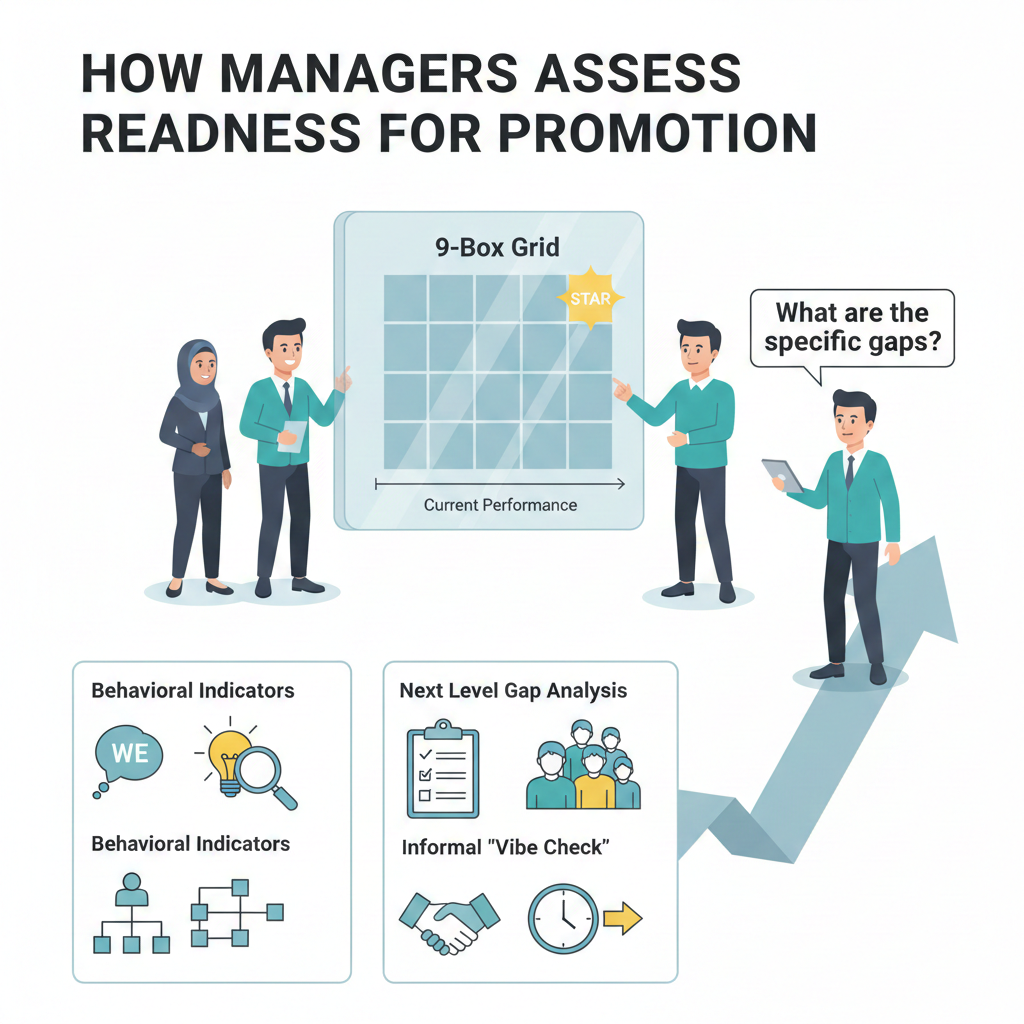
Before formal promotion, managers often test readiness quietly. They assign stretch tasks or involve you in higher-level discussions.
These tests reveal how you handle expanded scope. Managers observe reaction, not just results.
Strong performance in these moments accelerates promotion readiness perception.
Visibility plays a critical role
Managers cannot assess what they cannot see. Visibility of impact, thinking, and ownership matters.
Professionals who communicate outcomes clearly make readiness easier to evaluate. Quiet capability often goes unnoticed.
This visibility supports fair and confident promotion decisions.
Common reasons readiness is questioned
Some professionals deliver strong results but avoid ownership. Others execute well but struggle with communication.
Some hesitate during ambiguity or resist feedback. These signals raise readiness concerns.
Understanding these gaps allows targeted improvement instead of frustration.
How professionals can signal readiness intentionally
Start by aligning your work with next-level expectations. Focus on outcomes, not just tasks.
Take ownership of decisions within your scope. Communicate thinking and results clearly.
Seek feedback on readiness, not just performance. This shows growth intent and maturity.
These actions make readiness visible without demanding promotion.
Timing promotion conversations correctly
Promotion discussions work best after readiness is demonstrated, not before.
Initiate conversations after stretch assignments or visible wins. Frame discussions around contribution growth, not entitlement.
This timing aligns with how managers think and decide.
Conclusion
Promotions are not awarded automatically. They are based on perceived readiness for greater responsibility. That is how managers assess readiness for promotion across roles and organizations.
When you show ownership, decision-making ability, and broader thinking consistently, readiness becomes clear. Managers feel confident moving you forward.
To explore roles and career paths that value readiness, growth, and leadership potential, use the best job tool to find opportunities aligned with your next level.
Find Your Dream Job Today – Explore Endless Career Opportunities and Secure Your Next Role with Best Job Tool.






Comments
Be the first to leave a comment.