

Introduction
Performance reviews are often viewed as routine check-ins or annual formalities. Many professionals focus on ratings, increments, or short-term feedback and then move on. However, performance reviews play a much bigger role than most people realize. They quietly shape how your career moves inside an organization. That is exactly how performance reviews influence career mobility over time.
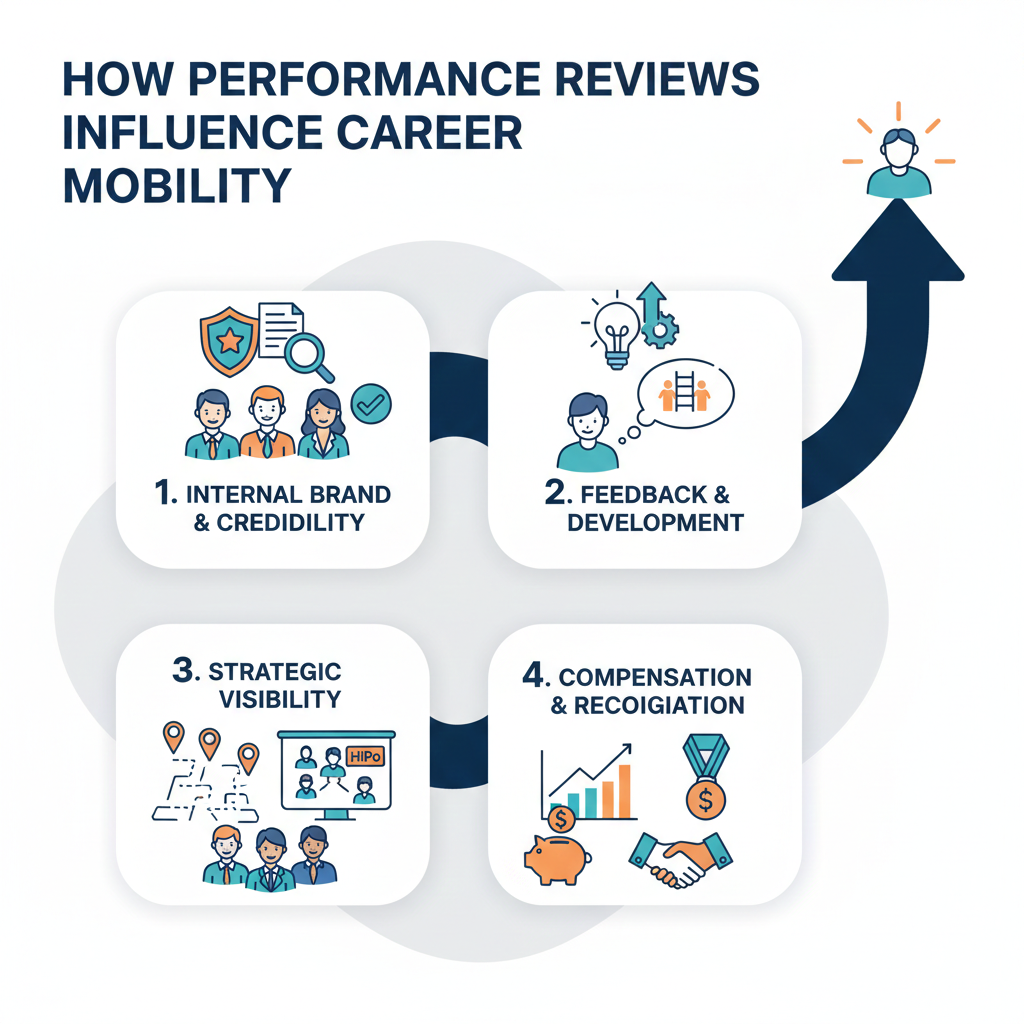
Career mobility depends on trust, perception, and readiness. Performance reviews capture all three in a documented form. Once recorded, these reviews influence promotions, lateral moves, stretch assignments, and even internal transfers. Understanding their long-term impact helps professionals approach reviews strategically instead of passively.
What performance reviews really represent
Performance reviews are not just summaries of past work. They are official records of how decision-makers perceive your contribution, growth, and potential. Managers use them to translate daily observations into structured evaluations that others can reference later.
Because leaders cannot personally observe everyone’s work, reviews act as reputation snapshots. They tell future managers how you performed, how you handled responsibility, and how you responded to feedback. This makes reviews powerful signals that extend far beyond the review meeting itself.
How reviews shape internal reputation
Career mobility depends heavily on internal reputation. Performance reviews contribute directly to this reputation by creating a written narrative about you. Over time, these narratives accumulate and form a pattern.
Consistently strong reviews position you as dependable and growth-ready. Mixed or flat reviews position you as stable but limited. Even when skills improve later, earlier narratives often influence how people imagine your future path. This is a key reason how performance reviews influence career mobility so strongly.
The link between reviews and promotion decisions
Promotion decisions are rarely made in isolation. Managers look at performance reviews to assess consistency, readiness, and risk. Reviews help them answer whether someone can handle larger scope and higher stakes.
Strong reviews make promotion discussions easier to justify. Weak or unclear reviews introduce hesitation. Even high performers may face delays if reviews do not clearly show progression. Reviews provide the evidence leaders rely on when making advancement decisions.
How reviews affect lateral and internal moves
Career mobility is not only vertical. Lateral moves and internal transfers also depend on performance reviews. Hiring managers inside the organization often review past evaluations before approving a move.
These reviews help them assess behavior, collaboration, and reliability. External resumes show skills, but internal reviews show how you operate day to day. This makes reviews a deciding factor in internal mobility opportunities.
Performance reviews and access to stretch assignments
Stretch assignments often act as gateways to growth. Managers prefer assigning them to people with strong review histories because it feels safer.
Reviews reassure leaders that you can handle learning curves and ambiguity. Without positive review signals, managers hesitate to offer high-visibility projects. This limits exposure and slows career movement.
How review language affects future options
The language used in performance reviews matters deeply. Words like “reliable,” “consistent,” or “supportive” can be positive but limiting if not paired with growth indicators.
Language that highlights ownership, decision-making, and impact signals readiness for broader roles. Over time, this language shapes how others describe you in talent discussions. Subtle wording differences can significantly influence mobility outcomes.
Why reviews influence trust and risk perception
Career moves involve risk for managers. They must trust that someone will succeed in a new role without disruption. Performance reviews heavily influence this trust.
Positive reviews reduce perceived risk. Average or vague reviews increase caution. Even when skills exist, risk perception often determines who gets opportunities first.
This risk lens explains why performance reviews influence career mobility even more than resumes or tenure.
The compounding effect of reviews over time
Performance reviews rarely stand alone. They compound across years. Consistent upward trends signal growth and adaptability. Flat trends signal stagnation.
Once these patterns form, they shape long-term career narratives. Leaders start expecting certain trajectories, and opportunities align with those expectations. Breaking out of a flat pattern requires visible change over multiple cycles.
How reviews affect advocacy behind the scenes
Many mobility decisions happen when you are not present. Leaders discuss talent in closed meetings. Performance reviews provide talking points in these conversations.
Strong reviews make advocacy easier. Managers can confidently recommend you. Weak reviews create hesitation or silence. Advocacy often determines who gets shortlisted for opportunities.
Common mistakes professionals make with reviews
One common mistake is treating reviews as backward-looking only. Another is assuming good work automatically translates into strong reviews.
Some professionals also avoid discussing growth during reviews. This limits how managers frame future potential. Ignoring review narratives weakens career mobility over time.
Using reviews strategically to support mobility
Professionals can influence reviews by aligning work with evaluation criteria. Focusing on outcomes, documenting impact, and communicating progress clearly all strengthen review narratives.
Seeking feedback early and acting on it visibly also improves future evaluations. Over time, this strategy reshapes how reviews support mobility instead of limiting it.
Recovering mobility after weak reviews
If reviews have slowed mobility, recovery is possible. It starts with clarity on expectations and gaps. Visible improvement matters more than explanation.
Consistent action across cycles rebuilds trust and shifts perception. As new reviews reflect change, mobility options reopen.
Conclusion
Performance reviews are not just reflections of the past. They are signals that shape trust, perception, and opportunity access. That is how performance reviews influence career mobility across promotions, lateral moves, and internal growth paths.
When professionals understand this influence, they can approach reviews intentionally. Clear impact, visible growth, and ownership turn reviews into mobility enablers instead of obstacles. To explore roles and organizations that value fair evaluations and career movement, use the best job tool to find opportunities aligned with your long-term growth.
Find Your Dream Job Today – Explore Endless Career Opportunities and Secure Your Next Role with Best Job Tool.






Comments
Be the first to leave a comment.