

Introduction
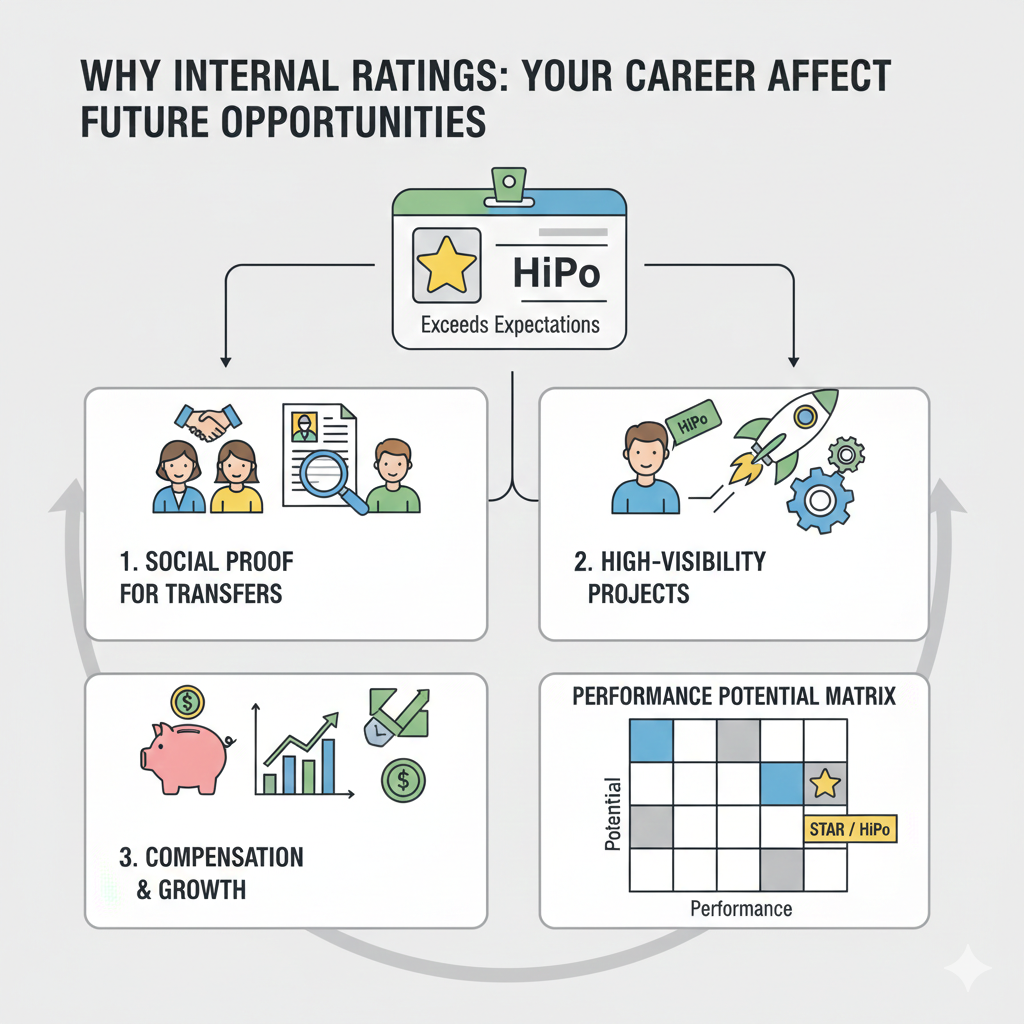
Internal ratings are often treated as routine paperwork, something to get through once a year and then forget. Many professionals focus only on immediate outcomes like bonuses or salary adjustments. However, internal ratings have a much deeper and longer-lasting impact. They quietly influence how managers, leaders, and decision-makers view your potential. That is exactly why internal ratings affect future opportunities far more than most employees realize. These ratings become shorthand for trust, capability, and risk, shaping who gets promoted, who gets stretch assignments, and who is considered for internal moves long after the review cycle ends.
What internal ratings really represent
Internal ratings are not just numerical scores or labels. They are condensed judgments about your performance, reliability, growth, and perceived readiness. Managers use them to summarize months of observation into a single signal that others can quickly understand. Because leaders cannot personally observe everyone’s work in detail, ratings become a proxy for reputation. Once recorded, they influence how others interpret your contributions, even if they have never worked with you directly.
How internal ratings travel beyond reviews
Many professionals assume internal ratings stay locked inside performance review documents. In reality, they move quietly across conversations, systems, and decisions. When managers discuss promotions, internal transfers, or staffing for important projects, ratings often surface as a quick reference point. Leaders use them to compare candidates efficiently. This portability is a major reason why internal ratings affect future opportunities well beyond the moment they are given.
Ratings and risk perception in opportunity decisions
Every opportunity decision involves risk. Managers ask themselves who can handle pressure, visibility, and responsibility without creating problems. Internal ratings heavily influence this judgment. Strong ratings signal safety and consistency, while average or weak ratings introduce hesitation. Even when skills are present, lower ratings can create doubt about reliability. Over time, these risk perceptions guide who gets trusted with growth opportunities and who remains in stable roles.
The compounding effect of ratings over time
Internal ratings rarely act in isolation. They compound across performance cycles. Consistently strong ratings build a narrative of reliability and upward momentum. Flat or stagnant ratings build a narrative of stability without progression. Once these narratives form, they influence how leaders imagine your future path inside the organization. Opportunities tend to follow that imagined trajectory, not just your current performance.
How ratings influence stretch and lateral opportunities
Stretch assignments and lateral moves are often stepping stones to promotion. Managers prefer to allocate these opportunities to people with strong internal ratings because it feels safer. Ratings reassure them that the person can handle ambiguity and learning curves. As a result, ratings influence not only vertical growth but also exposure and skill expansion. This connection further explains why internal ratings affect future opportunities in subtle but powerful ways.
Internal mobility and the role of ratings
Internal hiring managers rely heavily on ratings when reviewing candidates from within the organization. Unlike external applicants, internal candidates already carry a documented performance history. Ratings help managers assess behavior, not just skill. Even when resumes look strong, internal ratings often tip the decision. This makes ratings a critical factor in internal mobility and career pivots.
Why weak ratings can linger longer than expected
One challenging aspect of internal ratings is their memory effect. A single weak or average rating can linger in perception longer than professionals expect. Leaders tend to remember dips more clearly than steady performance. Without visible improvement signals, older ratings continue shaping decisions. This does not mean recovery is impossible, but it does mean that improvement must be clear, consistent, and visible over time.
Ratings and behind-the-scenes advocacy
Many career-defining decisions happen when you are not in the room. Leaders discuss talent in closed meetings. Internal ratings strongly influence how confidently managers advocate for you in these discussions. Strong ratings make advocacy easy. Weaker ratings create hesitation or silence. In many cases, opportunity access depends on these unseen conversations, making ratings even more influential.
How communication affects internal ratings
Internal ratings are shaped not only by results but also by communication. Managers rate what they clearly understand and remember. When impact is communicated well and ownership is visible, ratings tend to improve. Quiet delivery, even when effective, often leads to underestimation. This link explains why performance alone does not always translate into strong ratings.
Common misunderstandings about internal ratings
A common misconception is that internal ratings matter only for compensation. Another is that ratings reset completely every year. In reality, they accumulate context and influence long-term perception. Treating ratings as temporary or insignificant often leads to missed opportunities and stalled growth.
How professionals can influence ratings strategically
Influencing internal ratings does not mean manipulating the system. It means aligning behavior with evaluation criteria. Focusing on outcomes, documenting impact, communicating progress clearly, and acting on feedback all shape how managers rate performance. Over time, these behaviors shift perception and strengthen ratings naturally.
Recovering from limiting internal ratings
If internal ratings have plateaued or declined, recovery is possible with strategy. It starts by understanding expectations clearly and addressing gaps through visible action. Improvement must be demonstrated consistently, not just explained. As new patterns emerge, old narratives slowly fade, and opportunity access improves again.
Conclusion
Internal ratings are far more than administrative scores. They are signals that influence trust, risk perception, mobility, and growth. That is why internal ratings affect future opportunities across promotions, projects, and internal moves. When professionals understand how ratings work, they can manage them intentionally instead of passively. Clear impact, visible growth, and ownership reshape ratings over time. To explore roles and environments that value growth, transparency, and fair evaluation, use the best job tool to find opportunities aligned with your long-term potential.
Find Your Dream Job Today – Explore Endless Career Opportunities and Secure Your Next Role with Best Job Tool.






Comments
Be the first to leave a comment.