

Introduction
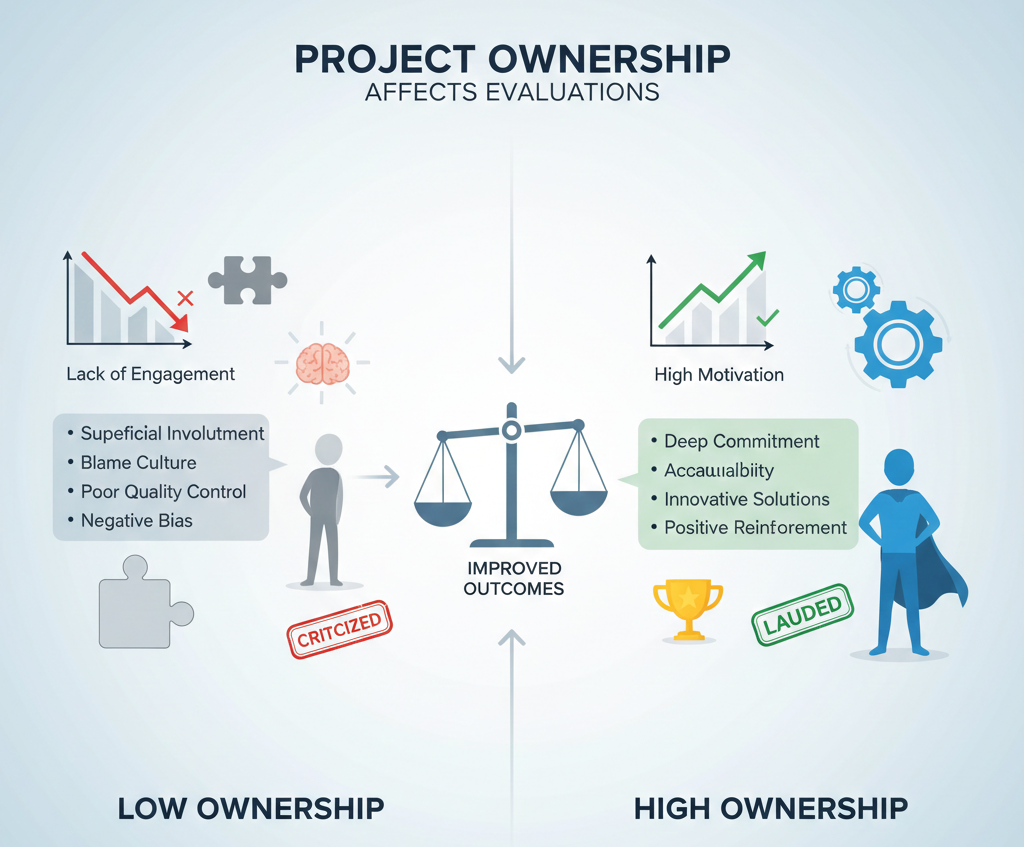
Many professionals complete tasks efficiently yet feel undervalued during evaluations. They meet expectations but struggle to stand out. One major reason is the difference between participation and ownership. That is why understanding how project ownership affects evaluations is essential for long-term career growth.
Managers do not evaluate effort alone. They evaluate responsibility, decision-making, and outcomes. Project ownership signals all three. When you own a project, your contribution becomes easier to assess, remember, and reward.
This blog explains why ownership carries so much weight in evaluations and how it shapes perception.
What project ownership really means
Project ownership goes beyond completing assigned work. It means taking responsibility for outcomes, not just actions.
Owners think about the full lifecycle of a project. They anticipate risks, manage trade-offs, and follow through to completion. They care about results, not just delivery.
From a manager’s perspective, ownership signals maturity and reliability. It shows readiness for greater responsibility.
Why evaluations focus on ownership, not participation
Performance evaluations aim to assess future potential. Managers ask whether someone can handle more complex work.
Participation shows capability at the current level. Ownership shows readiness for the next level. This distinction matters greatly during evaluations.
When you own a project, your impact is clearer. Managers can link outcomes directly to your decisions. This clarity makes evaluation easier and stronger.
This is a core reason how project ownership affects evaluations so directly.
Ownership makes impact visible and measurable
Evaluations rely on examples. Owners naturally generate clearer examples because their role is defined.
When you own a project, success and failure both become visible learning points. Managers see how you handle challenges, not just tasks.
This visibility reduces ambiguity. It allows evaluators to speak confidently about your contribution.
Clear impact leads to clearer recognition.
How ownership influences trust during evaluations
Trust plays a major role in evaluations. Managers reward people they trust with responsibility.
Project ownership builds trust through consistency and follow-through. When managers see you handle uncertainty well, confidence grows.
That trust often shows up during reviews. Language shifts from task completion to leadership potential.
Ownership transforms how managers talk about you in decision rooms.
The difference between owning outcomes and owning tasks
Task ownership focuses on execution. Outcome ownership focuses on results.
Managers value outcome ownership more because it aligns with business goals. They want people who think beyond instructions.
When you own outcomes, you take initiative. You adjust plans when needed. You care about success, not just compliance.
This mindset strongly influences evaluation outcomes.
Why owners receive stronger feedback
Project owners receive more detailed feedback. This happens because their role is clearer and broader.
Managers comment on decision-making, communication, and prioritization. This feedback accelerates growth.
Stronger feedback also signals investment. Managers spend time developing people they see as owners.
This development focus improves long-term evaluation trajectories.
How ownership reduces evaluation bias
Evaluations often suffer from recency or visibility bias. Ownership helps counter this.
When you own a project, your contribution spans time. It creates a narrative instead of isolated moments.
This continuity helps managers evaluate fairly. Your impact is easier to recall and justify.
That consistency improves evaluation outcomes.
Ownership and accountability during challenges
How you handle problems matters more than smooth execution. Ownership becomes most visible during difficulty.
Owners address issues proactively. They communicate clearly and take responsibility instead of deflecting.
Managers remember this behavior during evaluations. It signals resilience and leadership readiness.
This is another way how project ownership affects evaluations beyond success alone.
Common mistakes that limit ownership recognition
Some professionals take ownership privately but fail to communicate it. This hides impact.
Others step in only at execution stages, avoiding decisions. This limits perception of ownership.
Some also avoid ownership due to fear of failure. However, controlled ownership builds credibility, not risk.
Avoiding these mistakes strengthens evaluation outcomes.
How to demonstrate ownership without formal authority
Ownership does not require a title. It starts with mindset and behavior.
You can own timelines, coordination, or outcomes within your scope. You can proactively flag risks and suggest solutions.
When you act like an owner, perception shifts naturally. Managers notice responsibility before roles change.
This approach supports growth without waiting for promotion.
Long-term career impact of consistent ownership
Consistent ownership compounds over time. Evaluations improve. Trust deepens. Opportunities expand.
Professionals known for ownership often get stretch assignments and leadership roles faster. Their evaluations reflect readiness, not just performance.
Ownership becomes part of their professional identity.
Conclusion
Evaluations are not just about what you do. They are about how you think, decide, and take responsibility. That is how project ownership affects evaluations in real workplace settings.
When you own outcomes instead of just tasks, your impact becomes visible and memorable. Managers trust you more, feedback becomes stronger, and growth opportunities increase naturally. Ownership turns performance into long-term credibility.
To apply this ownership mindset in the right roles and teams, use the best job tool to explore opportunities that value responsibility, impact, and leadership potential.
Find Your Dream Job Today – Explore Endless Career Opportunities and Secure Your Next Role with Best Job Tool.






Comments
Be the first to leave a comment.