

Introduction
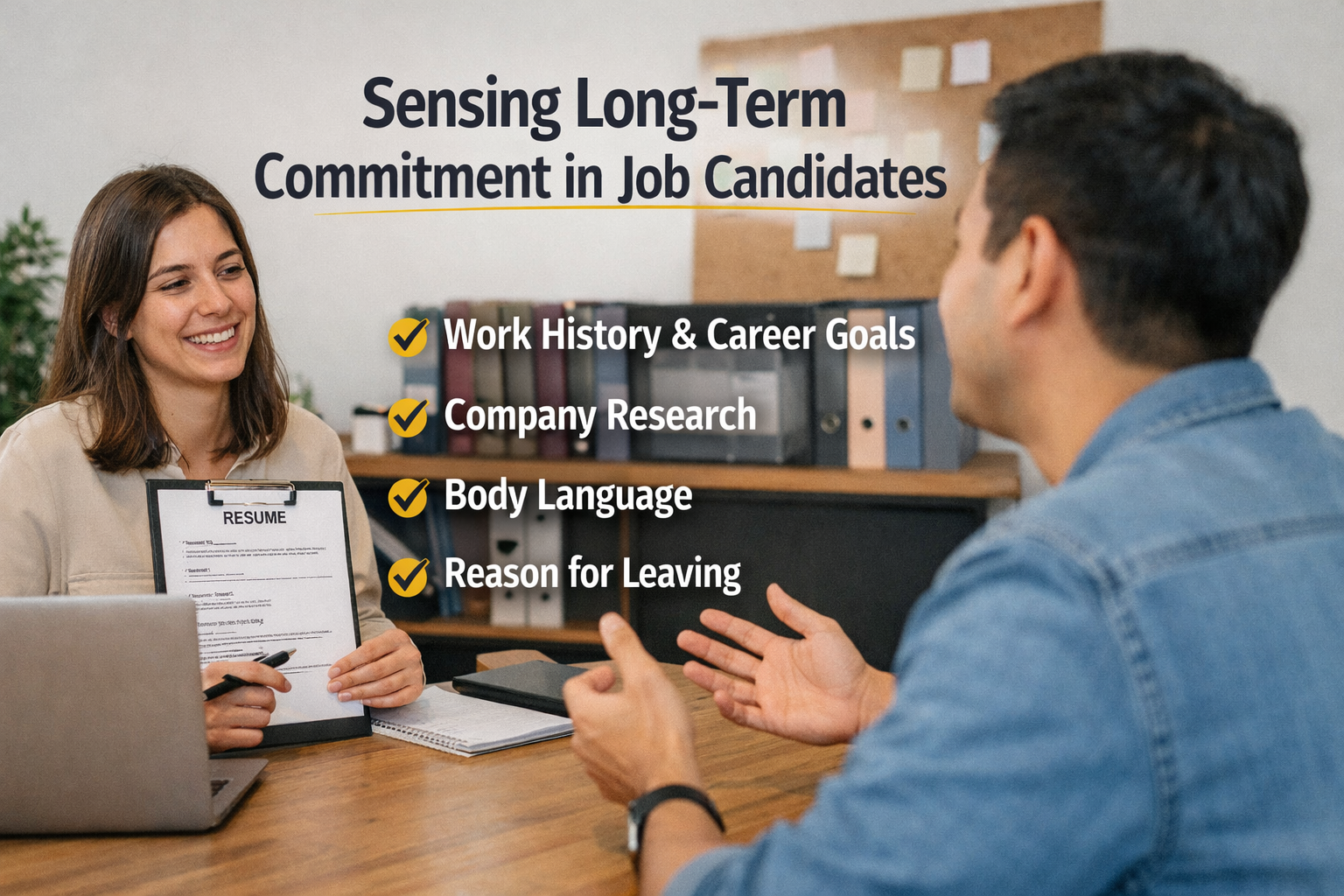
In today’s competitive job market, companies do not only look for talented candidates. They also look for people who will stay with the organization for a long time. Hiring and training a new employee takes time, money, and effort. If an employee leaves within a few months, the company faces loss again. That is why recruiters carefully observe signs of long-term commitment during the hiring process.
Long-term commitment does not mean that a person must stay in one company for 20 years. It means the candidate shows stability, responsibility, and a genuine interest in growing with the organization. In this article, we will understand how recruiters sense long-term commitment and what signals they look for during interviews.
How Recruiters Sense Long-Term Commitment?
1. Consistency in Work History Shows Long-Term Commitment
One of the first things recruiters check is the candidate’s resume. They carefully look at job duration in each company.
If a candidate changes jobs every 3–6 months without a strong reason, recruiters may feel doubtful. Frequent job changes can signal:
- Lack of stability
- Difficulty adjusting to workplace culture
- Low patience
- No clear career direction
However, this does not mean job changes are always bad. Sometimes candidates switch jobs for better growth, higher salary, relocation, or personal reasons. Recruiters understand this. But they want to see logical reasons behind each move.
If a candidate stayed at one company for 2–4 years and shows career growth within that company, it creates a positive impression. It shows loyalty and the ability to commit.
2. Clear Career Goals Shows Long-Term Commitment
Recruiters often ask questions like:
- “Where do you see yourself in five years?”
- “Why do you want to join this company?”
- “What are your long-term career goals?”
These questions are not random. They help recruiters understand whether the candidate has a clear vision.
If a candidate says, “I just need any job,” it shows short-term thinking. But if the candidate explains how the company’s role matches their long-term goals, it shows seriousness.
For example, if someone applies for a content writing role and explains that they want to build expertise in digital marketing and grow into a content strategist, it shows planning and direction.
Recruiters sense commitment when goals align with the company’s future plans.
3. Genuine Interest in the Company
Before interviews, serious candidates research about the company. They learn about:
- Company values
- Products or services
- Work culture
- Recent achievements
If a candidate mentions specific details about the organization during the interview, it shows effort and interest.
For example, if someone says they are inspired by how Infosys focuses on innovation and training programs, it shows that the candidate has done research.
Recruiters easily sense when a candidate is serious about joining their company and not just applying everywhere.
4. Asking Smart Questions Shows Long-Term Commitment
At the end of interviews, recruiters often ask, “Do you have any questions for us?”
Candidates who are not serious usually say, “No, I don’t have any questions.”
But candidates who are thinking long-term ask questions like:
- “What growth opportunities are available in this role?”
- “How does the company support employee development?”
- “What does success look like in this position after one year?”
Such questions show that the candidate is thinking about staying and growing in the organization.
Recruiters sense commitment when candidates are interested in learning, growth, and contribution.
5. Stability in Personal Decisions
Recruiters also observe stability in personal choices. For example:
- Educational consistency
- Long-term projects
- Volunteer work
- Internships
If someone completed a 3-year degree without major breaks and participated in long-term projects, it shows discipline and dedication.
For instance, completing a full program at University of Delhi without dropping out shows commitment to goals.
Even involvement in clubs, community service, or side projects for a long period signals reliability.
6. Body Language and Confidence
Commitment is not only seen in resume details. It is also sensed through behavior.
Recruiters observe:
- Eye contact
- Calm tone
- Clear communication
- Positive attitude
If a candidate speaks confidently about future plans and responsibilities, it shows maturity. Nervousness is normal, but unclear or confused answers about long-term plans create doubt.
A calm and steady personality gives the impression of emotional stability, which is important for long-term roles.
7. Reason for Leaving Previous Job
This is one of the most important areas recruiters focus on.
If a candidate says they left because:
- “I didn’t like my manager.”
- “The work was boring.”
- “I got frustrated.”
It may show poor problem-solving skills.
But if they explain professionally, such as:
- “I completed my learning in that role and wanted new challenges.”
- “I was looking for growth opportunities.”
- “The company restructuring affected my role.”
It shows maturity.
Recruiters want to know if the candidate runs away from problems or faces them with patience.
8. Long-Term Project Experience
Candidates who have worked on long-term projects show dedication.
For example, working on a software project for two years or managing a marketing campaign for several months shows responsibility.
Even contributing regularly to a platform like Medium for a long time shows consistency and commitment to growth.
Recruiters value candidates who can stick to a task until completion.
9. Alignment with Company Culture
Every organization has its own culture. Some companies prefer innovation and risk-taking. Others focus on structure and discipline.
For example, companies like Tata Consultancy Services value stability and long-term employee relationships.
If a candidate’s personality matches the company’s culture, recruiters feel more confident about long-term commitment.
During interviews, recruiters check whether:
- The candidate shares similar values
- The candidate respects teamwork
- The candidate understands company expectations
When alignment is strong, long-term stay becomes more likely.
10. Passion for the Field Shows Long-Term Commitment
Recruiters can sense when someone truly loves their profession.
For example, if a person applying for a writing role regularly reads books, writes blogs, or learns about SEO, it shows passion.
Passion increases the chances of long-term commitment because the candidate is not working only for salary but also for interest.
When someone is passionate about their field, they are more likely to stay and grow.
11. Patience During the Hiring Process
Sometimes hiring processes take time. There may be multiple rounds, assignments, or waiting periods.
Candidates who remain patient and professional during delays show emotional maturity.
If someone becomes angry or impatient quickly, recruiters may feel that the person lacks stability.
Commitment also means patience and understanding.
12. References and Background Checks
Companies sometimes contact previous employers for feedback.
They ask about:
- Work ethics
- Reliability
- Team behavior
- Reason for leaving
If previous managers say that the candidate was dependable and stayed committed to projects, it builds trust.
Good references increase confidence in long-term potential.
13. Willingness to Learn and Adapt
Long-term commitment is not only about staying. It is also about growing with change.
Recruiters ask:
- “How do you handle new challenges?”
- “Have you learned any new skills recently?”
Candidates who continuously upgrade themselves show that they are serious about building a long career.
A person who is open to training and development is more valuable in the long run.
14. Salary Expectations
If a candidate demands unrealistic salary compared to their experience, recruiters may feel that the person is more focused on money than growth.
Reasonable and market-based salary expectations show practical thinking.
Long-term employees usually balance salary with learning and stability.
15. Emotional Intelligence Shows Long-Term Commitment
Employees who manage emotions well are more likely to stay long term.
Recruiters sense emotional intelligence through:
- Conflict handling examples
- Teamwork stories
- Communication style
Emotionally intelligent employees solve problems instead of quitting immediately.
This increases long-term retention.
Conclusion
Recruiters do not directly ask, “Will you stay here for five years?” Instead, they observe many small signals to understand your mindset.
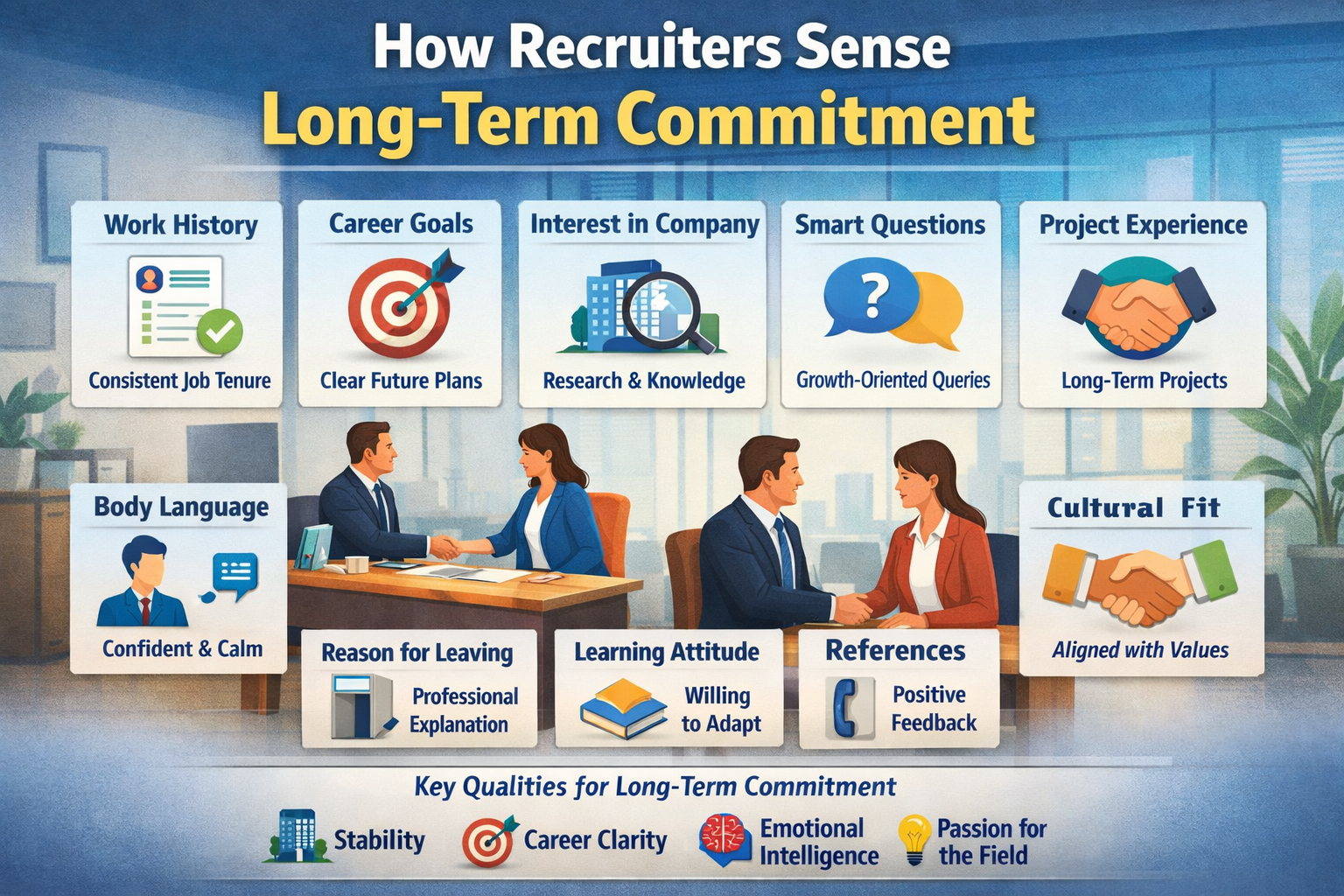
Long-term commitment is sensed through:
- Resume consistency
- Career clarity
- Professional attitude
- Emotional stability
- Passion for the field
Companies want employees who grow with them and contribute for a meaningful period.
If you focus on stability, learning, and alignment with company goals, recruiters will naturally sense your long-term potential.
Remember, commitment is not about staying forever. It is about showing responsibility, direction, and seriousness toward your career. When you demonstrate these qualities, recruiters feel confident in investing in you for the future.






Comments
Be the first to leave a comment.